A construction equipment supplier of construction machinery solutions for 30 years. WhatsApp:+86-18968212829
Language
A construction equipment supplier of construction machinery solutions for 30 years. WhatsApp:+86-18968212829
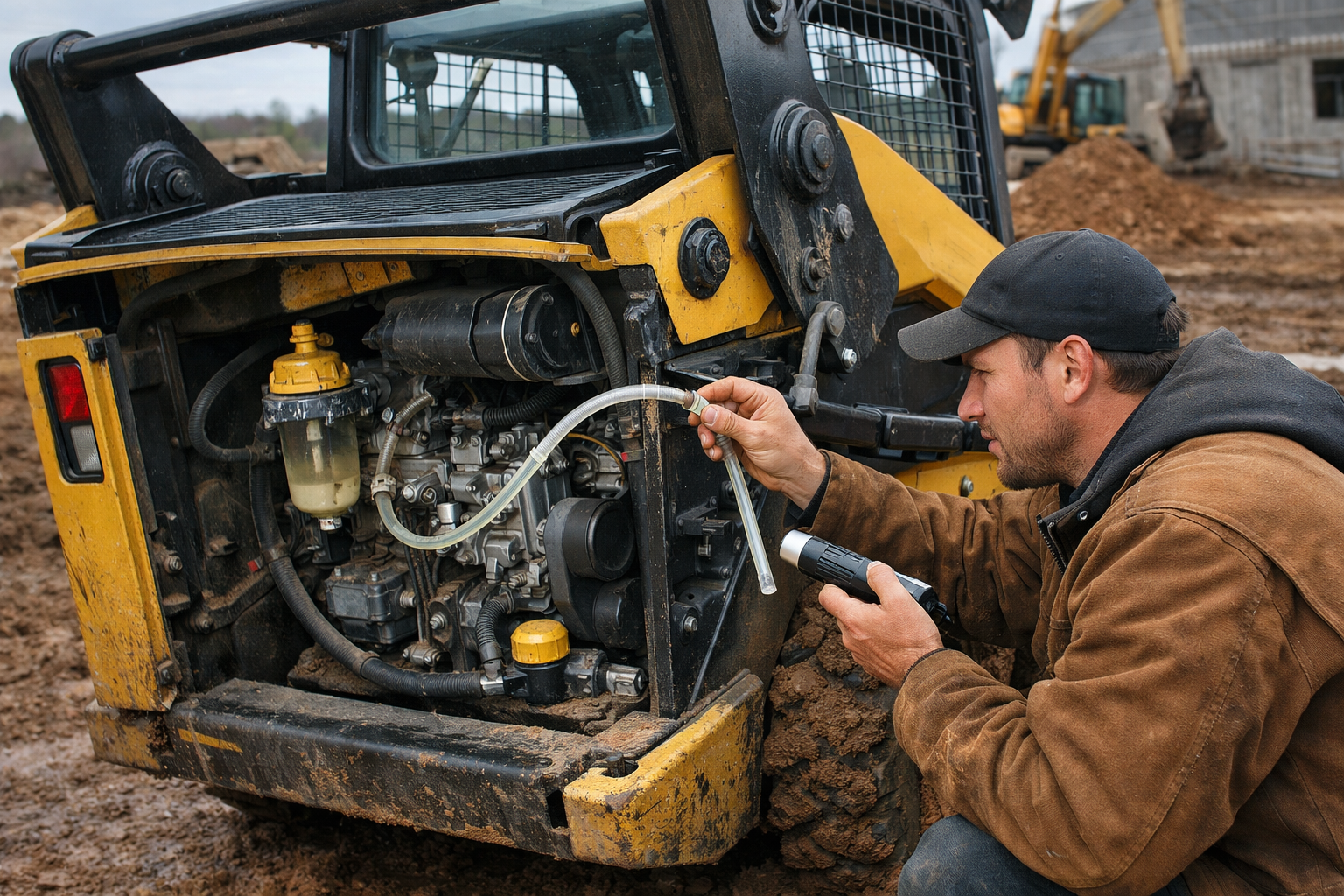
When a skid steer cranks normally but still refuses to start, many operators first suspect the battery, starter, or injector system. However, in many diesel machines, the real problem is much simpler. Air has entered the fuel system. Once air gets into the fuel line, diesel delivery becomes unstable. The engine may crank, try to fire, produce light smoke, or even start for a second and stop again. This is why air in fuel line skid steer faults are often linked with skid steer hard starting fuel issue, skid steer cranks but won’t start fuel system, and other common no-start complaints.
This kind of problem often appears after a fuel filter change, after the machine runs out of diesel, or when a small leak allows the system to lose prime while the skid steer is parked. At first, the symptoms may look serious. In reality, the engine may still be mechanically sound. The real issue is that the fuel reaching the engine is mixed with air, and the injection system cannot build a steady fuel supply.
A diesel fuel system is designed to move liquid fuel, not air pockets. When air is trapped in diesel fuel system lines, the fuel flow becomes uneven. This affects the pressure and timing needed for proper combustion. As a result, the engine may crank well but fail to start cleanly.
In some cases, the machine starts after a long crank and runs rough for a few seconds. In other cases, it fires briefly and then dies. Sometimes it will not start at all. These symptoms can seem random, but they often point to the same root cause. The fuel system is no longer fully primed, and the engine is not getting a steady stream of diesel.
This is why a skid steer fuel system air problem should never be ignored. Even a small amount of air can interrupt the starting process and make the machine difficult to use in daily work.
The most common sign is simple. The skid steer cranks, but it does not fire properly. That is often the first clue. Another common symptom is that the engine starts and then dies after a few seconds. This usually happens when a small amount of fuel reaches the engine, but the flow is not stable enough to keep it running.
Some machines also become harder to start after sitting overnight. This often means the machine is fuel line losing prime skid steer style, meaning fuel drains back or air enters the line while parked. Another sign is white smoke during cranking. This can happen when fuel enters the chamber but does not burn completely.
Still, it is important to stay careful here. White smoke does not always mean air in the line. It can also be related to glow plug issues, injector problems, or low compression. That is why good diagnosis matters. Air in the fuel line is common, but it is not the only reason a diesel skid steer may refuse to start.
The best way to judge this fault is to look at what happened before the no-start issue began. If the problem started right after a fuel filter replacement, after running out of fuel, or after fuel line service, air intrusion becomes much more likely. If manual priming helps the machine start, even for a short time, that is another strong sign.
A good technician does not guess too early. Instead, they look at the sequence. If priming improves starting, the fuel system deserves close attention first. If priming changes nothing, then the fault may be elsewhere. This is where many online articles stay too general. They list symptoms, but they do not clearly show how to separate a fuel air problem from preheating, injector, or compression faults.
In practice, that difference saves both time and repair cost.
Air normally enters from the low-pressure side of the fuel system. In many cases, the problem is not a large visible diesel leak. Instead, it is a small sealing fault that allows air to enter when the system draws fuel forward.
Common leak points include the fuel filter seal, filter housing, primer bulb, lift pump connections, hose joints, clamps, and ageing rubber lines. A loose fuel filter is one of the most common causes. A cracked hose can cause the same issue. Even a slightly damaged seal can create a hard starting problem.
This is why diesel fuel system troubleshooting air leak work should begin with the simple parts first. Check the filter seating. Check the hose condition. Check every connection that may have been disturbed during recent service. On many machines, the root cause is found there.
Many operators think refilling the tank should solve the problem. But once a skid steer runs out of diesel, the fuel column inside the system breaks. Air enters areas that should stay full of fuel. After that, the system often needs to be primed and bled before normal starting can return.
That is why hard starting skid steer after running out of fuel is so common. The machine is no longer just low on fuel. It now has air trapped in the delivery path. Until that air is removed, starting may remain difficult or impossible.
The exact method depends on the engine model, but the logic stays the same. First, make sure the tank has clean diesel. Then inspect the filter and all visible fuel connections. There is no point bleeding the system if air is still entering through a loose seal or damaged hose.
Next, use the primer pump or manual priming method recommended for the machine. Open the correct bleed point if the engine design includes one. Continue priming until fuel flows without bubbles. Then close the bleed point and continue as needed further downstream.
The key point is simple. Do not stop just because a little fuel appears. During bleeding diesel fuel system after filter change skid steer work, you want a steady, bubble-free flow. A weak or foamy flow means the job is not finished yet.
After that, crank the engine again. If it starts and runs smoothly, the problem was likely trapped air. If it starts and then dies again, recheck for a suction-side leak. A machine that only starts after repeated priming often still has a sealing problem somewhere in the fuel supply side.
Even though air in the fuel line is common, not every no-start issue comes from the fuel system. If the machine has been primed correctly and fuel delivery looks stable, but it still refuses to fire, the next checks should include glow plugs, injectors, and engine compression.
Cold weather can make the situation worse. A weak battery, poor preheating, or thick fuel can make an air problem harder to spot. In some cases, several small issues appear at the same time. That is why the best repair approach follows a clear order. Check the fuel side first if the symptoms fit. Then move to other systems only after that step is confirmed.
This is a better approach than replacing parts one by one without clear evidence.
Prevention is usually easier than repair. When changing a fuel filter, make sure the seal sits correctly and the contact surface is clean. Check that hoses are not cracked or too hard with age. Tighten clamps properly, but do not overtighten plastic parts or soft fittings.
If the skid steer repeatedly loses prime overnight, treat that as a warning sign. It usually means air is still entering the system somewhere. Fixing the leak early helps prevent repeated hard starts, unnecessary cranking, and extra repair cost.
A fuel system should stay sealed, stable, and easy to prime. If it does not, the problem will usually return.
If your skid steer cranks well but refuses to fire properly, air in the fuel line is one of the first faults worth checking. This is especially true after a fuel filter change, after running out of diesel, or when the machine becomes hard to start after sitting.
The good news is that this problem is often fixable without major repair. The important thing is to follow the fault logically. Check where air may be entering. Bleed the system correctly. Confirm whether the fuel flow is clean and steady. Then, only if needed, move on to glow plugs, injectors, or compression checks.
That process is simple, practical, and far more reliable than guessing.
Air usually enters through a loose fuel filter, damaged seal, cracked hose, bad clamp, or after the system has been opened during service.
Yes, it can. Incomplete fuel delivery may cause white smoke during cranking. But white smoke can also come from other diesel engine problems.
A common reason is unstable fuel delivery caused by air in the fuel system. However, glow plug, injector, or compression faults are also possible.
In many diesel skid steers, yes. If air enters during filter replacement, the system often needs to be primed and bled before the engine starts normally.