Product knowledge popularization
A construction equipment supplier of construction machinery solutions for 30 years. WhatsApp:+86-18968212829
Language
A construction equipment supplier of construction machinery solutions for 30 years. WhatsApp:+86-18968212829
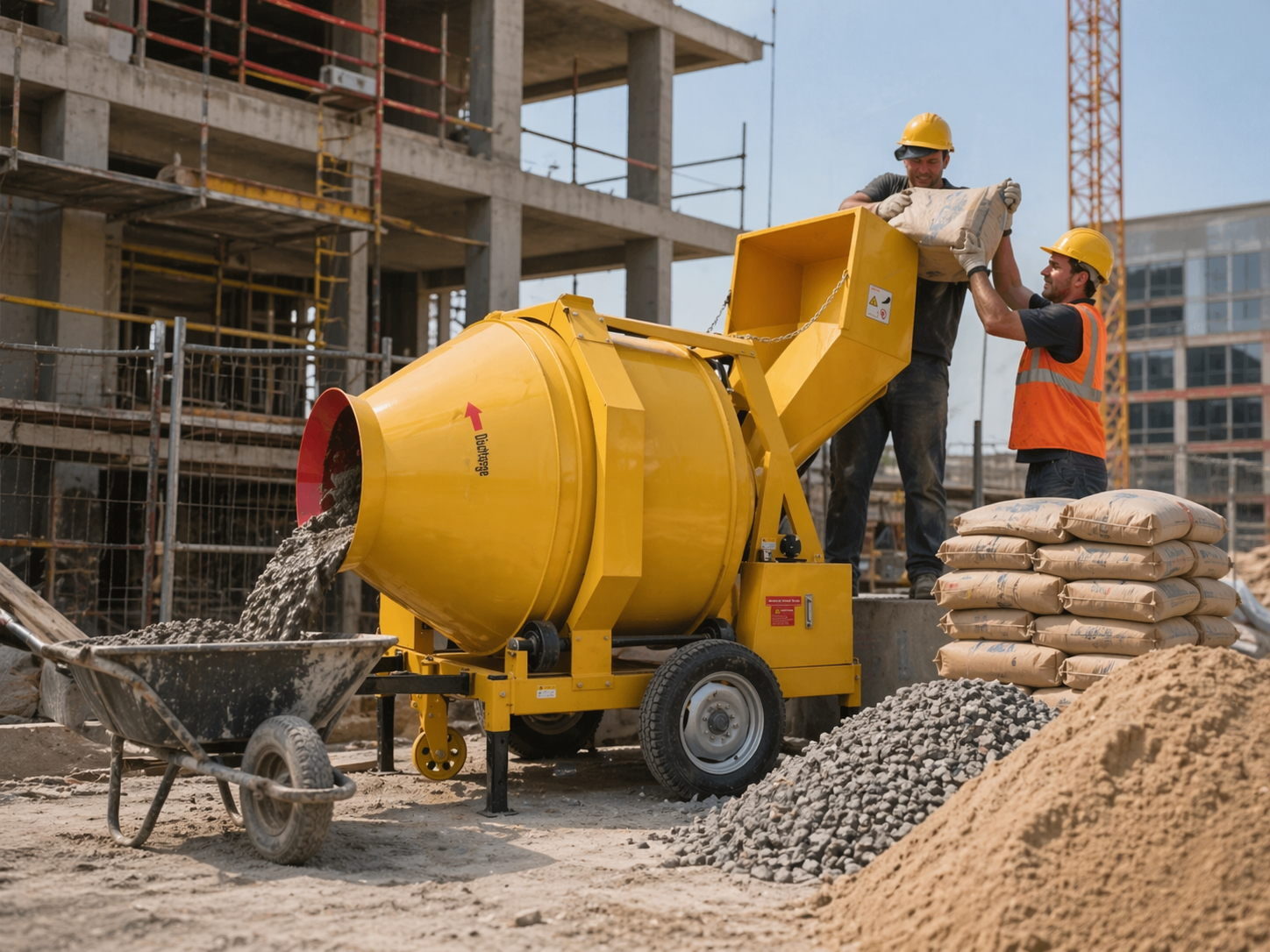
Knowing how to mix concrete in a mixer is important for any small construction job. A mixer can save labour, improve speed and make the concrete more even. However, the final result still depends on how the operator controls the materials, water, mixing time and mixer capacity.
Many people think concrete mixing is only about putting cement, sand, stone and water into the drum. In real work, it is more than that. If the concrete mixing ratio is wrong, the concrete may become weak. If the water to cement ratio is too high, the surface may crack or turn dusty after curing. If the mixer is overloaded, the materials may roll inside the drum without mixing properly.
This guide explains mixing concrete using a mixer in a simple and practical way. It also covers concrete mixer capacity, concrete mixer rpm, mixing time, and how to choose between a portable concrete mixer, electric concrete mixer and diesel concrete mixer.
Machine mixing concrete gives a more even result than hand mixing because the drum keeps the materials moving. As the drum rotates, the blades lift and fold the mix again and again. This movement helps cement paste cover the sand and aggregate more evenly.
This is especially useful when the job needs several batches. For example, when pouring a driveway, path, small slab or foundation base, each batch should look and behave almost the same. If one batch is too wet and the next batch is too dry, the finished surface may have different colours, weak areas or uneven strength.
A concrete mixer also helps workers keep a better pace on site. Instead of mixing by hand on the ground, the operator can prepare one controlled batch after another. This makes the work cleaner, faster and easier to manage. Still, the mixer is only a tool. Good concrete still comes from correct proportion, enough mixing time and careful water control.

The concrete mixing ratio is the base of the whole job. A common ratio for general small construction work is 1 part cement, 2 parts sand and 3 parts aggregate by volume. This type of mix is often used for paths, small slabs, post bases and light construction work.
For a concrete mix ratio for driveway projects, the requirement is usually higher. A driveway must support vehicle weight, so the concrete needs good strength, correct thickness and proper finishing. The exact mix should depend on the traffic load, local building practice and whether steel mesh or reinforcement is used.
The most important point is consistency. Always measure materials with the same bucket, box or container. Do not rely only on random shovel loads. One shovel of wet sand can be much heavier than one shovel of dry sand. If every batch is measured differently, the concrete quality will also change from batch to batch.
A good operator does not guess too much. The operator keeps the same measuring method, follows the same loading order and checks the mix before pouring. This makes the final concrete more predictable.
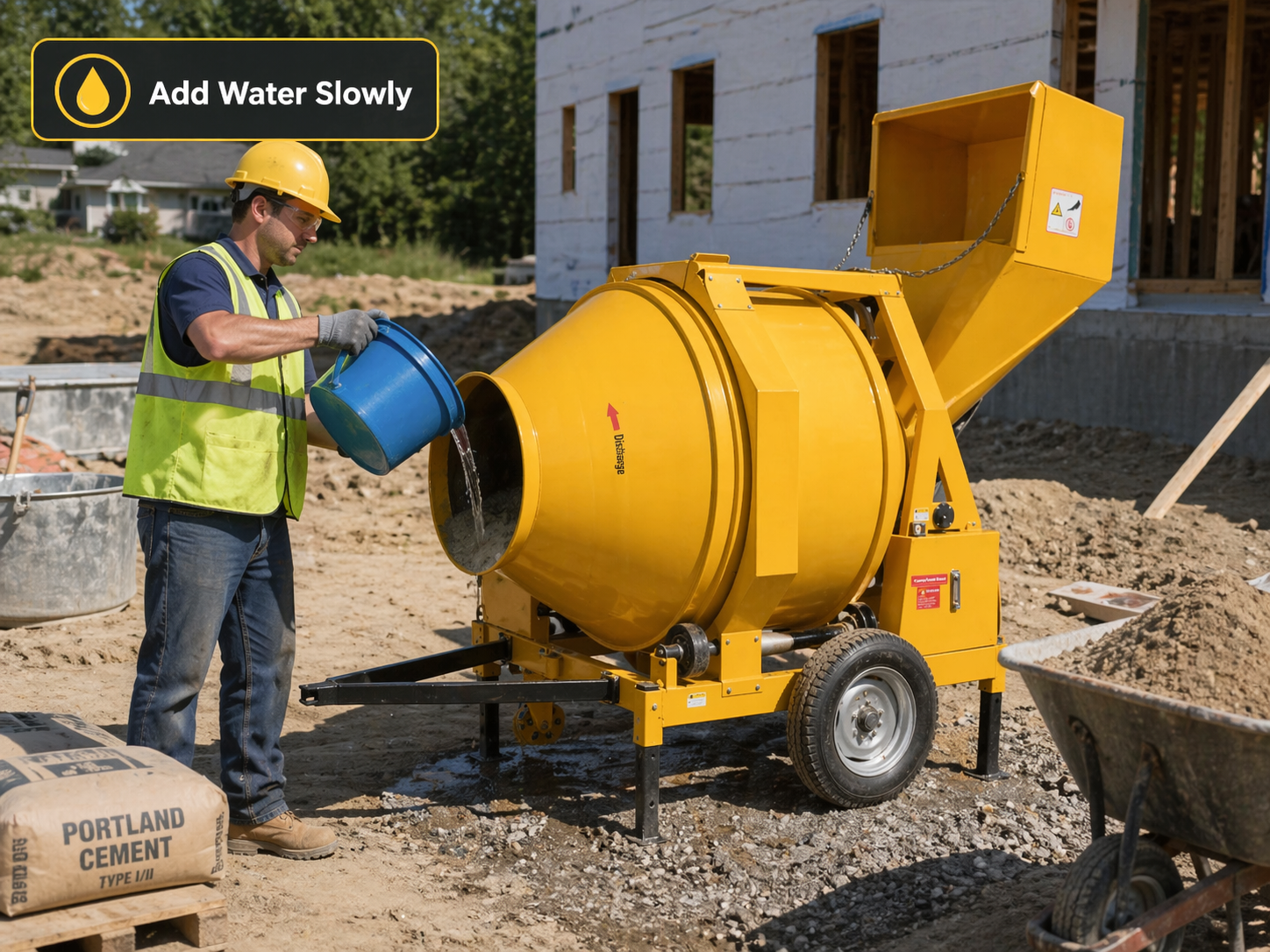
The water to cement ratio has a strong effect on concrete strength. Water is needed to activate the cement and make the mix workable. But too much water creates extra pores after curing. These pores can make the concrete weaker, softer and easier to crack.
The best method is to add water slowly. First, add part of the measured water into the drum. Then add aggregate, sand and cement while the mixer is running. Once the dry materials start to combine, add the remaining water little by little.
The mix should become workable, not watery. If the concrete flows like thin soup, there is too much water. If it breaks apart and does not coat the stone properly, it is too dry. A good concrete mix should hold together on a shovel, look even in colour and move as one body when discharged.
This simple check is very useful on site. It helps the operator decide whether the mix is ready or still needs a small adjustment. Adding water slowly gives more control and reduces the chance of ruining the batch.

Before starting, place the mixer on firm and level ground. This keeps the machine stable during loading and discharging. Then check that the drum is clean and free from old hardened concrete. Old concrete inside the drum can reduce mixing quality and make the batch uneven.
Start the mixer before adding materials. Add part of the water first. After that, add some aggregate, then sand, then cement. Many operators add aggregate early because it helps reduce cement sticking inside the drum. Once the main materials are inside, let the drum turn until the colour begins to look even.
Next, adjust the water slowly. Do not add a full bucket at one time unless the batch clearly needs it. Small adjustments are safer. After the mix becomes even, allow it to continue mixing until there are no dry pockets, no loose cement and no unmixed stones.
When the concrete is ready, discharge it close to the working area. Try not to delay placement for too long, especially in hot weather. Concrete can begin to stiffen if it sits too long after mixing. A steady work rhythm gives better results than rushing one batch and waiting too long for the next.
Many users ask, how long to mix concrete in a mixer? For most small drum mixers, the normal mixing time is about 3 to 5 minutes after all materials are loaded. This is enough for many small construction jobs when the batch size is correct.
However, time is not the only standard. The operator should also look at the mix. The concrete should have one colour, one texture and no dry lumps. If cement powder is still visible, the batch needs more mixing. If the mix has already become stiff, it may have stayed in the drum too long.
Mixing too short can leave weak spots in the concrete. Mixing too long is also not ideal, because the concrete may lose workability before it is placed. The best result comes from a balanced mixing time and quick placement after discharge.
For repeated batches, keep the same process. Use the same material order, similar mixing time and similar water control. This makes each batch easier to finish and reduces quality problems.
Concrete mixer capacity is often misunderstood. The total drum volume is not the same as the real mixing volume. A mixer needs empty space inside the drum so the concrete can tumble and fold. If the drum is filled too full, the materials cannot move correctly.
Overloading the mixer may look efficient, but it usually causes problems. The motor or engine works harder. The mix takes longer to become even. Some dry material may stay near the back of the drum. In serious cases, the mixer may become unstable during discharge.
For small repair jobs, a portable concrete mixer is easy to move and clean. It is suitable for garden work, paths, small slabs and light construction. For driveway sections or larger site jobs, a bigger mixer can reduce the number of batches. But the operator still needs to control each batch size carefully.
A good rule is simple: do not fill the drum to its maximum physical space. Leave enough room for real mixing movement. A slightly smaller but well-mixed batch is better than a large batch with poor consistency.
Concrete mixer rpm affects how the materials move inside the drum. If the drum turns too slowly, the concrete may not fold enough. If it turns too fast, the materials may stick to the drum wall or separate instead of blending smoothly.
Most mixers are designed with a suitable working speed. For normal site use, the operator should not change the pulley, belt or engine speed without technical advice. Changing the rpm may seem like a quick way to increase productivity, but it can reduce mixing quality and damage the machine.
Drum angle also matters. A very steep drum angle may hold more material, but it may reduce the tumbling action. A better angle allows the concrete to roll, lift and fold smoothly. When the drum speed and drum angle work together, the mix becomes more even and easier to discharge.
Different jobs need different mixer types. A portable concrete mixer is a good choice for small sites, repair work, landscaping, garden paths and light concrete jobs. It is easy to move, simple to operate and does not need much space.
An electric concrete mixer is suitable for homes, workshops, indoor areas and sites with stable power. It is clean, quiet and easy to start. It is also useful where exhaust gas is not acceptable. However, the power supply must match the motor requirement, and the cable should be safe for site use.
A diesel concrete mixer is better for outdoor projects, road work, farms and remote construction sites. It does not depend on electricity, so it is practical where power is unstable or unavailable. Diesel mixers are often used for heavier site conditions, but they need fuel, ventilation and regular engine maintenance.
The best choice depends on the working environment. If the site has reliable power and light work, electric power is often enough. If the site is remote and the workload is heavier, diesel power is usually more practical.
The first common mistake is adding too much water. Wet concrete is easier to pour, but it may become weak after curing. Good concrete should be workable, not watery.
The second mistake is overloading the drum. A mixer needs space to mix. When the drum is too full, the materials cannot move properly, and the result may be uneven.
The third mistake is ignoring cleaning. Concrete left inside the drum will harden and affect the next batch. It can also reduce the real capacity of the mixer. Cleaning the drum, blades and discharge area after use keeps the machine in better condition.
Another mistake is poor planning. If the operator mixes too slowly, the first batch may start setting before the next batch is ready. If the operator mixes too fast without checking quality, the concrete may not be even. A steady rhythm is always better.
Mixing concrete using a mixer is not difficult, but it does require control. The operator needs the right concrete mixing ratio, careful water to cement ratio, suitable concrete mixer capacity, correct mixing time and stable machine operation.
A portable concrete mixer is useful for small and mobile jobs. An electric concrete mixer is clean and convenient where power is available. A diesel concrete mixer is better for remote or heavier outdoor work. No matter which type is used, the goal is the same: produce concrete that is even, workable and strong enough for the job.
When the materials, mixer and operator work together, concrete quality becomes much easier to control. That is the real value of machine mixing concrete on a construction site.
Concrete is usually mixed for about 3 to 5 minutes after all materials are loaded. The mix should look even in colour and texture before discharge.
A common concrete mixing ratio is 1 part cement, 2 parts sand and 3 parts aggregate by volume. Driveway concrete may need a stronger mix depending on the load and slab design.
The water to cement ratio affects strength and durability. Too much water makes concrete easier to pour, but it can reduce strength after curing.
Yes, a portable concrete mixer can be used for small driveway sections. For larger driveways, the operator should plan batch timing carefully to avoid weak joints.
An electric concrete mixer is better for clean, small and power-supported sites. A diesel concrete mixer is better for remote outdoor sites where electricity is not reliable.

