Product knowledge popularization
A construction equipment supplier of construction machinery solutions for 30 years. WhatsApp:+86-18968212829
Language
A construction equipment supplier of construction machinery solutions for 30 years. WhatsApp:+86-18968212829
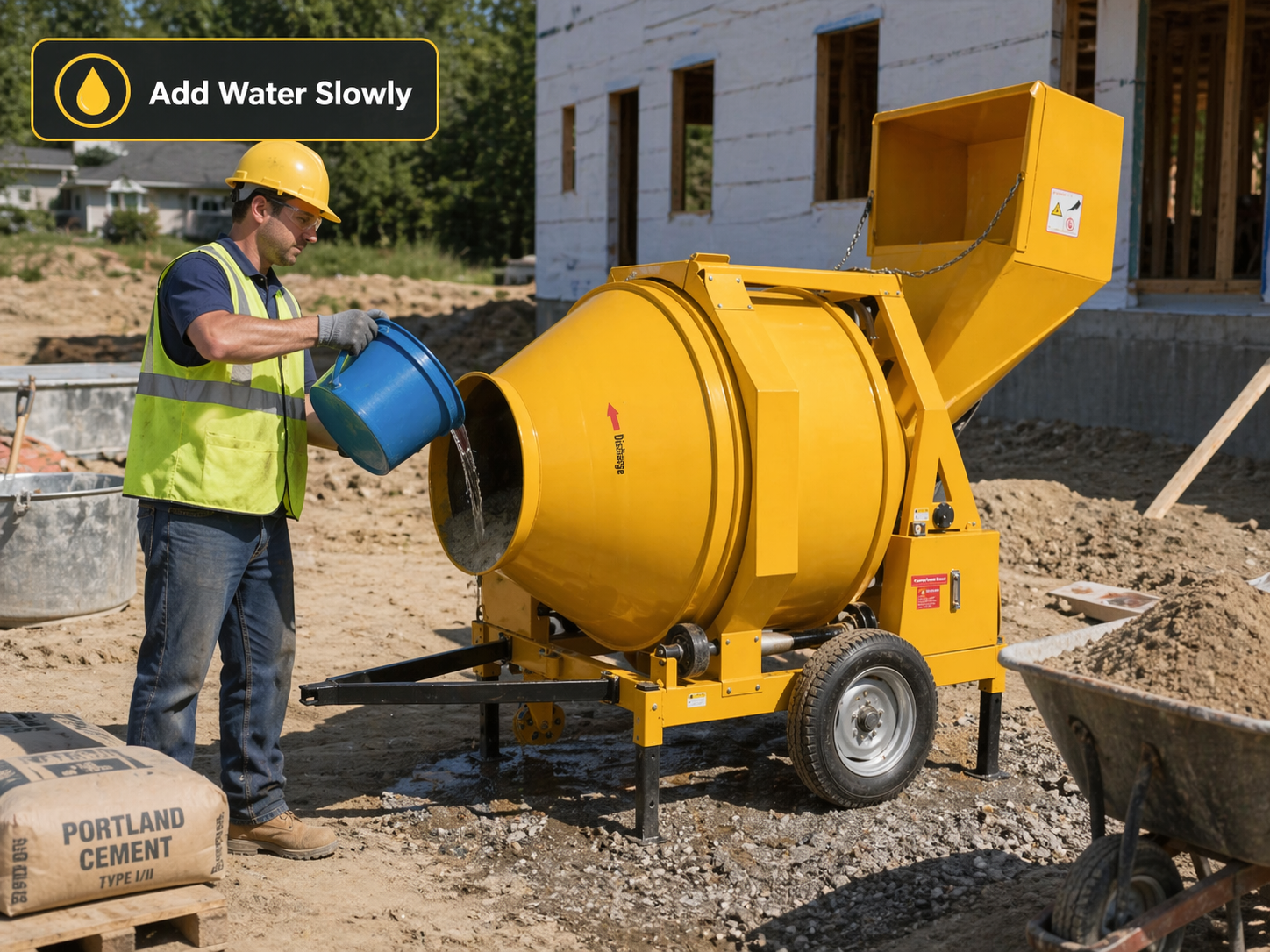
Concrete mixer troubleshooting usually starts when the site team is already under pressure. The slab is scheduled, the aggregate is waiting, and the mixer suddenly stops, overheats, slips, shakes, or produces a batch that looks more like a gravel pudding than workable concrete. For contractors, rental fleets and equipment dealers, these faults are not only mechanical problems. They affect pouring time, labour planning, concrete quality and equipment return on investment.
A concrete mixer is a simple-looking machine, but its real performance depends on several working systems staying in balance: the motor or engine, drive belt, drum, gear ring, bevel gear, bearings, lubrication points, mixing blades and loading practice. When one part is ignored, another part often takes the blame. A slipping belt may look like a weak motor. Poor mixing may look like a bad concrete recipe. A noisy drum may actually be asking for grease before it becomes an expensive repair.
This guide explains the common causes of concrete mixer problems, how to diagnose them logically, and what contractors or rental managers should check before replacing parts. It is written for site users who need practical answers, not a lecture long enough to cure concrete by itself.
The fastest way to waste time is to start replacing parts without understanding the symptom. A concrete mixer fault normally shows itself in one of several ways: the machine will not start, the motor starts then cuts out, the drum rotates weakly, the belt slips, the mixer makes unusual noise, the batch does not blend evenly, or hardened concrete begins to build up inside the drum.
Each symptom points towards a different area of the machine. Electrical faults usually appear before the drum moves. Drive faults appear when the motor runs but the drum does not rotate properly. Mixing faults appear after the drum is moving but the material remains uneven. Maintenance faults often appear as noise, heat, vibration or premature wear.
For B2B buyers, this matters because troubleshooting is also a procurement issue. A mixer used by a small contractor may only need simple daily maintenance. A rental company needs machines that are easy to inspect, clean and repair between users. A dealer needs clear spare parts logic, because customers rarely enjoy hearing, “Maybe it is this part, maybe that part, maybe the moon is in the wrong position.”
If an electric concrete mixer starts normally but stops after working for a period of time, overheating is one of the first issues to check. Long continuous running, overloading, poor ventilation, high ambient temperature, weak wiring, unstable voltage or a damaged cooling fan can all increase motor temperature. Many mixers use motor protection to stop the machine before internal damage becomes serious.
This automatic stop can be frustrating, but it is often protecting the motor from failure. Before restarting the mixer, allow the motor to cool, reduce the batch size and inspect whether the air vents are blocked by cement dust. If the mixer restarts after cooling but stops again under load, the machine may be working beyond its practical capacity or the drive system may be creating extra resistance.
The mixer runs normally when empty but stops after material is loaded.
The motor casing becomes unusually hot.
The machine stops more often in hot weather or long working periods.
The drum slows down before the motor cuts out.
A burnt smell appears near the motor or switch box.
Do not simply keep pressing the switch. If the machine is protecting itself, repeated restarting may turn a manageable fault into a motor replacement. For contractors, the practical fix may be smaller batches and rest intervals. For rental companies, the better solution is to inspect the cooling system, power cable, switch, capacitor and motor load before sending the mixer back out.
When the motor runs but the drum does not rotate, the drive system should be checked before assuming the motor has failed. On many portable concrete mixers, a V-belt transfers power from the motor or engine to the drum drive. If the belt is loose, worn, cracked, oily or broken, the drum may rotate weakly, stop under load or fail to move at all.
A slipping belt can sound like a power problem because the motor continues working while the drum loses torque. If the belt has become polished, stretched or damaged, it should be replaced with the correct specification. Belt tension also matters. Too loose, and it slips. Too tight, and it increases bearing load. Neither option is kind to the machine.
The motor runs, but the drum does not move.
The drum turns when empty but stops with concrete inside.
A squealing sound appears during start-up or loading.
Rubber dust appears near the belt cover.
The belt has visible cracks, glazing or frayed edges.
The gear system should be checked next. The bevel gear and main gear handle repeated rotation and load transfer. Because these parts work continuously during mixing, they are common wear points. If gear teeth are worn, chipped or poorly engaged, the mixer may make grinding noise, rotate unevenly or lose drive efficiency. Gear replacement can involve removing the drum, so regular inspection is cheaper than waiting for complete failure.
A concrete mixer that becomes louder over time is often warning the operator before a major breakdown. Grinding, knocking, clicking or irregular vibration may come from gear wear, loose fasteners, dry bearings, poor alignment, hardened concrete debris or worn drum support points.
The bevel gear is particularly important because it transfers motion into the drum rotation system. Once tooth wear becomes serious, the drum may still rotate, but the load distribution becomes uneven. This increases vibration and accelerates damage to nearby components. In site language, the machine is still working, but it is no longer working happily.
Check whether the gear teeth are worn, cracked or missing.
Inspect the drum support and rotation points for looseness.
Look for hardened concrete stuck near moving parts.
Check whether bolts and fasteners have loosened from vibration.
Inspect lubrication points and add grease according to the maintenance schedule.
Noise is more than an operator comfort issue. It often marks increased friction or misalignment. For dealers and rental fleets, a noisy mixer should not be treated as “still usable” without inspection. A short check before the next rental may prevent a customer complaint, emergency spare parts request or full drum removal later.
Poor mixing is one of the most misunderstood concrete mixer problems. Operators may blame cement quality, water quantity or aggregate size, but the mixer itself may be the real cause. Worn internal blades, incorrect loading sequence, overfilling, low drum speed, belt slipping or hardened residue inside the drum can all reduce mixing quality.
A good batch should show consistent distribution of cement paste, fine aggregate and coarse aggregate. If the mixture contains dry pockets, unmixed sand, uneven stone distribution or excessive water separation, the problem should be investigated before pouring. Once poor concrete reaches the slab, the mixer has successfully transferred the problem from the machine to the building. That is rarely a good promotion strategy.
The drum is overloaded beyond its practical mixing capacity.
Water is added too quickly or unevenly.
Dry materials are loaded in a poor sequence.
The drum speed is too low because of belt slip or weak drive.
Mixing blades are worn or covered by hardened residue.
The batch is discharged before enough mixing time has passed.
Operators should avoid judging capacity only by drum size. Total drum volume and real mixing capacity are not the same. A mixer filled to the top cannot tumble materials properly. Concrete needs movement space inside the drum. If the machine is constantly loaded above practical capacity, the result is slower mixing, higher motor load, more belt wear and inconsistent concrete.
If concrete remains inside a rotating mixer for a short period, the risk is usually manageable. The real problem begins when the drum stops and wet concrete stays still for too long. As the material begins to set, it can harden on the drum wall, blades, discharge area and rotation path. Once hardened, it reduces capacity, creates imbalance, increases wear and makes future cleaning much harder.
For small contractors, this often happens during interruptions: the operator leaves to handle formwork, the power supply stops, another task delays discharge, or the team underestimates setting time in hot weather. For rental companies, hardened concrete inside the drum is one of the clearest signs of poor user practice.
It reduces effective drum volume.
It makes mixing less uniform.
It increases load on the motor and belt.
It can create drum imbalance and vibration.
It makes cleaning more labour-intensive and less safe.
The safest approach is simple: clean the mixer promptly after use, before the material becomes a mechanical problem. If hardened concrete must be removed, disconnect the power source or isolate the engine before cleaning. For larger truck-mounted drums or confined drum access, operators should avoid entering the drum where possible and follow a controlled safe system of work.
Lubrication is not exciting, but neither is replacing a damaged gear system because nobody touched a grease gun. Concrete mixers have rotation points that work under repeated load, and these points need regular attention. On many drum mixers, grease nipples are positioned around the upper drum shaft and the front and rear shaft seats. Because the drum rotates frequently, these areas can wear faster when lubrication is poor.
A practical maintenance schedule should separate high-frequency and normal-frequency lubrication points. The upper drum shaft may need greasing more often because of its working load and rotation frequency. Front and rear shaft seats may follow a slightly longer interval, depending on usage intensity. On busy construction sites, inspection should be based on working hours and visible condition rather than a calendar alone.
Inspect grease nipples before and after heavy use.
Add grease when the shaft area shows dryness or noise increases.
Check whether old grease is contaminated by cement dust or grit.
Do not ignore front and rear shaft seats.
Record lubrication intervals for rental fleet control.
Grease should go where the manufacturer specifies. Open gear areas should be treated carefully according to the machine design, because exposed grease can attract abrasive dust and sand on some mixer types. The aim is to reduce friction, not make a grinding paste with a premium cement fragrance.
A daily checklist should be short enough that operators actually use it. The goal is not to create paperwork for decoration. It is to catch the small faults that become expensive when ignored.
Check the power cable, plug, switch or engine controls.
Inspect the belt cover and listen for belt slip during start-up.
Confirm the drum rotates freely when empty.
Check for abnormal gear noise or knocking.
Inspect visible bolts, frame points and drum supports.
Make sure the mixer is placed on stable ground.
Do not exceed practical mixing capacity.
Add materials in a controlled sequence.
Watch for sudden drum speed changes.
Stop the machine if severe grinding or burning smell appears.
Avoid leaving concrete idle inside a stopped drum.
Discharge the batch completely.
Wash the drum before concrete hardens.
Remove material from blades and discharge areas.
Inspect the belt, gear teeth and lubrication points.
Store the mixer in a clean, dry position where possible.
Daily checks keep the mixer working today. Weekly and monthly maintenance keeps it earning money next season. Contractors should focus on reliability and job continuity. Rental companies should focus on inspection speed, part availability and customer misuse detection. Dealers should focus on clear spare parts guidance and after-sales support.
Check V-belt tension and condition.
Inspect bevel gear and main gear wear.
Grease specified shaft seats and drum shaft points.
Check whether drum rotation remains smooth under moderate load.
Clean cement dust from cooling areas and motor ventilation.
Inspect switch box, cables and protective covers.
Inspect the drum wall for dents, cracks or heavy internal build-up.
Check blade wear and mixing performance.
Inspect bearing condition by listening for grinding or rough rotation.
Check frame welds and wheel or support condition.
Review spare parts stock: belts, gears, switches, bearings and grease fittings.
For high-use rental machines, maintenance should be linked to working hours and return inspections rather than monthly dates only. A mixer that has completed a heavy week on site may need more attention than a privately owned machine used once for a small garden slab.
Not every fault means the mixer should be replaced. Belts, switches, bearings and some gears are normal wear items. However, repeated overheating, severe drum deformation, major gear damage, cracked frames or poor mixing after repair may suggest the machine is approaching the end of its useful working life.
The decision should include more than the repair bill. Buyers should consider downtime, labour cost, spare parts availability, the machine’s age, job frequency and the cost of poor concrete quality. A cheap repair that fails again during a pour may cost more than a planned replacement.
The fault is limited to a belt, switch, bearing or serviceable gear.
The drum and frame remain structurally sound.
Spare parts are available quickly.
The machine still mixes evenly after repair.
The drum is heavily damaged or badly imbalanced.
Gear wear is severe and repeated.
The motor overheats even after load and ventilation checks.
Repair cost approaches the value of a new mixer.
The machine no longer matches the contractor’s output requirement.
For dealers and procurement teams, this is where supplier support matters. A reliable concrete mixer is not only a drum and motor. It also needs practical parts access, clear maintenance guidance and model options that match the buyer’s real jobsite workload.
Many buyers choose a mixer by capacity and price first. Those two points matter, but they are not the whole story. A mixer that is easy to inspect, grease, clean and repair will usually perform better over its service life. This is especially true for contractors working across different sites, rental companies with many operators, and dealers supplying machines to customers with different skill levels.
When comparing concrete mixer models, buyers should check the real mixing capacity, drum structure, drive system, belt access, gear design, lubrication points, engine or motor type, discharge method, transport wheels, frame strength and spare parts support. For larger site work, output per hour and loading efficiency also matter. For small contractors, portability and simple maintenance may matter more.
ACE Machinery supplies concrete mixer options for different construction requirements, from portable drum mixers to diesel and hydraulic models. For overseas buyers, the stronger purchasing question is not only “How many litres is the drum?” but also “How easy is this machine to keep working when site conditions are dusty, wet, rushed and operated by real humans?” That second question often saves more money.
A concrete mixer that keeps stopping may be overheating, overloaded, working with poor ventilation, suffering from unstable voltage, or facing extra resistance from the belt, drum or gear system. Let the motor cool, reduce the load, clean ventilation areas and inspect the drive system before restarting repeatedly.
If the motor runs but the drum does not turn, check the V-belt first. It may be loose, broken, oily or worn. If the belt is working, inspect the gear system, bearings, hardened concrete build-up and drum support points.
Poor concrete mixing can come from overloading, incorrect loading sequence, too much water, short mixing time, worn blades, low drum speed, belt slip or hardened residue inside the drum. Check both the machine and the mixing method before blaming the material.
Greasing frequency depends on machine type and working intensity. High-rotation drum shaft points may need more frequent lubrication, while front and rear shaft seats may follow a longer interval. Busy job sites and rental machines should be inspected by working condition, not only by calendar dates.
Yes. Hardened concrete inside the drum can reduce capacity, affect mixing quality, create imbalance, increase drive load and make cleaning more difficult. The drum should be washed promptly after use before residue sets.
Grinding noise usually points to gear wear, dry bearings, poor alignment, loose fasteners or debris near moving parts. Stop the mixer and inspect the gear teeth, drum support points, lubrication condition and any hardened concrete build-up.
Repair is usually reasonable for normal wear parts such as belts, switches, bearings and serviceable gears. Replacement may be better when the drum is damaged, the frame is cracked, overheating repeats after repair, or the machine no longer meets the site’s output requirement.

