A construction equipment supplier of construction machinery solutions for 30 years. WhatsApp:+86-18968212829
Language
A construction equipment supplier of construction machinery solutions for 30 years. WhatsApp:+86-18968212829
A road roller machine may look simple from a distance: a heavy drum moves forward, the surface looks flatter, and everyone hopes the road will behave itself later. In real construction work, however, compaction is not just about appearance. A roller increases material density by applying pressure, vibration, kneading, impact or a combination of these forces, so the right machine depends on the material and the compaction mechanism required. According to the Kentucky Transportation Center, compaction may be achieved through pressure, vibration, kneading, impact or combined forces. For asphalt work, this matters because the Federal Highway Administration notes that a 1 percent increase in in-place asphalt pavement density can extend pavement service life by at least 10 percent.
That is why choosing a road roller by size or price alone is risky. A small repair patch, a parking lot, a trench backfill and a road base may all need compaction, but they do not need the same compactor. The best machine is the one that matches the working material, available space, target density, surface finish and daily productivity. In other words, the job should choose the roller, not the other way round.
A road roller machine is a compaction machine used to increase the density and stability of asphalt, soil, gravel or mixed base materials. Better density helps reduce settlement, rutting, cracking and surface movement after construction. For asphalt, density is especially important because air voids directly affect pavement performance. Pavement Interactive notes that dense-graded hot mix asphalt generally performs best when air voids are between 3 percent and 8 percent, balancing strength, fatigue life, durability, raveling resistance, rutting resistance and moisture damage resistance.
For buyers, this means the roller is not just a finishing machine. It is part of the quality-control chain. If the roller cannot help the crew reach the required density before the material cools, dries or loses workability, the surface may look acceptable on day one but perform poorly later. Roads are patient inspectors; they reveal bad compaction slowly and expensively.
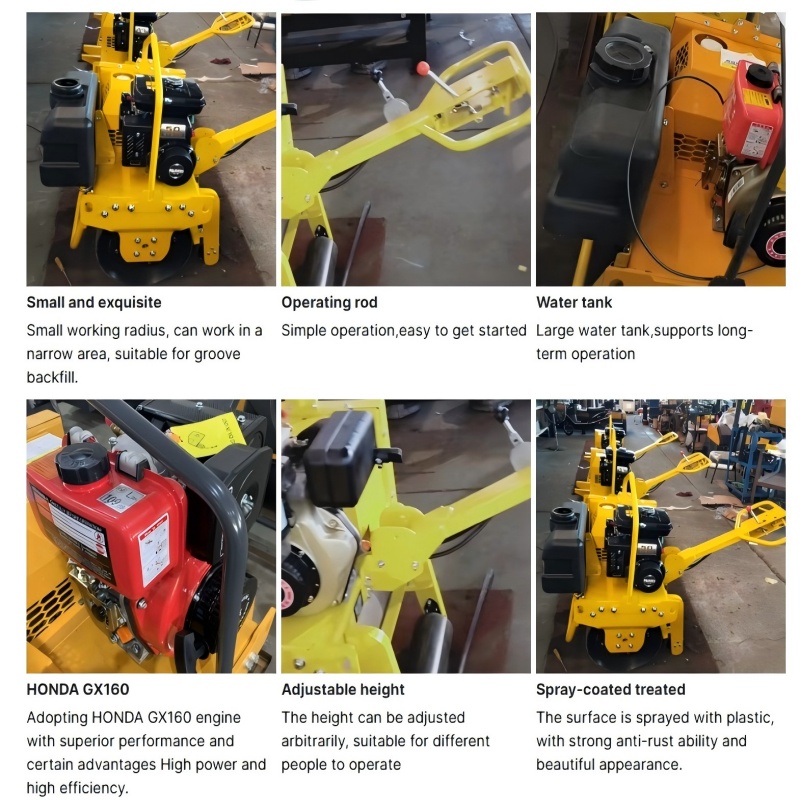
A walk-behind road roller is compact, easy to transport and useful in narrow areas where larger machines cannot turn freely. It is commonly used for sidewalks, road edges, patching, driveway repair, small asphalt areas and trench backfill. Because the operator walks behind the machine, visibility around edges and obstacles is good. The trade-off is productivity. On a large open surface, a walk-behind model can finish the work, but the operator may start to feel that the site has quietly expanded overnight.
A double drum road roller, also called a tandem roller, has steel drums at both the front and rear. This design gives even surface contact and is especially useful for asphalt compaction, parking lots, cycle paths, small roads and surface finishing. The smooth drum layout helps with both finish and density, and density is where the real engineering value appears. The Federal Highway Administration reports that a 1 percent increase in asphalt density can improve fatigue performance by 8 to 44 percent and rutting resistance by 7 to 66 percent.
A ride-on road roller is more efficient when the working area is open enough for longer rolling passes. It reduces walking fatigue, improves daily output and helps operators maintain a more consistent rolling pattern on parking areas, estate roads, sports grounds and medium-size paving projects. However, comfort is not only about the seat. OSHA states that construction hearing conservation requirements apply when noise exposure exceeds 90 dBA over an 8-hour period, so long rolling shifts and nearby equipment should be considered when planning operator protection.
Single drum rollers are often used for soil, gravel and road base preparation. They normally have one large front drum and rear tyres, giving traction and deeper compaction ability on larger earthwork areas. Padfoot rollers use raised pads to knead cohesive soil such as clay, where surface pressure alone may not be enough. For asphalt, though, a smooth drum is usually preferred, because a padfoot drum would leave marks that no site manager wants to explain during handover.
A pneumatic tyre roller uses multiple rubber tyres to apply kneading pressure across the surface. It is often used in asphalt finishing and sealing because the tyres help close surface voids and improve contact across the mat. These machines are valuable on larger paving projects, although they are less common in small repair work than compact walk-behind or double drum vibratory rollers.
Road roller applications depend heavily on what is being compacted. Asphalt usually needs smooth drum contact, vibration control and a water spray system to reduce sticking. Granular soil, sand and gravel often respond well to vibration because particle movement helps the material settle into a denser structure. Cohesive soil such as clay may need kneading action from a padfoot roller. Before selecting an asphalt compaction roller, contractors should also check how the project defines density, because the Asphalt Institute explains that density targets may be based on laboratory compacted mix, maximum theoretical density or control strip density.
Small road repair, sidewalk construction and narrow access work often favour a small road roller or walk-behind roller. Parking lots, cycle paths and estate roads usually benefit from a compact double drum or ride-on vibratory roller. Trench backfill and utility repair work may need a trench roller or another compact machine if access is too restricted. A big roller in a tight trench is not a productivity upgrade; it is a scheduling problem with a steering wheel.
The choice between a walk-behind road roller and a ride-on roller mainly comes down to area, access and productivity. Walk-behind rollers are better for narrow spaces, edges, repairs, trench work and small asphalt patches. Ride-on rollers are better for larger open areas where longer passes improve efficiency and reduce operator fatigue. If the site has many kerbs, manholes, columns or barriers, compact size becomes more valuable. If the site is open and the schedule is tight, ride-on productivity usually wins.
For dealers and rental companies, this is why stocking only one roller type may not serve every customer well. A road repair crew may need a walk-behind unit for confined repairs, while a paving contractor may prefer a ride-on double drum road roller for parking lots and estate roads. The machine mix should follow local project demand, not just showroom space.
| Buying Factor | What to Check | Industry Reference |
|---|---|---|
| Compaction mechanism | Check whether the material needs pressure, vibration, kneading, impact or combined force. | Compaction may be achieved through pressure, vibration, kneading, impact or combined forces. |
| Asphalt density | Confirm whether the roller can help the crew reach the project density target. | FHWA: 1% higher asphalt density can extend pavement service life by at least 10%. |
| Performance impact | Consider density as a pavement performance factor, not only a finish requirement. | FHWA: 1% density increase may improve fatigue performance by 8%–44% and rutting resistance by 7%–66%. |
| Air void control | Check whether compaction supports the required asphalt air-void range. | Dense-graded HMA often performs best at 3%–8% air voids. |
| Noise exposure | Consider operator exposure during long rolling passes and nearby equipment operation. | OSHA: construction hearing conservation applies above 90 dBA over 8 hours. |
When choosing a road roller compactor, start with the material and the required compaction result. For asphalt, check the density specification, mat thickness, working temperature, drum width, vibration control and water spray system. For granular base materials, compare operating weight, centrifugal force and vibration frequency. For cohesive soil, check whether the machine can provide kneading action rather than only surface pressure.
Next, look at the site itself. A wider drum improves productivity only when the machine can move freely. A compact roller may deliver better value on sidewalks, patching work and small municipal repairs because it can be transported easily and manoeuvred quickly. Buyers should also compare gradeability, turning radius, drum width, service access, engine parts, belts, bearings, hydraulic components and spare parts availability. NIOSH recommends reducing occupational noise exposure through measures such as buying quieter equipment and keeping moving parts oiled and well maintained, which makes maintenance part of both reliability and safety.
A smooth drum or double drum road roller is commonly used for asphalt because it provides even surface contact and helps achieve a smooth finish. For small repairs, walk-behind rollers or plate compactors may be used when access is limited.
A walk-behind road roller is better for narrow spaces, road edges, trench backfill and small repair work. A ride-on road roller is better for larger open areas where longer passes and higher daily productivity are required.
A vibratory road roller combines machine weight with vibration to improve compaction. It is commonly used for asphalt, granular soil, sand, gravel and base layers where particles need to settle into a denser structure.
Choose according to material type, required density, project size, access conditions, drum width, vibration system, water system, operating weight, transport method and spare parts support. For ACE compact road roller options, buyers can review walk-behind vibrator rollers and ride-on double drum vibratory rollers according to project size and working area.

