Product knowledge popularization
A construction equipment supplier of construction machinery solutions for 30 years. WhatsApp:+86-18968212829
Language
A construction equipment supplier of construction machinery solutions for 30 years. WhatsApp:+86-18968212829
A power trowel machine rarely develops a fault without early symptoms. Excessive vibration at mid-throttle, inconsistent blade pitch response, abnormal gearbox heat, or spiral marks under low-angle lighting are mechanical signals — not random events.
On large floor pours, these indicators are often overlooked until flatness tolerances or surface density requirements are no longer achieved. At that stage, rectification involves grinding, overlays, or partial reconstruction.
This article examines power trowel diagnostics from an engineering and maintenance decision perspective. We will analyse:
Mechanical causes of vibration
Blade geometry effects on surface finish
Gearbox noise interpretation
Rotor imbalance isolation methods
Condition-based maintenance logic
The objective is to provide structured diagnostic reasoning for engineers and service teams managing concrete finishing equipment.
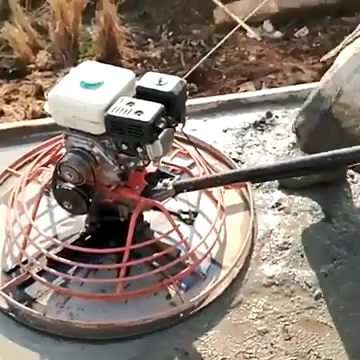
The rotating assembly — spider plate, arms and blades — must remain dynamically balanced. Imbalance typically results from:
Uneven blade wear
Bent trowel arms
Incorrect blade bolt torque
Concrete build-up on the spider plate
Engineering method: Remove blades and measure arm runout using a dial indicator. Acceptable deviation is generally within 1.0–1.5 mm depending on machine diameter.
If vibration increases proportionally with RPM and is accompanied by housing heat, gearbox bearing wear or shaft misalignment should be investigated.
Inspection steps include:
Radial and axial shaft play measurement
Lubricant contamination check
Gear tooth contact pattern evaluation
Rubber isolation mounts harden or crack over time. When vibration is felt predominantly through the handle rather than the rotor, isolation failure is likely.
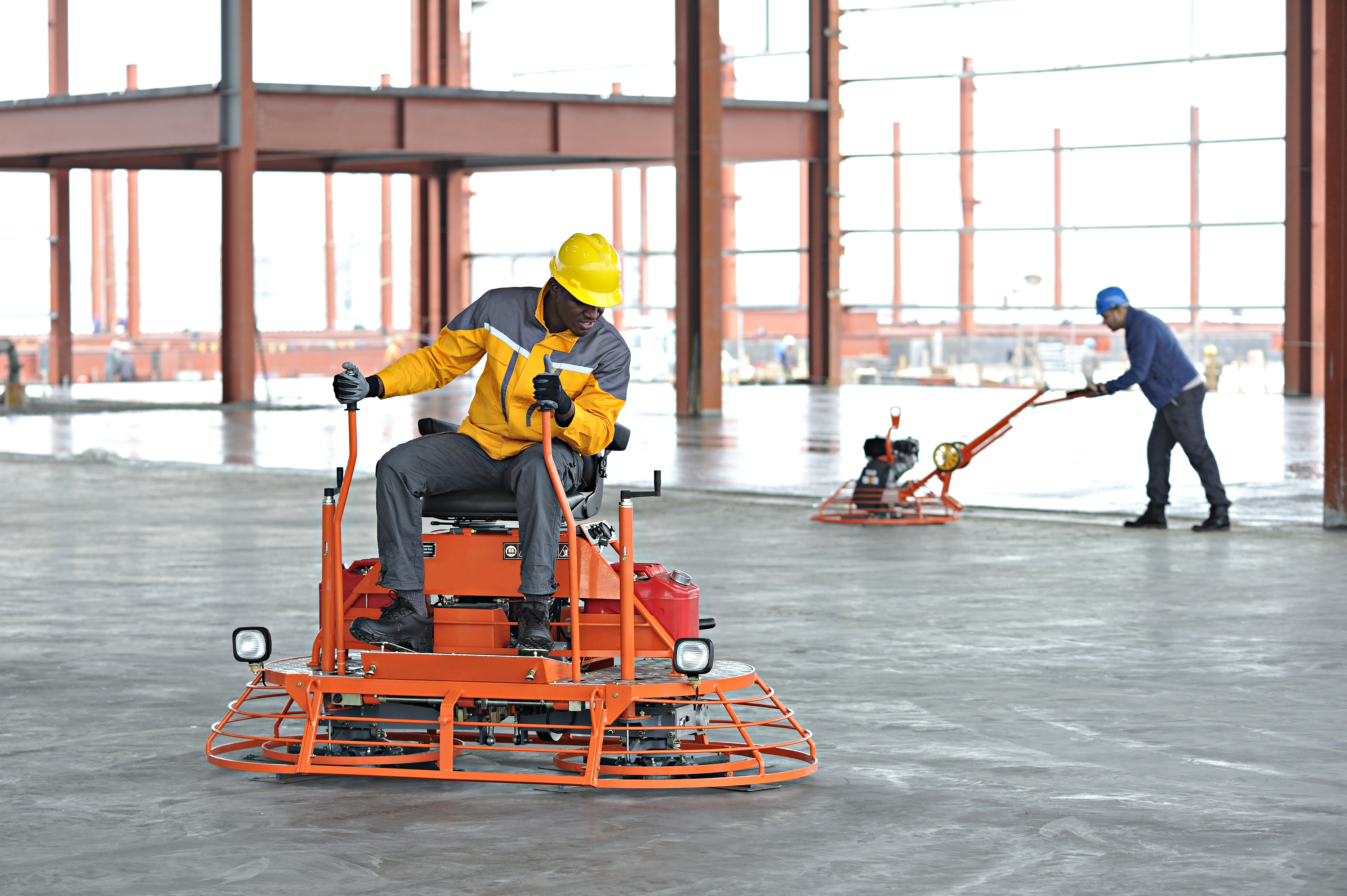
Surface defects result from interaction between concrete curing stage and machine settings. Mechanical condition alone is rarely the sole factor.
Increasing pitch before the concrete reaches appropriate plastic phase leads to:
Surface tearing
Spiral drag marks
Edge dishing
Field indicator: if marks reduce when pitch is lowered, timing was premature.
Uneven blade edges produce crescent-shaped finish inconsistencies. Measure blade flatness using a straight edge; deviation above 2 mm generally requires replacement.
Throttle cable slack or carburettor instability creates RPM fluctuation, resulting in gloss variation and uneven surface density. Stability testing involves holding constant throttle for 60 seconds and monitoring RPM variation.
Walk-behind units commonly experience:
Handle pivot fatigue
Engine mount cracking
Spider arm distortion
Ride-on models introduce additional stresses:
Dual-rotor synchronisation imbalance
Hydraulic control drift
Higher gearbox thermal load
Inspection frequency should be shorter for ride-on equipment due to higher rotational mass and load transfer.
Usually indicates bearing wear. Check oil condition and measure radial shaft play.
Often linked to gear tooth damage or spline wear. Inspect gear mesh pattern and endplay tolerance.
Common causes include incorrect lubricant viscosity, overfilled oil chamber, or blocked ventilation. Thermal imaging during operation provides reliable evidence.
Blade bolt torque verification
Fuel system check
Visual crack inspection
Gearbox oil level and contamination check
Arm straightness measurement
Engine mount compression assessment
Bearing preload verification
Spider hub dye penetration test
Rotor balance recalibration
Maintenance logs should record measurable values rather than subjective observations.
| Concrete Condition | Recommended Action |
|---|---|
| Surface sheen present | Keep blades flat |
| Footprint depth 3–5 mm | Begin low-pitch pass |
| Surface resists thumb pressure | Gradually increase pitch |
Incorrect timing is frequently misinterpreted as mechanical failure. Distinguishing between curing stage error and equipment imbalance prevents unnecessary component replacement.
A power trowel machine communicates its condition through vibration, heat distribution, acoustic changes and surface outcome. Systematic inspection separates mechanical imbalance from operational misjudgement.
For maintenance teams managing multiple machines, structured diagnostics combined with measurable service records significantly improve equipment reliability and slab consistency.
High-speed vibration typically indicates rotor imbalance or gearbox bearing wear rather than engine instability.
Generally every 200–300 operating hours, depending on dust exposure and load intensity.
Minor deformation may be corrected, but structural fatigue reduces service life. Replacement is often safer.
Premature blade pitch increase combined with improper curing stage assessment.
Use correct lubricant viscosity, monitor operating temperature, and avoid aggressive pitch during early concrete curing phases.

