Product knowledge popularization
A construction equipment supplier of construction machinery solutions for 30 years. WhatsApp:+86-18968212829
Language
A construction equipment supplier of construction machinery solutions for 30 years. WhatsApp:+86-18968212829
Why does a mini excavator overheat during continuous operation? This question typically arises after several hours of trenching, grading or breaker work, when coolant temperature rises beyond normal operating range and hydraulic performance begins to degrade. In most 1–2 tonne mini excavators, overheating is not caused by a single defective component. It is usually the result of thermal load exceeding the machine’s cooling system capacity under sustained duty cycles.
Continuous operation places combined stress on the diesel engine, hydraulic pump, cooling stack and exhaust after-treatment system. To diagnose overheating accurately, engineers must evaluate airflow efficiency, coolant circulation, hydraulic heat generation and emission system thermal contribution as an integrated system rather than as isolated parts.

Most compact diesel engines operate within a coolant temperature range of 80–95°C. Hydraulic oil typically stabilises between 45–65°C, depending on ambient conditions. During heavy digging or breaker operation, temporary increases are expected. Overheating occurs when:
Coolant temperature exceeds manufacturer upper threshold (often above 100°C)
Hydraulic oil surpasses safe viscosity limits
Engine derating or warning alarms activate
Coolant loss or boiling is observed
Sustained temperatures beyond these limits indicate insufficient heat dissipation relative to load.
Under constant excavation load, fuel injection increases to maintain torque. Higher combustion pressure generates additional heat that must be dissipated through the radiator and oil cooler. If airflow is restricted or coolant flow is compromised, temperature gradually rises.
Hydraulic pumps convert mechanical energy into hydraulic flow. Efficiency losses appear as heat. During continuous operation:
High system pressure increases oil temperature
Relief valve bypassing generates excess heat
Improper pump matching increases engine load
If hydraulic oil cooling capacity is insufficient, rising oil temperature further elevates engine thermal load because cooling stacks are often shared.
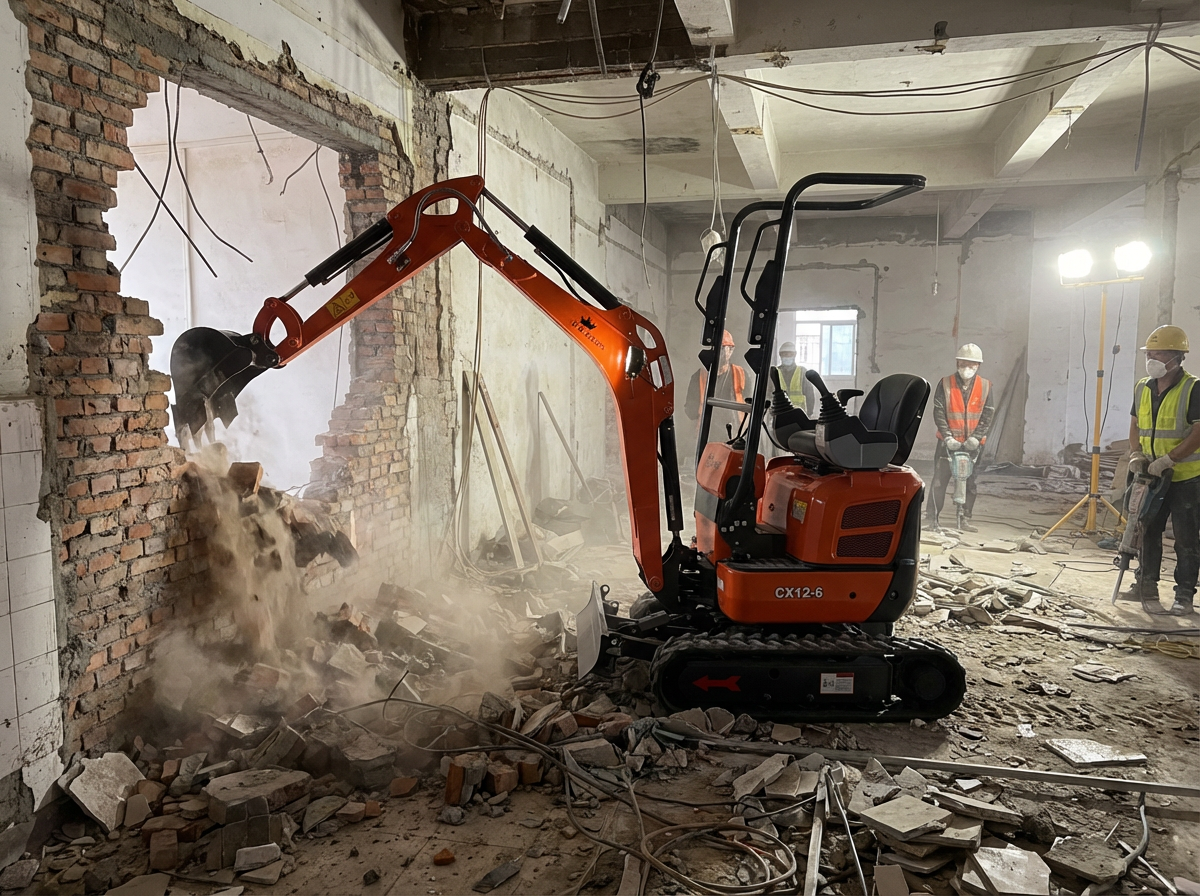
In field conditions, yes. Dust, grass, soil particles and construction debris accumulate between radiator fins and cooling cores. Mini excavators typically use stacked cooling modules (radiator, oil cooler, intercooler). Restricted airflow through one layer reduces total cooling efficiency.
Symptoms include:
Gradual temperature increase over several hours
Fan running continuously at maximum speed
No visible coolant leakage
Inspection should include separation and cleaning of cooling cores, not only surface air blowing.
Yes. Mechanical or electric fans must maintain sufficient airflow at low travel speeds. Common issues include:
Worn fan belts (in belt-driven systems)
Damaged fan blades
Electrical faults in temperature-controlled fans
Incorrect fan shroud alignment
Reduced airflow under continuous load prevents stable heat exchange, especially in confined urban environments with limited natural ventilation.
Modern mini excavators complying with Stage V regulations defined by the European Commission and EPA Tier 4 Final standards regulated by the Environmental Protection Agency often include Diesel Particulate Filters (DPF) and, in some models, Exhaust Gas Recirculation (EGR).
These systems introduce additional thermal considerations:
DPF regeneration raises exhaust temperature
EGR increases cooling system heat load
Exhaust back pressure may elevate combustion temperature
During active regeneration combined with heavy digging, overall heat rejection demand increases significantly.
Hydraulic oil coolers are typically positioned within the same airflow path as the engine radiator. If hydraulic oil temperature rises excessively due to high pressure or continuous auxiliary attachment use:
Oil cooler transfers additional heat into cooling airflow
Radiator efficiency decreases
Coolant temperature subsequently rises
Breaker operation is a common scenario where hydraulic heat generation exceeds cooling design margins.
Yes. Even if airflow is adequate, restricted coolant circulation reduces heat transfer efficiency. Potential causes include:
Partially blocked radiator core
Worn or damaged water pump impeller
Thermostat malfunction (stuck partially closed)
Air trapped within cooling system
Continuous operation amplifies these issues because temperature rise is cumulative over time.
High ambient temperature reduces the temperature gradient between coolant and surrounding air. Heat dissipation efficiency decreases as external temperature rises. In hot climates:
Cooling capacity margin narrows
Hydraulic oil viscosity drops more rapidly
Thermal runaway risk increases during sustained excavation
Machines operating in enclosed demolition sites or under direct sunlight are particularly vulnerable.
Yes. If hydraulic pump displacement demands exceed available torque, the engine operates at elevated load continuously. This increases fuel injection rate and combustion temperature. Over time, cooling capacity may be insufficient to stabilise the system.
Symptoms include:
Engine labouring under constant digging load
Noticeable rpm drop before temperature alarm
Hydraulic system operating near relief pressure limits
Correct pump calibration relative to engine torque curve is essential for thermal stability.
A structured engineering assessment should include:
Measure coolant temperature rise over time under controlled load.
Inspect cooling stack cleanliness and airflow integrity.
Check hydraulic oil temperature during peak demand.
Verify thermostat opening temperature.
Examine water pump function and coolant circulation.
Review ECU data for regeneration cycles or derating history.
Isolated component replacement without system-level analysis often fails to resolve recurring overheating.
Clean cooling modules regularly in dusty environments.
Avoid prolonged idling followed by sudden heavy load.
Allow proper DPF regeneration completion.
Monitor hydraulic pressure to prevent continuous relief valve operation.
Maintain correct coolant concentration and eliminate trapped air.
Continuous operation exposes the thermal limits of compact excavators. Overheating is typically the result of accumulated inefficiencies in airflow, coolant circulation, hydraulic heat generation and emission-related thermal load. Effective diagnosis requires analysing the entire thermal system rather than focusing solely on the radiator or thermostat.

