A construction equipment supplier of construction machinery solutions for 30 years. WhatsApp:+86-18968212829
Language
A construction equipment supplier of construction machinery solutions for 30 years. WhatsApp:+86-18968212829
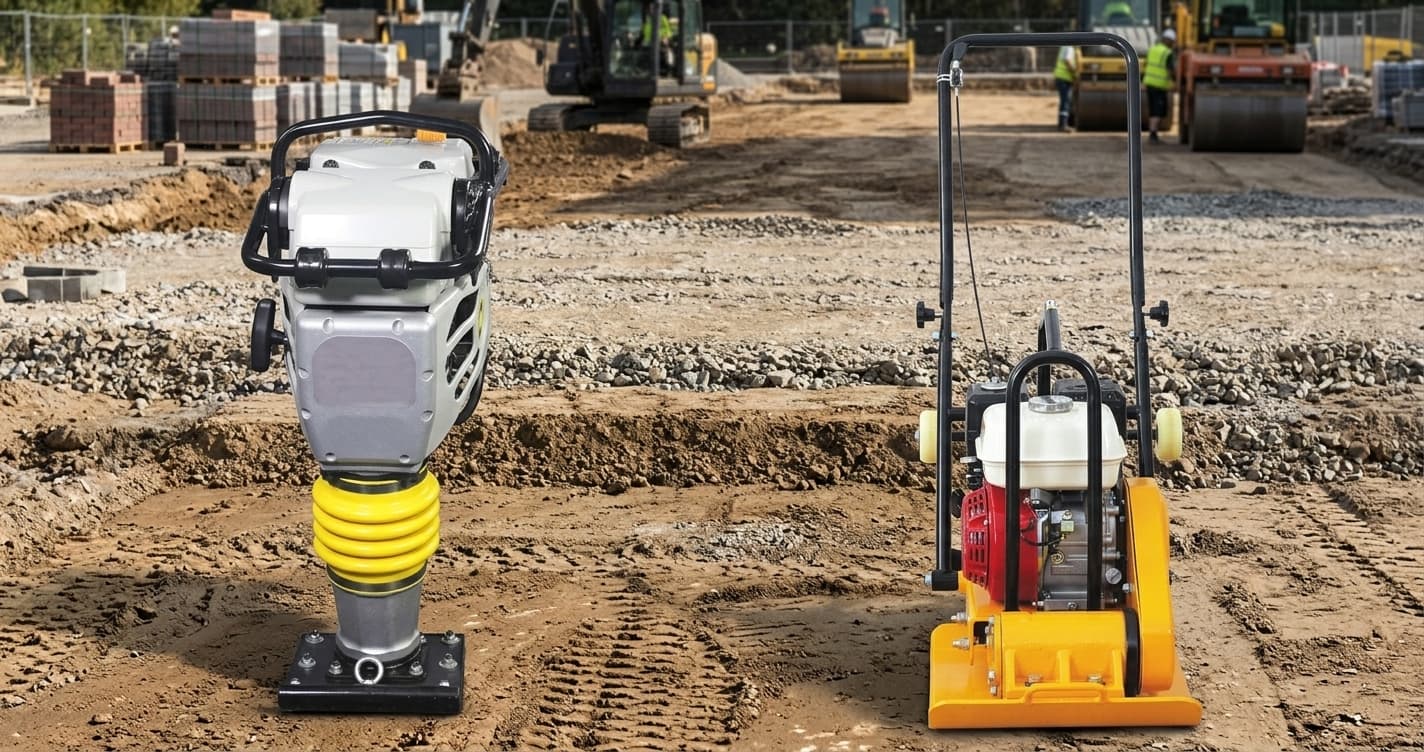
Picture this: you've just finished backfilling a trench, the surface looks tight, the crew is happy, and three months later — a sinkhole. Nobody wants that conversation with the client. More often than not, the culprit isn't the fill material or the crew's effort. It's the wrong machine for the job. Choosing between a rammer and a compactor might seem like a minor detail, but on a construction site, minor details have a way of becoming very expensive lessons. This guide breaks down the real differences so you can make the right call before the concrete gets poured — not after.
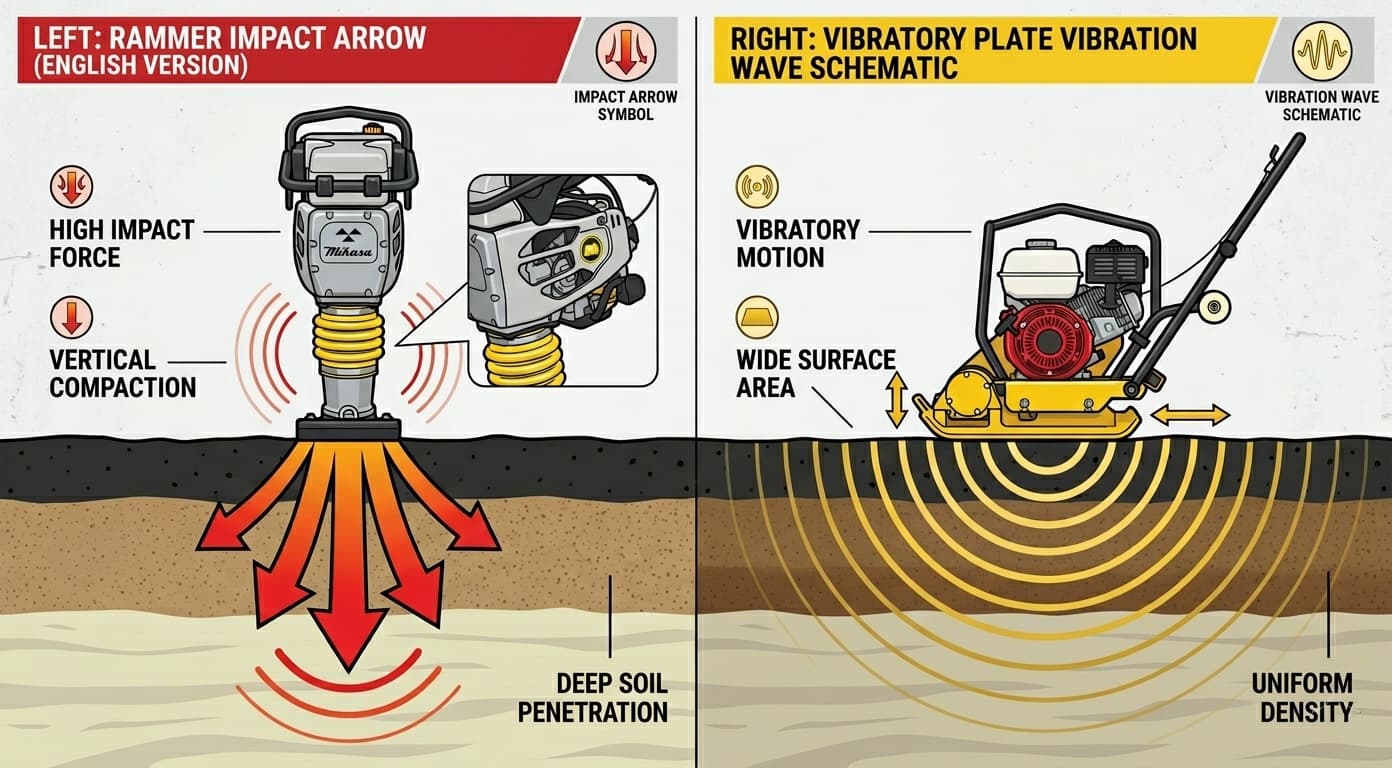
At first glance, a rammer and a plate compactor seem like they're playing the same game: both compress soil, both run on gasoline or diesel, and both vibrate enough to rattle your fillings loose. But the way they compact soil is fundamentally different, and that difference is the whole story.
A tamping rammer — often called a jumping jack, which is arguably the best nickname in construction equipment — works by hammering the ground repeatedly. A spring mechanism launches the machine upward and drives it back down onto a narrow baseplate at anywhere between 500 and 750 blows per minute. Think of it as a relentless, tireless pile driver that fits in a trench. That concentrated, high-energy impact is precisely what breaks apart tightly bonded soil particles and forces out trapped air and water.
A plate compactor, on the other hand, vibrates rather than pounds. An internal rotating weight generates oscillations that travel through a wide flat steel plate into the soil beneath. Those vibrations cause soil particles to momentarily lose their grip on each other, allowing them to shift and lock into a denser arrangement. It covers ground quickly and evenly — which is great for large open areas, and not so great when you're working in a two-foot-wide trench.
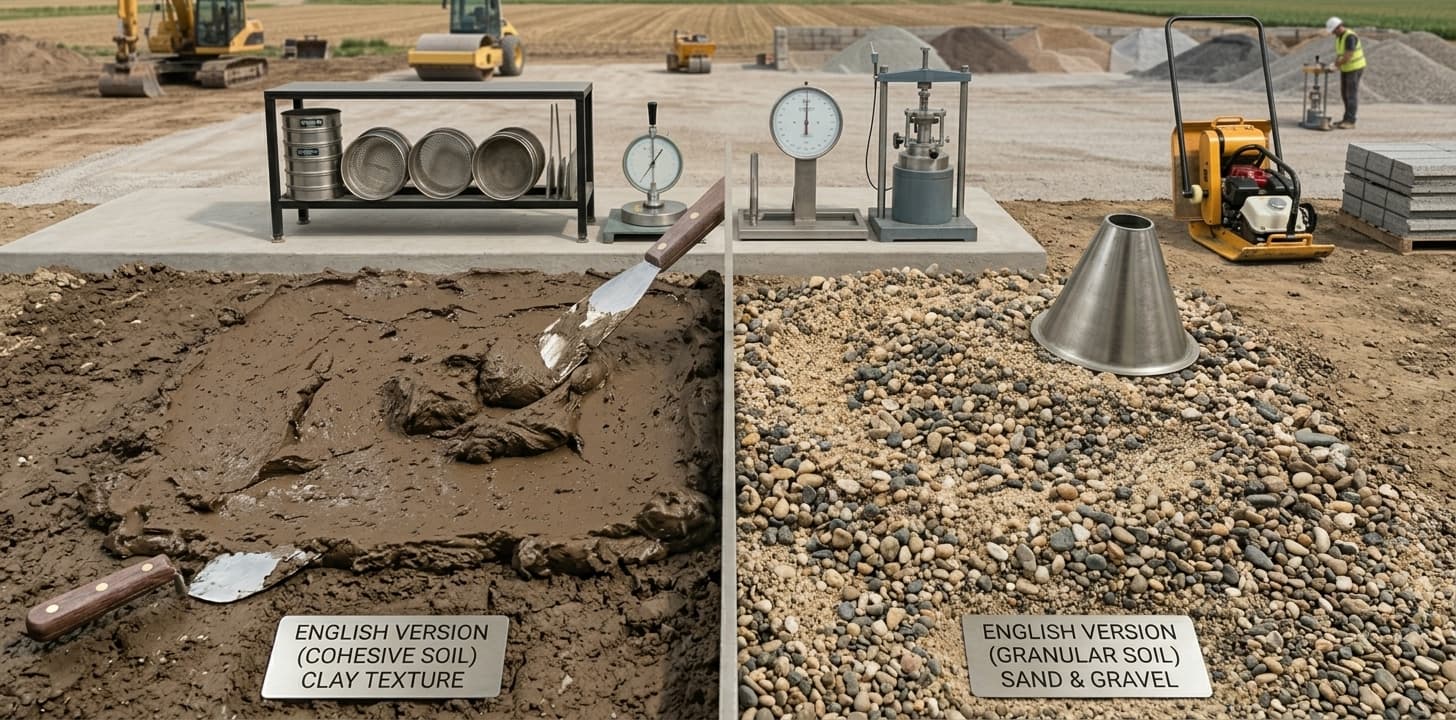
Here's the part that a lot of guides gloss over: soil type isn't just one factor among many. It's the deciding factor. Getting this wrong doesn't just reduce efficiency — it can actively make the compaction worse.
Clay and silt particles bond together through surface chemistry, not friction. They're stubborn, they hold moisture, and they don't respond well to vibration — which is exactly why sending a plate compactor into a clay-filled trench is a losing battle. What cohesive soil needs is direct, repeated impact to physically break down the particle bonding and push out the air voids. That's the rammer's job description.
There's a moisture factor here that often gets ignored. Clay compacts best at an optimal moisture content — roughly 13 to 15 percent for most clay-dominant soils. At that moisture range, a rammer can achieve compaction depths of 8 to 12 inches per lift. Too wet, and the soil becomes plastic and won't hold density. Too dry, and the particles resist compaction entirely. Getting a quick Proctor test done before work begins saves far more time than it costs.
Sand, gravel, and crushed aggregate work on friction between particles. When vibration hits these materials, it briefly overcomes that friction and lets the particles rearrange themselves into the tightest possible formation — like shaking a jar of pebbles until they settle. A plate compactor running at 75 to 100 Hz does this across a wide area, consistently and quickly.
What happens if you use a rammer on granular soil? The narrow foot punches down and displaces material outward rather than compressing it downward. You end up with a hole surrounded by loose soil that looks compacted on the surface but absolutely isn't. It's one of those field mistakes that's hard to spot and easy to regret.
| Factor | Tamping Rammer | Plate Compactor |
|---|---|---|
| How it compacts | Percussive impact (500–750 BPM) | Vibration (75–100 Hz) |
| Best soil type | Cohesive — clay and silt | Granular — sand, gravel, crushed stone |
| Max lift depth | 8–12 inches per pass | 6–8 inches standard; up to 12 in. for reversible models |
| Coverage speed | Slower — best for confined areas | 3–4× faster across open flat surfaces |
| Typical weight | 130–200 lbs | 150–700 lbs depending on model |
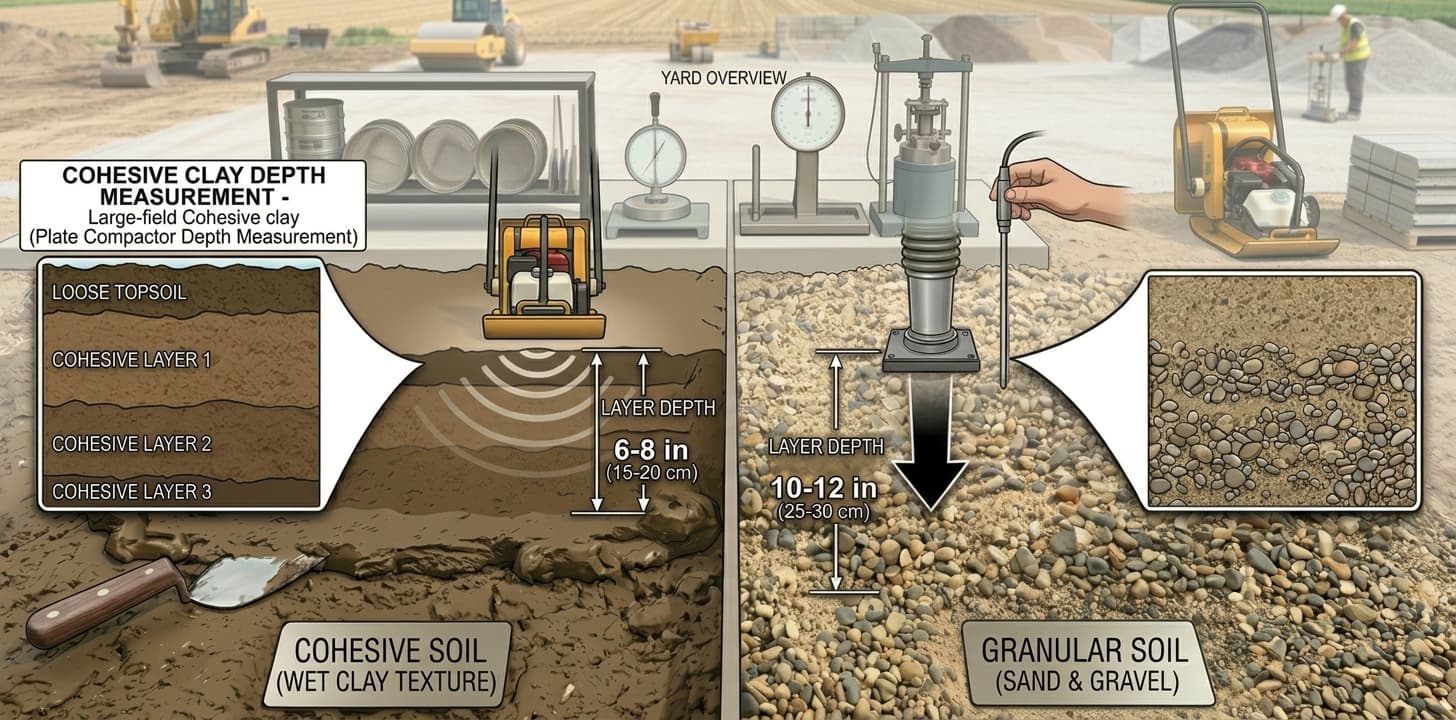
One of the most common mistakes on compaction jobs is trying to compress too much material in a single pass. It's understandable — fewer lifts means less time. But physics doesn't negotiate. A plate compactor can only drive its vibration energy so deep before it runs out of steam. Push past that depth, and you get a dense crust on top sitting over loosely compacted material underneath. That interface becomes a failure plane the moment any load is applied.
For a standard plate compactor, the practical limit is 6 to 8 inches of loose material per lift. Reversible plate compactors with higher centrifugal force can push that to around 10 to 12 inches in well-graded granular material. A rammer, because its impact energy travels more vertically and with greater force per unit area, handles lifts of up to 10 to 12 inches in cohesive fill — which is a meaningful advantage in deep trench backfill, where every saved lift cycle cuts real labor time.
The other common trap is judging compaction by appearance. A smooth, firm-looking surface tells you very little about what's happening 6 inches down. Running a nuclear density gauge or a sand cone test at depth is the only reliable confirmation — and it's worth doing on any job where settlement would be a problem.
Let's be direct about this, because it's more serious than most guides suggest. Using a plate compactor on clay-heavy trench backfill is one of the most frequently seen causes of post-construction differential settlement. The vibration compacts whatever granular material is present in the mix but leaves cohesive pockets loosely bound underneath. Six months later, the road surface drops, the service pipe shifts, and the repair bill arrives with the client's frustration attached.
The reverse problem — using a rammer on a granular sub-base for block paving or a driveway — produces uneven density across the slab. Some spots compact well where the foot hit directly; the areas between passes don't. Once traffic loading begins, point settlement and cracked joints follow. It's the kind of failure that's easy to blame on material quality when the real cause was equipment selection.
There's also a machine wear angle worth mentioning. Running a rammer on granular material accelerates wear on the foot plate and the spring assembly, because the machine fights material displacement rather than compaction resistance. Using the wrong tool doesn't just produce poor results — it shortens equipment life faster than the rental company will appreciate.
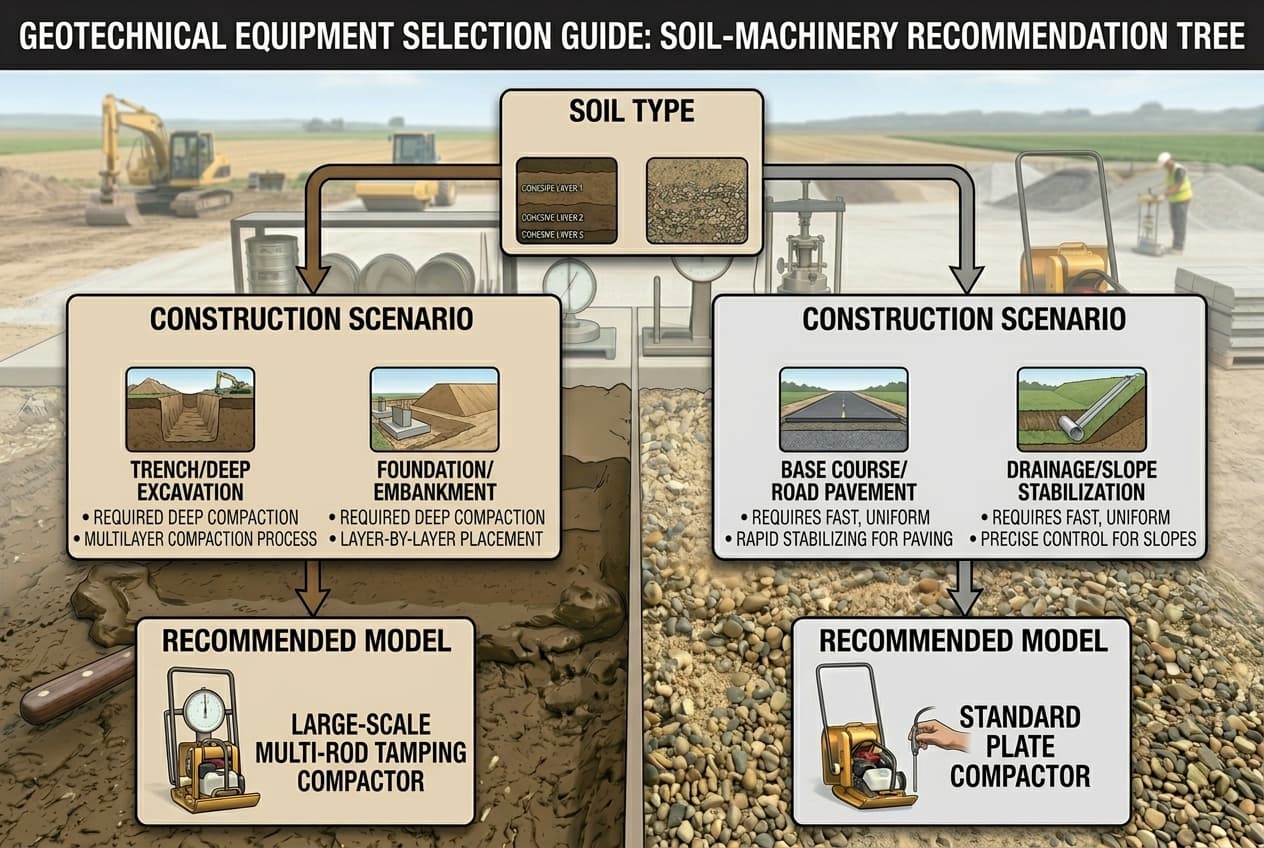
The decision framework is simpler than it might look. If you're working in a trench, around a foundation, or in any confined space with cohesive or mixed fill — the rammer is your machine. Its narrow profile, high impact force, and deep penetration make it the only practical choice in these conditions. If you're preparing an open sub-base for a road, parking lot, patio, or driveway using granular base material, the plate compactor is faster, more consistent, and better suited to the material's behavior under vibration.
Many experienced contractors keep both machines on hand, because many sites have both conditions. That's not redundancy — that's being prepared. A rammer and a plate compactor together cover nearly every compaction scenario you'll encounter in general contracting, and the combined cost is far lower than the cost of a single failed compaction job.
The rammer vs. compactor debate isn't really about which machine is better. It's about understanding that compaction is a material science problem, and the right equipment is whatever matches the physics of the soil on your specific site. Get that right, and everything built on top of it has a fighting chance.
Quick field tip: always cross-reference your geotechnical report's Proctor compaction data with the manufacturer's recommended lift depth for the specific machine you're using. Those two numbers together will prevent most compaction failures before they ever start.

