Product knowledge popularization
A construction equipment supplier of construction machinery solutions for 30 years. WhatsApp:+86-18968212829
Language
A construction equipment supplier of construction machinery solutions for 30 years. WhatsApp:+86-18968212829
The machine has a heavy flat steel plate at the bottom. A small petrol or diesel engine spins an off-centre weight inside, creating strong up-and-down vibration. This vibration, together with the machine’s own weight, pushes soil particles closer and removes air gaps. Most models vibrate between 4000 and 5800 times per minute, and the force they produce is measured in kilonewtons (kN). Higher force means deeper compaction in one pass.
Different plate sizes also change how the machine behaves. Narrow plates (around 35–50 cm wide) reach tight corners well, while wider plates (up to 67 cm) cover more ground faster. Shock-absorbing rubber mounts keep most of the shaking away from the operator’s hands so the work feels less tiring.
Contractors use vibratory plate compactors for many everyday tasks. They prepare bases under garden paths, driveways, patios and small road repairs. Sand and gravel respond best because the vibration helps the grains lock together tightly. Dry concrete mixes with small stones also compact well for footings and slabs.
For asphalt work the situation changes. Hot or cold asphalt sticks to a dry plate and makes uneven surfaces. That is why models with a built-in water tank spray a thin film of water to stop sticking and reduce dust at the same time.
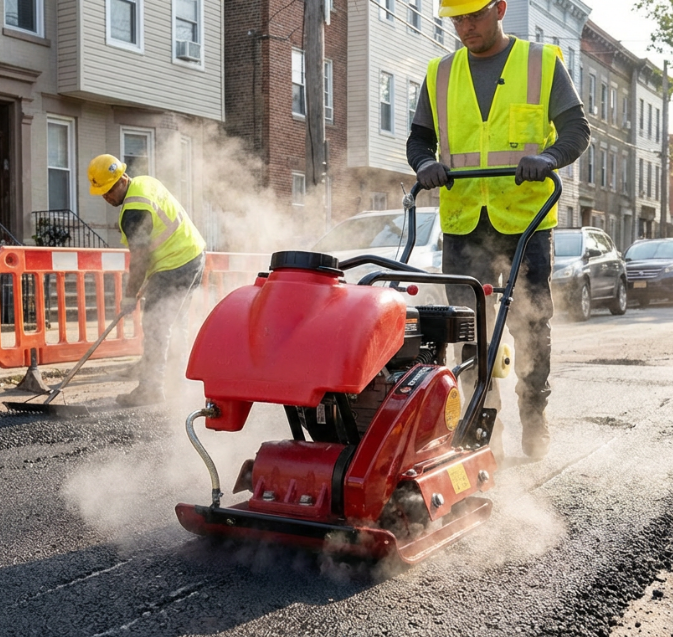
Single-direction models only move forward. They are lighter (usually 65–120 kg) and easier to carry with foldable handles or small wheels. These suit open flat areas such as driveways or landscaping where you can walk in straight lines.
Reversible plate compactors move forward and backward, and many can vibrate in one spot. This saves a lot of time in narrow trenches, along walls, around foundations or in tight backfill zones where turning the machine by hand is difficult. Heavier reversible units (125–330 kg) deliver stronger force (25–38 kN) and reach compaction depths up to 90 cm, making them the better choice for deeper or confined work.
Always start with the correct material thickness. Spread soil or gravel in layers no thicker than the machine can handle (normally 20–40 cm depending on force). Make three or four overlapping passes over each layer while walking at a steady speed.
Check soil wetness first. Very wet coarse gravel can make the plate bounce and refuse to move forward smoothly. For asphalt, open the water tank valve and keep the tank filled. Without water the plate drags and leaves rough marks.
Wear gloves, ear protection and strong boots every time. After finishing, clean mud and stones off the plate and frame so nothing hardens and causes trouble next time.
The biggest benefit is fast, reliable ground improvement that stops future settlement. Reversible models finish jobs quicker in tricky spaces and reduce operator effort. Wider plates and higher centrifugal force raise daily output, sometimes reaching 500–650 square metres per hour.
Choosing the correct machine also saves money. A model matched to the soil type, depth needed and site size avoids extra passes, fuel waste and rework. Features like oil protection switches and durable base plates keep repairs low over years of use.
Look at all bolts after every job and tighten any that feel loose. Loose fixings reduce power and can break expensive parts. Change engine oil after the first two weeks of use, then every three to five months.
In dusty conditions clean or replace the air filter often. If the engine will not start, check fuel, spark plug and carburettor first – most problems come from these three areas.
A well-maintained plate compactor delivers steady performance across sand, gravel, mixed soils and asphalt. Matching centrifugal force, plate width, direction type and water tank to your real working conditions gives the best speed, finish quality and long-term value on every project.

