Product knowledge popularization
A construction equipment supplier of construction machinery solutions for 30 years. WhatsApp:+86-18968212829
Language
A construction equipment supplier of construction machinery solutions for 30 years. WhatsApp:+86-18968212829
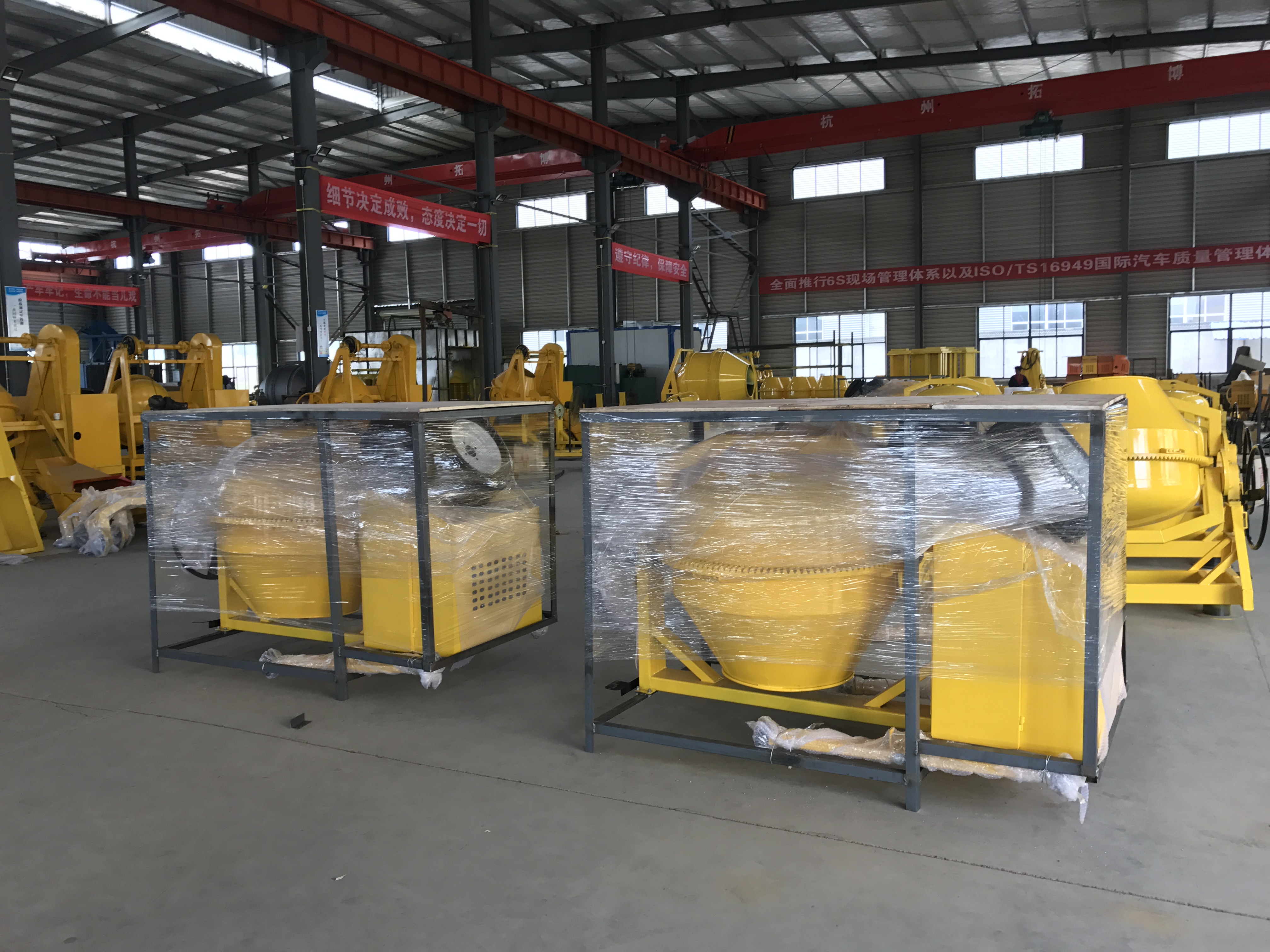
A concrete mix ratio chart is useful, but it is only half the story. The ratio tells you how much cement, sand and aggregate should go into the mix. The concrete mixer tells you how much of that mix can actually be blended properly in one batch. When those two things do not match, the result is familiar: the first wheelbarrow looks wet, the last one looks dry, and everybody on site suddenly becomes a concrete expert.
For contractors, rental companies and equipment buyers, the real question is not just “What is the best concrete mix ratio?” It is “Can this mixer produce that ratio again and again without overloading, slipping, choking or wasting material?” That is why this guide connects the concrete mix ratio chart with mixer batch size, water control and practical purchasing checks.
The ratios below are common field references. They are usually measured by loose volume, such as buckets, and written as cement : sand : coarse aggregate. They are useful for planning small site batches, but they should not replace a project mix design for structural concrete or regulated work.
| Mix Ratio | Common Use | Buyer Note |
|---|---|---|
| 1:1.5:3 | Stronger slabs, footings, heavier site work | Needs careful water control and good compaction |
| 1:2:3 | General slabs, paths, small foundations | A balanced site mix when project specs allow it |
| 1:2:4 | Light-duty slabs, posts, basic repair jobs | Easier to place, but not for high-load work |
| 1:3:6 | Lean concrete, bedding, blinding layers | Low-strength support layer, not a structural mix |
A ratio is not a magic spell. If the sand is wet, the stone is dirty, the drum is overloaded or the operator keeps “helping” with extra water, the same ratio can behave very differently. Concrete has a sense of humor, but sadly it mostly shows it after curing.
Water makes concrete workable, but too much water can quietly steal strength. The American Concrete Institute defines the water-cementitious material ratio, or w/cm, as the mass of mixing water divided by the mass of cementitious material. That means water should be controlled by weight or a repeatable measuring method, not by mood.
The American Cement Association explains that a typical concrete mixture is roughly 7% to 15% cement, 60% to 75% aggregate and 14% to 21% water by volume, with entrained air sometimes adding up to another 8%. This shows why water deserves respect. It is not the biggest ingredient by volume, but it has a large effect on workability, paste quality and durability.
| Water Condition | What You See in the Mixer | What May Happen Later |
|---|---|---|
| Too little water | Harsh mix, poor coating, difficult discharge | Voids, honeycombing, poor finish |
| Controlled water | Cohesive mix, steady flow, even coating | Better strength and consistency |
| Too much water | Easy discharge, very fluid mix | More shrinkage, lower durability, cracking risk |
If water must be adjusted after mixing starts, do it slowly and mix again. The NRMCA notes that water additions should stay within the mix design limit, and adjusted batches should receive at least 30 mixer revolutions at mixing speed to regain uniformity.
One of the most common buying mistakes is assuming that a 350L concrete mixer makes 350L of finished concrete per batch. It does not. Drum volume, loading capacity and discharge capacity are different things. A mixer needs empty space inside the drum so the material can fold, tumble and coat properly. Fill it to the mouth and it stops mixing; it just complains in circles.
Before choosing a machine, ask for rated discharge capacity, not only drum size. That number is closer to what the buyer can actually plan around.
| Mixer Class | Suitable Job Type | What to Check Before Buying |
|---|---|---|
| 350L mixer | Small slabs, repairs, posts, farm jobs, rental use | Real discharge capacity, motor power, wheel strength |
| 400L mixer | Regular contractor work, small commercial pours | Drum thickness, gear ring quality, blade design |
| 500L mixer | Higher daily output on small and medium sites | Loading height, power source, frame stability |
For more detail on this topic, ACE’s guide to concrete mixer capacity explains why rated output matters more than the number printed beside the drum.
Start with the ratio, then match it to the mixer’s working capacity. For a 1:2:3 mix, every 1 part of cement needs 2 parts sand and 3 parts coarse aggregate. If the measuring container is a 10L bucket, one small batch may begin with 10L cement, 20L sand and 30L coarse aggregate, then water is added gradually.
The final wet concrete volume will not equal the dry ingredient volume. Sand fills gaps between stones, cement fills smaller gaps, water activates the paste, and the whole pile settles into something more compact. Concrete does not care about neat arithmetic. It prefers physics.
A practical batching method is:
Choose the ratio allowed for the job.
Confirm the mixer’s rated loading and discharge capacity.
Use one fixed bucket or container for all dry materials.
Add only part of the water first.
Load materials gradually, not in one heroic dump.
Adjust water slowly and record the repeatable batch.
A good concrete mix ratio can still fail if the loading order is poor. For most portable drum mixers, start with part of the water, add some coarse aggregate, then add sand and cement, followed by the remaining aggregate. Add the rest of the water slowly after the materials begin to blend.
This sequence helps prevent cement from sticking to the drum and reduces dry pockets. If the mixer struggles, do not immediately add more water. First check whether the batch is too large, the drum angle is wrong, the blades are worn or the material was added too fast. For the full operating process, use ACE’s guide on how to mix concrete in a mixer.
| Mistake | Why It Hurts | Better Practice |
|---|---|---|
| Overloading the drum | Materials roll instead of mixing | Stay within rated loading capacity |
| Adding water by eye | Workability improves, strength may drop | Measure water and adjust gradually |
| Ignoring wet sand | Hidden water changes the real w/cm | Reduce added water when sand is damp |
| Mixing too briefly | Paste does not coat aggregate evenly | Follow mixer guidance and check consistency |
| Using one ratio for every job | Different jobs need different performance | Match the ratio to the application |
| Buying only by drum size | Output may be lower than expected | Compare discharge capacity and power |
If the recipe is right but the mix is still poor, the problem may be mechanical. Belt slip, worn blades, wrong drum speed or gear wear can all affect mixing quality. ACE’s concrete mixer troubleshooting guide is the better page for diagnosing those faults.
For dealers, rental companies and contractors, a concrete mixer is not just a drum with a motor. It is a repeatability tool. If operators cannot make similar batches every day, the machine will create arguments faster than it creates concrete.
| Buyer Question | Specification to Check | Why It Matters |
|---|---|---|
| Can it handle common mix ratios? | Loading capacity and blade design | Prevents dry pockets and overload |
| Will output match daily site demand? | Discharge capacity and cycle time | Helps estimate real productivity |
| Is maintenance simple? | Gear ring, belt, bearing and lubrication access | Reduces downtime |
| Does the power source fit the market? | Electric, gasoline or diesel | Matches jobsite power conditions |
| Is it easy to move? | Frame, wheel size and balance | Important for rental and small crews |
| Is support available? | Parts, documents and inspection help | Protects long-term ownership cost |
If you are comparing machines, start with ACE’s concrete mixer manufacturers page. For jobsite selection, read the portable concrete mixer buying guide. Before placing a bulk order, the concrete mixer inspection checklist is the page to keep beside the quotation.
For general site work, 1:2:3 is a common reference ratio for cement, sand and coarse aggregate. For lighter work, 1:2:4 may be used. For structural concrete, always follow the project specification or an engineered mix design.
In general, 1:2:3 contains more cement paste relative to aggregate, so it is often used for stronger site concrete. Final strength still depends on water control, aggregate quality, compaction and curing.
Usually no. A 350L drum does not mean 350L of finished concrete per batch. Buyers should ask for rated loading capacity and discharge capacity.
Extra water increases workability at first, but it can weaken the cement paste and increase shrinkage. That is why water should be measured and adjusted carefully.
Field mixes often use volume, such as buckets. Professional mix designs usually use mass, especially when calculating water-cementitious material ratio.
Check rated discharge capacity, drum thickness, blade design, motor or engine power, gear quality, spare parts support and maintenance access. The cheapest mixer is not always cheap after the first repair bill.

