Concrete Mixer Batch Size Guide: 350L, 400L and 500L Drum Volume vs Output
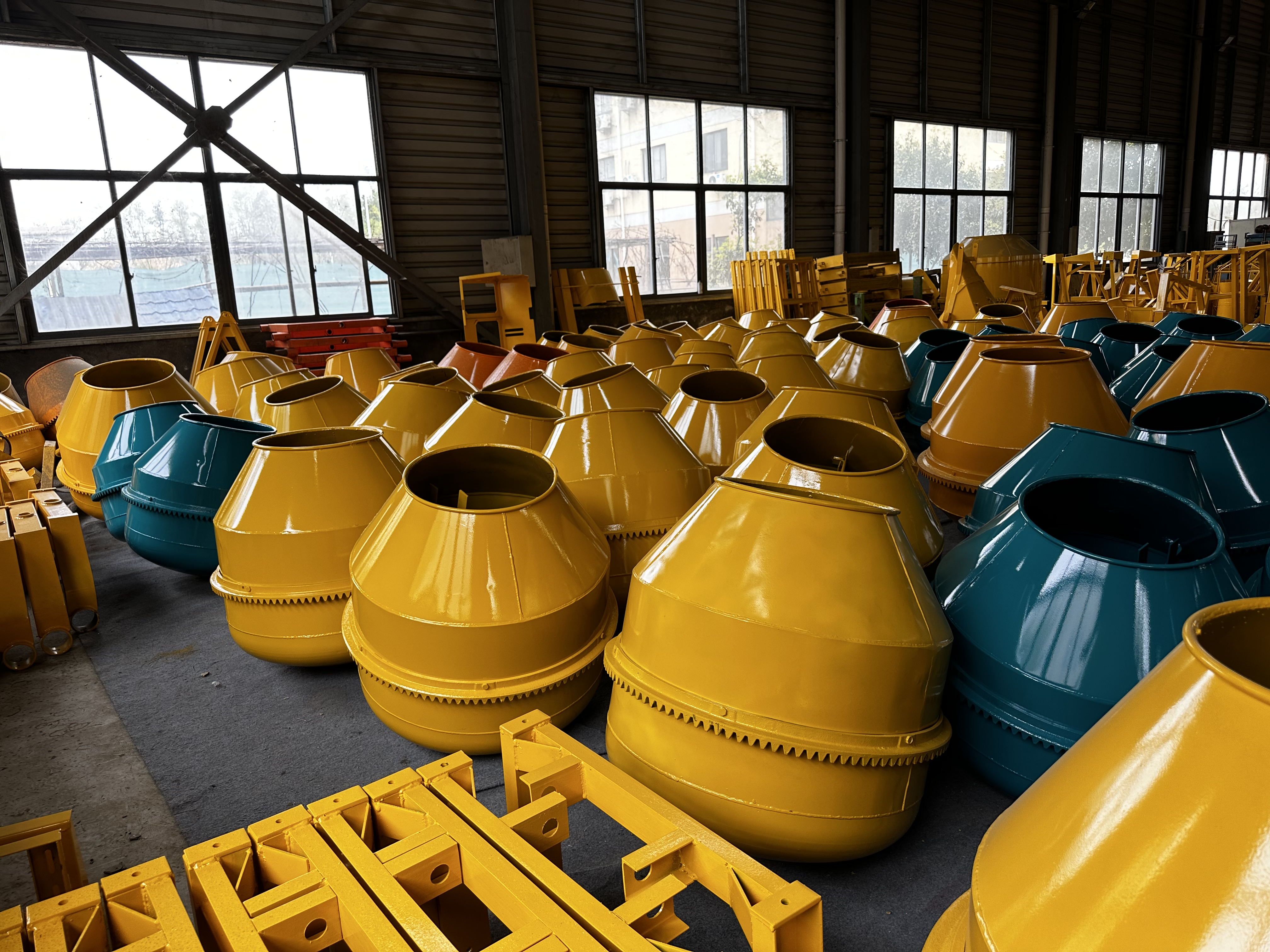
A concrete mixer batch size should not be guessed from the largest number printed beside the machine. A mixer sold as 350L, 400L or 500L may use that figure to describe drum volume, while the amount it can actually mix and discharge in one batch can be lower. That difference matters when a contractor is planning daily output or a dealer is comparing machines from two suppliers. Mix ratio matters too, but it answers a different question: the ratio tells you how the ingredients are proportioned, while usable batch capacity tells you how much the machine can handle without turning the drum into an overloaded cement carousel.
Concrete Mixer Volume Is Not the Same as Batch Output
The first thing to check is what the capacity figure actually means. Total drum volume describes the physical space inside the drum. Mixing capacity refers to the material the machine is intended to mix, while discharge capacity tells you how much mixed concrete can actually leave the machine after one cycle. Those figures may be close on some machines and quite different on others.
| Capacity Term | What It Describes | What the Buyer Should Ask |
|---|---|---|
| Total drum volume | Geometric space inside the drum | Is this only drum size or also the rated working capacity? |
| Mixing capacity | Material the mixer can handle during normal operation | Is this the recommended working load? |
| Discharge capacity | Mixed concrete leaving the drum per batch | What repeatable output can I use for site planning? |
| Hourly productivity | Output over several complete cycles | What cycle time and operating conditions were used? |
The distinction between gross volume and working volume is normal in professional concrete equipment. NRMCA requirements for truck mixers, for example, state that rated mixing capacity should not exceed 63% of gross drum volume; the limit rises to 80% when the drum is used as an agitator. Those percentages apply to truck mixers, not small portable 350L or 500L mixers, so they should not be used as a conversion formula. They do show why engineers treat gross drum volume and usable mixing capacity as two different numbers.
There is a physical reason for the gap. Concrete needs room to move. Aggregate has to lift, tumble and fall through the mix rather than simply rotate with the drum wall. NRMCA notes that aggregate normally makes up around 60–75% of concrete volume, so most of the material moving inside a mixer is stone and sand. Give that material too little room and a bigger load can produce worse mixing rather than more useful output.
For a deeper comparison of rated size and real site productivity, see the ACE guide to concrete mixer capacity and output efficiency.
How Should You Compare 350L, 400L and 500L Concrete Mixers?
The current ACE concrete mixer range includes 350L, 400L and 500L classes, with diesel, petrol and electric power options. The size class is useful for making a shortlist, but it is not enough to calculate how many batches a project will need.
| Mixer Class | Where It May Fit | Check Before Ordering |
|---|---|---|
| 350L | Small concrete work, repairs, posts and mobile contractor jobs | Usable batch capacity, discharge method, power and wheel setup |
| 400L | Regular site batching and repeated contractor work | Working capacity, blade layout, ring gear, frame and engine or motor |
| 500L | Jobs requiring larger repeated batches | Actual discharge volume, loading height, power demand and transport |
These are purchasing categories rather than engineering rules. A 350L mixer with an efficient loading system may suit one crew better than a larger machine that spends half its day waiting for materials. Before comparing quotations, ask each supplier to state the usable mixing or discharge capacity in the same terms. Otherwise, you may be comparing litres with litres and still comparing two different things.
Where Does the Concrete Mix Ratio Fit In?
A concrete mixer ratio describes ingredient proportions, not machine capacity. A nominal 1:2:3 field mix, for example, means one part cement, two parts sand and three parts coarse aggregate when the same volumetric measuring method is used.
If one 10-litre bucket is used as the measuring unit, the dry materials would start as 10 litres of cement, 20 litres of sand and 30 litres of coarse aggregate. Water should not simply become a fourth number in that ratio. It needs separate control.
Nor should the 60 litres of dry ingredients be mistaken for 60 litres of finished concrete. Fine particles fill spaces between coarse aggregate, cement paste fills smaller voids, and the materials settle during mixing. Anyone who has loaded a mixer knows that concrete is quite good at making a neat arithmetic total disappear.
If you need the ratio side in more detail, including 1:2:3 and 1:2:4 references, use the ACE concrete mix ratio chart. For structural work, however, follow the project specification and approved mixture design rather than choosing a nominal ratio simply because it is familiar.
Water-Cement Ratio: The Part You Cannot Judge by Eye
ACI defines the water-cementitious materials ratio, or w/cm, as the mass of mixing water divided by the mass of cementitious materials. If 50 kg of cementitious material is used with a w/cm of 0.50, the corresponding mixing water is 25 kg. The real calculation also has to consider free water carried into the mixer by the aggregates.
Wet Sand Can Add More Water Than You Think
An ACI worked example shows how large that correction can become. In its SI calculation, the batch contained 770 kg of oven-dry fine aggregate with 6.0% total moisture and 1.0% absorption. The fine aggregate contributed 38.5 kg of free surface water. Coarse aggregate added another 11.3 kg, bringing aggregate free moisture to 49.8 kg. To keep total mixing water at the specified 190 kg, the separately batched water had to be reduced to about 140 kg.
Those figures are an ACI calculation example, not a claim that every wet stockpile contains the same amount of water. The practical lesson is simpler: the shovel count can stay exactly the same while the real water content changes considerably. After rain, the mixer operator may need to adjust water even though nothing else in the recipe appears to have changed.
| ACI Example | Published Value |
|---|---|
| Fine aggregate total moisture | 6.0% |
| Fine aggregate free water | 38.5 kg |
| Coarse aggregate free water | 11.3 kg |
| Total aggregate free water | 49.8 kg |
| Water added separately | About 140 kg to maintain 190 kg total mixing water |
Why Adding “Just a Little More Water” Can Change the Batch
The temptation is understandable. A stiff batch becomes easier to move as soon as more water enters the drum. NRMCA gives a useful field rule of thumb: roughly 5 litres of additional water per cubic metre of concrete can increase slump by about 25 mm (1 in.). That is enough for an operator to notice immediately.
But easier placement does not mean the concrete has improved. NRMCA warns that water added beyond the design mixing quantity can delay setting, reduce strength, harm durability and increase cracking potential. If the required workability cannot be reached while staying within the specified w/cm, the answer may be a suitable admixture or a mixture adjustment rather than another casual splash from the hose.
Ready-mixed concrete practice also shows that water adjustment is not finished the moment the valve closes. Under ASTM C94/C94M procedures cited by NRMCA, concrete receives an additional 30 mixer revolutions at mixing speed after jobsite water or admixture is added. That 30-revolution requirement applies to ready-mix truck concrete, not automatically to portable site mixers, but the principle travels well: added water still needs enough mixing to become part of the whole batch.
How to Calculate the Number of Mixer Batches
Once you know the verified discharge quantity, the calculation is straightforward:
Number of batches = concrete required ÷ usable discharged volume per batch
If a particular machine has been verified to discharge 0.28 m³ per batch and the project requires 1.40 m³, the crew needs five batches:
1.40 ÷ 0.28 = 5 batches
The 0.28 m³ figure here is simply a calculation example; it should not be treated as the standard output of every mixer in a particular size class. For real production planning, use the model datasheet or a measured site batch.
Hourly output also depends on loading, mixing, discharging and getting the next batch ready. A drum that looks impressive on paper is not especially productive while two workers wait for another wheelbarrow of aggregate.
Loading Order and Mixing Time Still Matter
Once batch size is under control, the process needs to stay repeatable. Materials should be measured consistently, water should be controlled rather than guessed, and the mixer should run long enough to produce a visibly uniform batch. There is no need to turn every load into a new experiment.
Loading sequence can vary with mixer design and material condition, so this article does not prescribe one universal order. The ACE guide on how to mix concrete in a mixer covers the operating process separately. If you are comparing mixing time and machine speed, the guide to concrete mixer drum speed explains why RPM alone does not tell you whether a batch is being mixed properly.
Common Mixer Batch Problems
| Problem | What Usually Goes Wrong | Better Check |
|---|---|---|
| Drum overloaded | Material has too little room to move and mix | Rated working or discharge capacity |
| Water added by eye | Actual w/cm and consistency can drift between batches | Measured water plus aggregate moisture |
| Wet sand ignored | Hidden free water enters the mix | Surface moisture condition |
| Batch mixed too briefly | Materials may remain unevenly distributed | Manufacturer guidance and batch uniformity |
| Drum litres used as output | Site production is overestimated | Verified mixing or discharge volume |
| One mix used for every job | Concrete may not meet project requirements | Specified performance and approved mix design |
What Should Buyers Check Before Ordering a Concrete Mixer?
For procurement, start with the work rather than the catalogue. How much concrete does the crew need per batch? How many batches must be produced in a shift? Will the machine run on electricity, petrol or diesel? Can the crew load it comfortably, move it around the site and obtain wear parts later?
Then check the machine itself: usable capacity, blade layout, drum and ring gear, engine or motor, frame, wheels, discharge mechanism and maintenance access. Dealers and rental fleets should pay particular attention to parts access because a slightly cheaper mixer becomes considerably less cheap when it spends two weeks waiting for a bearing or belt.
The ACE concrete mixer inspection checklist covers the mechanical points in more detail, while the portable concrete mixer buying guide is useful when portability and site conditions matter as much as drum size.
Concrete Mixer Batch Size FAQ
Can a 350L concrete mixer produce 350L of finished concrete?
Not necessarily. The 350L figure may describe total drum volume rather than usable mixing or discharge capacity. Check the manufacturer's definition before calculating batch output.
What is the difference between drum volume and mixing capacity?
Drum volume is the total internal space. Mixing capacity is the material the mixer can handle while leaving enough room for proper movement and mixing.
Does wet sand change the amount of water needed?
Yes. Free surface moisture in sand and coarse aggregate contributes to the mixing water. ACI requires that this water be considered when it materially affects the actual w/cm.
How much can a small water addition change concrete slump?
NRMCA gives a rule of thumb of about 5 L/m³ of water for roughly a 25 mm increase in slump. It is a field estimate, not permission to exceed the specified water content or w/cm.
Is 1:2:3 the best concrete mixer ratio?
No single nominal ratio is correct for every job. A 1:2:3 ratio is a common field reference, but structural concrete should follow the required strength, exposure conditions and approved mixture design.
Should I choose a 350L, 400L or 500L mixer?
Choose from the required usable batch output, daily production, site access, power source and transport needs. The litre class is a useful starting point, not the whole buying decision.
Tags: concrete mixer batch size, concrete mixer volume, 350L concrete mixer, 400L concrete mixer, 500L concrete mixer, concrete mixer output per batch, drum volume, concrete mixer capacity, concrete batching, concrete mixer buying guide

