A construction equipment supplier of construction machinery solutions for 30 years. WhatsApp:+86-18968212829
Language
A construction equipment supplier of construction machinery solutions for 30 years. WhatsApp:+86-18968212829
On a busy construction site, nothing kills momentum faster than a concrete mixer that can’t keep up with the pour schedule. Get the concrete mixer capacity wrong and you either wait endlessly for small batches or waste fuel and time on an oversized machine. Understanding concrete mixer capacity and output efficiency helps you match the machine to real job demands and keep concrete flowing smoothly.
Every concrete mixer machine lists two key volumes: loading capacity (how much raw material fits in the drum) and discharging capacity (the actual usable concrete you get per batch).
For example, a popular mid-size model loads 560 litres but discharges around 350 litres of finished mix. Why the difference? The drum needs space for materials to tumble properly. Overfill it and mixing becomes uneven; underfill and you lose efficiency.
Real output also depends on cycle time — loading, mixing, discharging, and a quick clean between batches. Most site mixers complete 20–30 cycles per hour under good conditions, but experienced operators plan for 80–85% efficiency to account for breaks, material delays, and site realities.
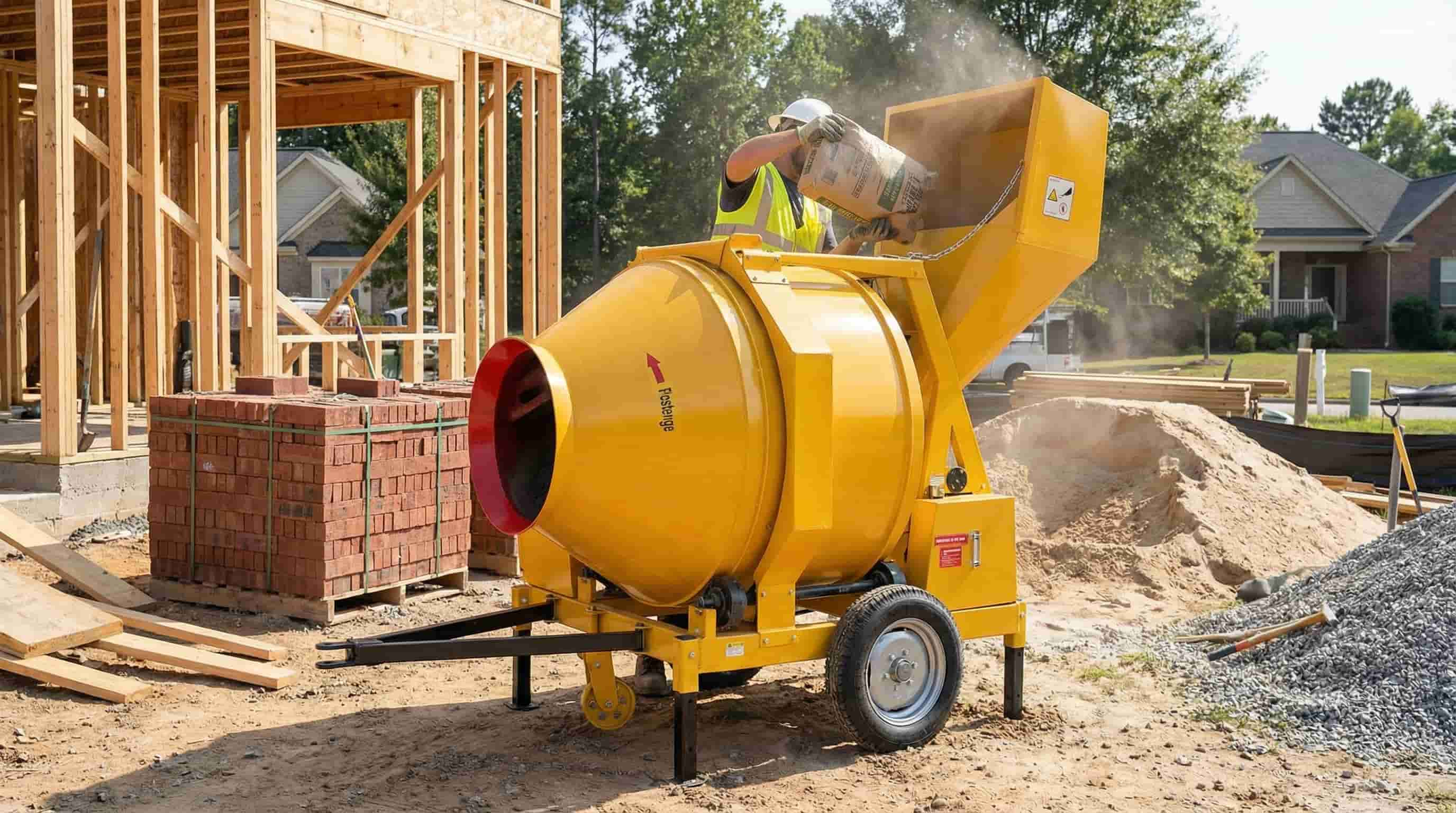
Small portable cement mixers (200–300L discharging) suit DIY jobs, small repairs, or remote sites with limited access. They produce 4–6 m³ per hour and handle 1 bag of cement per batch comfortably.
Mid-range machines (350L discharging, 560L loading) strike the sweet spot for most construction sites. With a reliable diesel or electric power system, they deliver 10–14 m³ per hour — enough for footings, slabs, driveways, or medium-sized pours without constant refilling. Many models process 2 bags of 50kg cement per batch.
Larger units (500–750L discharging) push 18–30 m³ per hour and work well for bigger projects or when speed really matters. However, they need more power, stronger frames, and careful matching to your daily target volume.
Bigger isn’t always better. An oversized drum on a small site means longer mixing times and higher fuel or power costs per cubic metre. A too-small mixer forces extra cycles, more labour, and higher risk of cold joints in the concrete.
Key factors that influence real-world efficiency include:
Drum rotation speed (typically 14–22 rpm for good blending without splashing)
Blade design and drum thickness (6–8 mm wear-resistant steel keeps performance consistent longer)
Power source — diesel engines shine on remote sites with strong torque; electric models offer steady output with lower running costs
Operator skill and site conditions — uneven ground or poor material flow can cut efficiency by 15–20%
Smart operators calculate daily needs first: target m³ per day divided by workable hours gives the required hourly output. Then they choose a mixer that comfortably hits that number at 80% efficiency.
Start with your pour schedule. A foundation job needing 40 m³ in an 8-hour day requires roughly 5–6 m³ per hour after breaks. A 350L machine with 10–14 m³/h potential handles it nicely with room to spare.
For scattered small pours across a large site, several smaller portable units often beat one large machine — you move the mixer instead of wheeling concrete long distances.
Always factor in aggregate size (up to 60 mm is common) and mix type. Stiffer mixes may need slightly longer cycle times, so plan conservatively.
Keep the drum clean between batches — dried residue slows mixing and reduces effective capacity
Use the right water pump and accurate measuring for consistent batches
Position the mixer close to the pour area and ensure stable, level ground for smooth operation
Choose hydraulic tipping hoppers on diesel models — they speed loading and discharging dramatically
Monitor tyre size and overall weight — heavier, well-balanced machines with chunky tyres maintain stability and consistent drum speed even when full
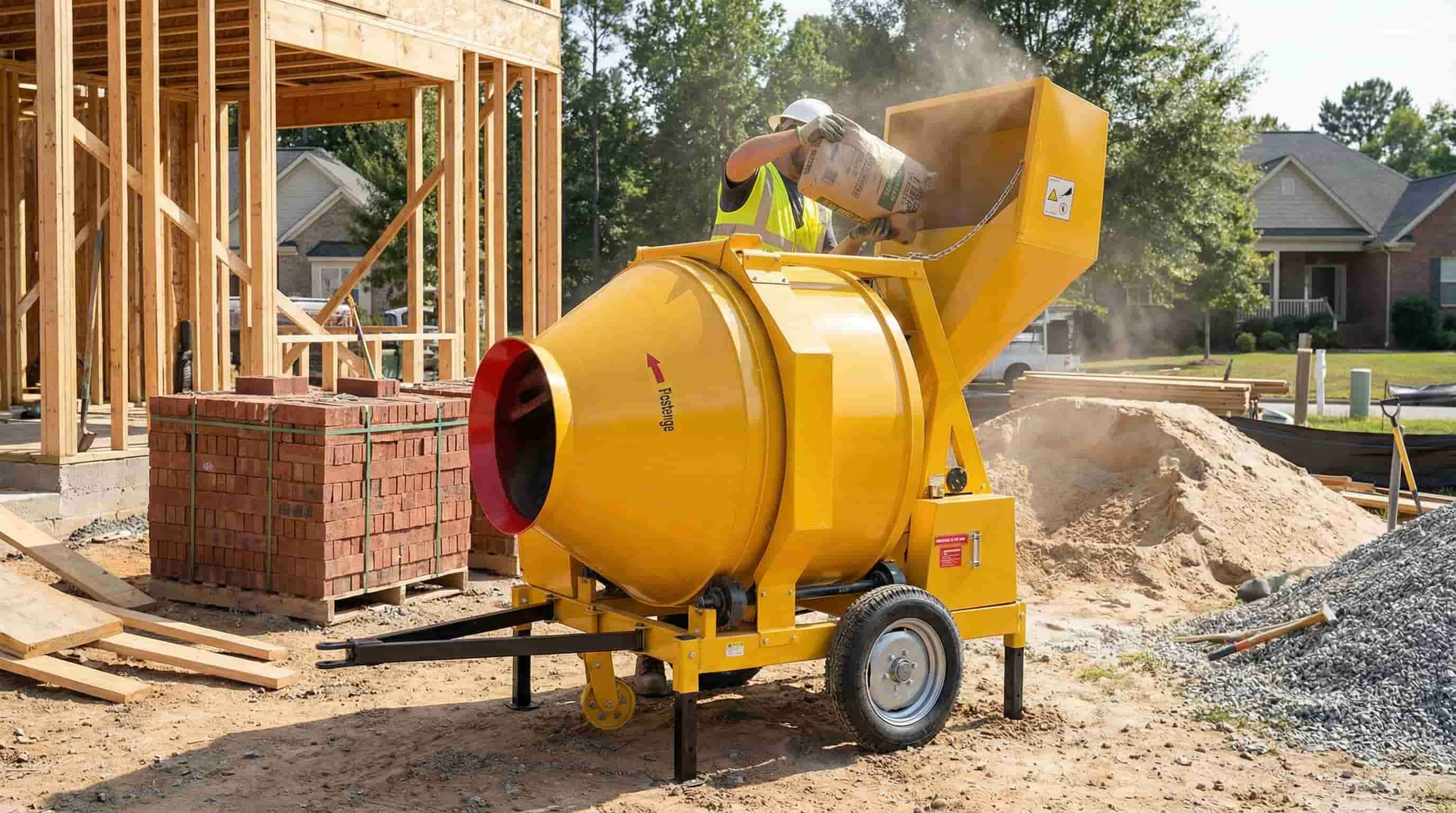
When concrete mixer capacity and output efficiency align with your actual needs, you reduce waiting time, cut labour hours, minimise material waste, and deliver stronger, more consistent concrete. Crews stay productive instead of standing around, and projects finish faster with fewer headaches.
Whether you run small repair jobs or medium construction sites, taking time to understand these numbers pays off batch after batch.
Ready to find the perfect match for your next project? Explore our range of reliable concrete mixer machines designed for real-world efficiency, or contact the team at nbacetools.com for personalised advice based on your daily volume and site conditions.

