Product knowledge popularization
A construction equipment supplier of construction machinery solutions for 30 years. WhatsApp:+86-18968212829
Language
A construction equipment supplier of construction machinery solutions for 30 years. WhatsApp:+86-18968212829
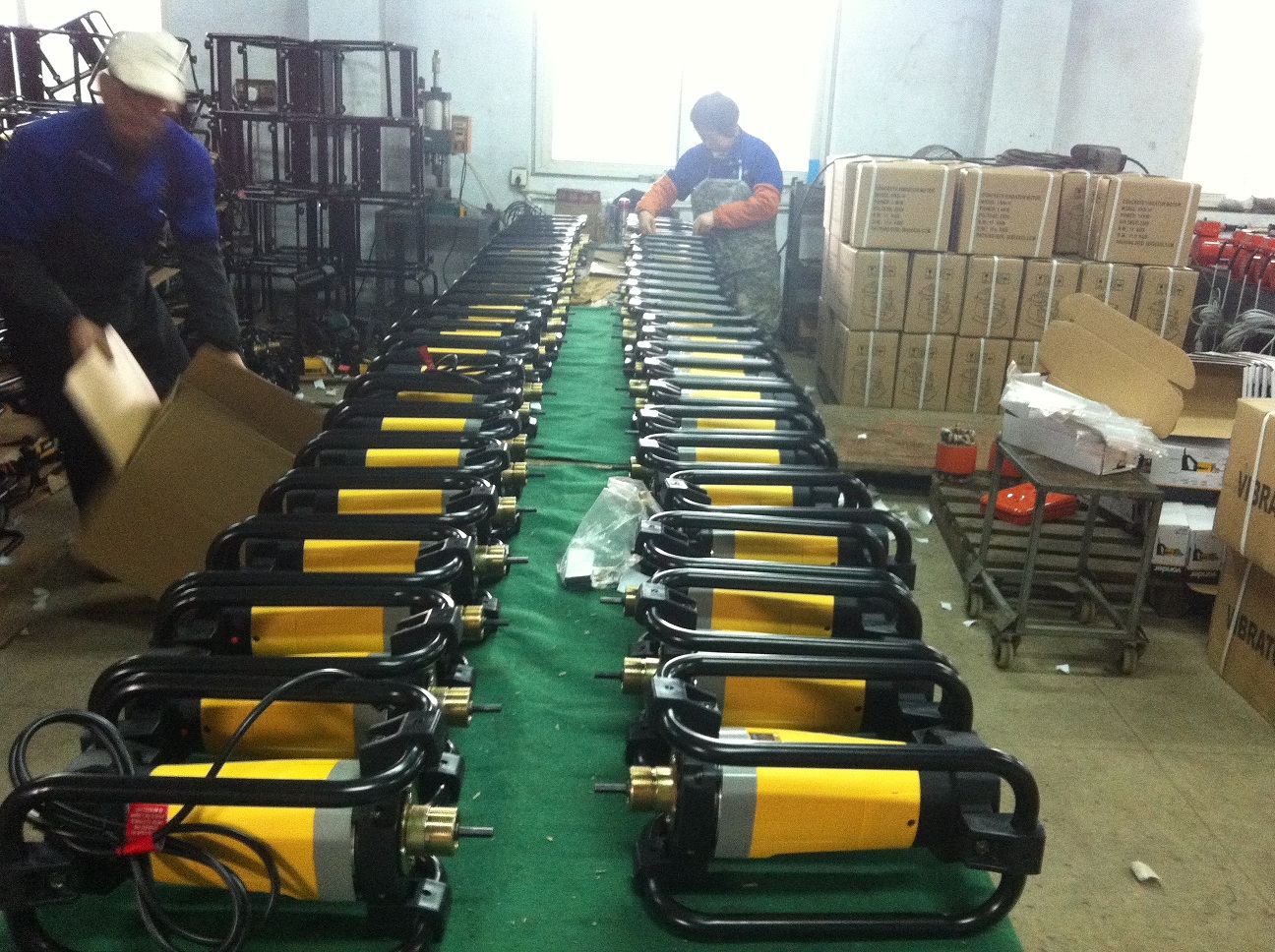
Choosing the right concrete vibrator is a little like choosing the right pair of boots for a construction site. The biggest one is not always the most useful one. A large poker head may look powerful in a catalogue, but if it cannot pass through dense reinforcement or reach the bottom of the pour, it will not do the job properly. A small poker, on the other hand, may enter narrow areas easily, but it needs more insertion points and more working time.
This concrete vibrator buying guide explains how to choose the right model from a practical jobsite point of view. Instead of only looking at motor power, buyers should compare poker size, shaft length, power source, vibration frequency, insertion spacing and maintenance needs. For contractors, dealers, rental companies and procurement teams, this approach helps reduce honeycombing, improve concrete density and avoid buying equipment that looks good on paper but struggles in real concrete.
A concrete vibrator machine removes trapped air from fresh concrete. When concrete is poured, air pockets remain between aggregate, cement paste and reinforcement. If those air pockets stay inside the structure, the result can be honeycombing, weak areas and poor surface finish. A concrete vibrator sends vibration through the mix, allowing air bubbles to rise while mortar flows around stone and rebar.
The vibrator should compact concrete, not move it across the formwork. This is a common site mistake. If an operator uses the poker like a spoon in a soup pot, the concrete may segregate, and nobody wants a concrete soup with stones at the bottom and watery paste at the top. According to Caltrans concrete structure guidance, concrete should be vibrated until mortar and water flush to the surface, and vibration beyond that point is not necessary or desirable.
The most practical way to choose a concrete poker vibrator is to start with the structure. Look at the reinforcement spacing, the depth of the pour and the shape of the formwork before choosing the poker head. The correct poker is usually the largest head that can pass through the reinforcement, reach the bottom of the concrete and still be moved vertically without force.
This matters because access is often the real limit on site. In congested reinforcement, ASCC’s discussion of ACI 309R-05 guidance states that internal vibration needs obstruction-free vertical runs of at least 4 × 6 in. (100 × 150 mm), and the horizontal spacing of these openings should not exceed 24 in. (610 mm) or 1.5 times the radius of influence. That means a bigger poker is only better when the structure gives it enough room to work.
| Vibrator Head Diameter | Radius of Influence | Maximum Insertion Spacing | Suitable Use |
|---|---|---|---|
| 3/4 in. | 3 in. | 4.5 in. | Very tight reinforcement or small repair work |
| 1-1/2 in. | 6 in. | 9 in. | Columns, thin walls and dense rebar |
| 2 in. | 8 in. | 12 in. | General reinforced concrete work |
| 2-1/2 in. | 10 in. | 15 in. | Footings, beams and medium sections |
| 3 in. | 12 in. | 18 in. | Open sections with enough working space |
| 3-1/2 in. | 14 in. | 21 in. | Large pours with low reinforcement congestion |
The table shows why insertion spacing should not be guessed by eye. For example, the ACI-based data summarised by ASCC lists a 2-1/2 in. internal vibrator head with a 10 in. radius of influence and a 15 in. maximum insertion spacing. A smaller head can still do good work, but the operator must insert it more often. That is not a problem if the crew plans for it; it becomes a problem only when everyone expects a small poker to cover concrete like a large one.
Concrete vibrator shaft length should match the actual working distance between the power unit and the insertion point. A short shaft is easier to control for slabs, small foundations and repair work. A longer flexible shaft is useful for deep forms, larger pours and areas where the motor or engine cannot stand close to the concrete.
Longer shafts can help with reach, but extra length also adds drag and handling effort. The operator still needs to insert the poker vertically, lower it under control and withdraw it slowly. NPCA, citing Portland Cement Association guidance, gives a useful working rule: after the vibrator sinks under its own weight, withdraw it at about 3 seconds per vertical foot (300 mm). This gives the concrete time to close behind the poker instead of leaving a hole that looks like the machine signed its name in the pour.
An electric concrete vibrator is a sensible choice when stable power is available. It suits building sites, indoor work, precast areas and projects where lower exhaust emissions are preferred. Buyers should check voltage, cable length, switch protection and local power compatibility before ordering.
A petrol concrete vibrator is better for outdoor work, road jobs, remote foundations and sites where electricity is unreliable. It gives more freedom of movement, but buyers also need to think about fuel, engine service, noise and spare parts. For contractors who vibrate concrete every day, a high-frequency system can offer more stable output during longer working periods.
For example, OLI’s concrete consolidation catalogue lists high-frequency internal electric vibrators with 42V, three-phase, 200Hz input and a nominal frequency of 12,000 vpm. The same catalogue notes that some converter models can transform ordinary 230V or 110V, 50/60Hz single-phase input into the higher-frequency output needed for that vibration performance.
For many normal pours, 5–15 seconds per insertion point is a useful starting range. NPCA reports that Portland Cement Association guidance gives an insertion time of 5 to 15 seconds as usually enough for adequate consolidation, although the exact time depends on vibrator size, concrete workability and member depth.
The operator should not work only by stopwatch. Fresh concrete gives signs when it has had enough. Large air bubbles stop rising, the surface settles, the sound of the vibrator changes and a thin mortar sheen appears. If the poker is removed and the hole does not close, the concrete may need a short reinsertion nearby. If the surface becomes watery or aggregate starts to settle, the vibrator has stayed too long. Like many things on site, good timing is not about rushing; it is about knowing when to stop.
The first mistake is buying by poker diameter alone. The buyer should always check reinforcement clearance and insertion spacing first. The second mistake is choosing the longest shaft for every project. If most work is shallow and close to the power unit, a long shaft may only make the operator tired faster. The third mistake is comparing only engine power while ignoring frequency, poker diameter and radius of influence.
For dealers and rental companies, one model rarely covers every customer properly. A useful range may include small poker heads for dense reinforcement, medium heads for beams and foundations, and larger heads for open pours. This makes the equipment easier to match to real jobs and reduces the chance that a customer blames the machine when the real problem was poor selection.
Good concrete vibrator maintenance starts before the concrete dries. After each use, clean the poker head, shaft, hose and coupling before concrete residue hardens. The flexible shaft, bearings, seals, switch and power connection should be checked regularly because concrete vibration tools work in wet, abrasive and high-load conditions.
For simple concrete vibrator troubleshooting, split the problem into two parts. If the motor or engine does not start, check the power supply, fuel, oil level, switch, spark plug, cable and overload protection. If the drive unit runs but the poker vibrates weakly, check the shaft connection, flexible shaft wear, bearing condition, poker head damage and lubrication. This order saves time because it avoids replacing random parts while the crew is watching fresh concrete slowly become less fresh.
Choose the largest poker head that can pass through the reinforcement, reach the bottom of the placement and move vertically without force. In dense reinforcement, check access openings first; ASCC’s ACI-based guidance refers to at least 4 × 6 in. (100 × 150 mm) obstruction-free vertical runs for internal vibration.
Insertion spacing should follow the poker’s radius of influence. As an example, ACI-based data summarised by ASCC gives a 2-1/2 in. head a 10 in. radius of influence and a 15 in. maximum insertion spacing.
For many normal pours, use about 5–15 seconds per insertion point as a starting range, then judge by air bubbles, surface sheen, concrete settlement and vibrator sound. This practical timing range is also supported by NPCA’s discussion of proper vibration practice.
The right concrete vibrator is chosen by working backwards from the job. Check reinforcement spacing first, then select poker diameter, shaft length, power source, vibration frequency and insertion spacing. A well-matched concrete poker vibrator helps remove trapped air, reduce honeycombing and give contractors more predictable concrete quality.
For B2B buyers, the smartest purchase is not the cheapest model or the largest poker head. It is the model range that matches the projects your customers actually handle. If your work includes slabs, columns, foundations and heavily reinforced walls, more than one poker size and shaft configuration will usually serve the fleet better than one “one-size-fits-all” machine.

