When Is the Right Time to Use a Concrete Power Trowel?
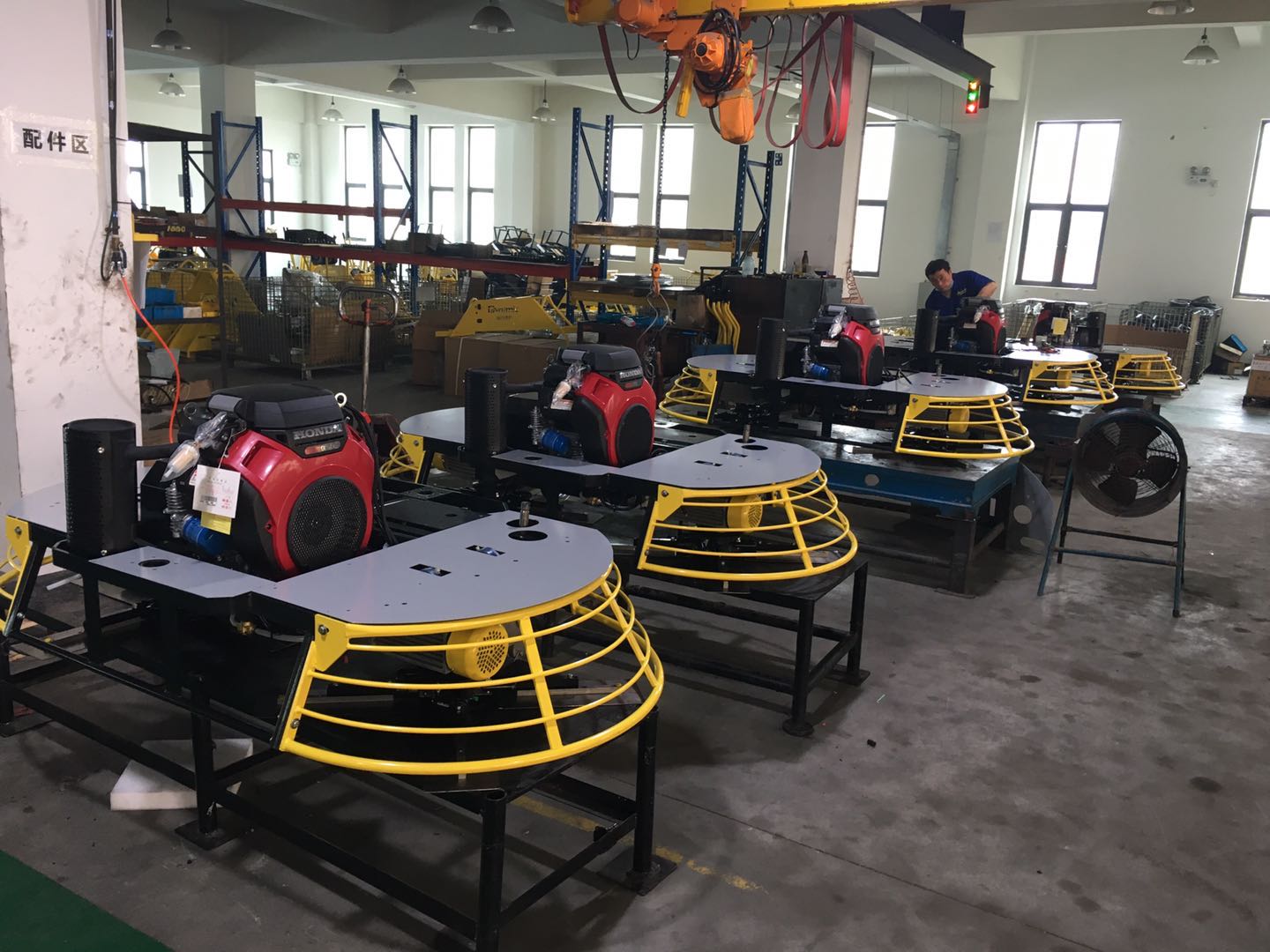
A concrete power trowel can make floor finishing faster, flatter and more consistent, but only when it enters the slab at the right time. If the machine starts too early, the pan or blades may disturb soft concrete. If it starts too late, the surface becomes harder to close and the operator has to work like they are trying to polish a rock.
For contractors, site managers and equipment buyers, power trowel timing is just as important as engine power, working diameter or blade type. A good machine cannot rescue poor timing, but correct timing can help the machine perform at its best.
Why Timing Matters in Concrete Floor Finishing
Concrete finishing is not controlled by the clock alone. It is controlled by setting speed, mix design, slab thickness, weather, wind, temperature, humidity and the amount of bleed water on the surface. Two slabs poured on the same day can become ready at different times, especially if one is in direct sun and the other is under shade. That is why experienced operators watch the concrete more than they watch their phone.
Starting a power trowel machine too early can seal the surface before air and bleed water have escaped. The National Ready Mixed Concrete Association explains that delamination can occur when the surface is sealed by premature finishing while air or bleed water remains below. In simple site language, the top may look finished, but underneath it is still trying to breathe.
Evidence-based site point: early trowelling is not just a small cosmetic mistake. Concrete Network explains that when finishing starts too early and closes the surface before bleeding is complete, air or water can become trapped below the dense top layer, creating voids that weaken the surface.
Proof Table: What the Industry Sources Say
| Site Question | Industry Fact | What It Proves | Practical Decision |
|---|---|---|---|
| Can I trowel while bleed water is still visible? | NRMCA CIP 20 warns against sealing the surface before air and bleed water from below have escaped. | Premature finishing can trap water or air under the surface. | Do not start power trowel finishing while the surface still shows bleed water. |
| What happens if the surface closes too early? | Concrete Network explains that trapped air or water can create subsurface voids and surface delamination. | The floor may look smooth at first but develop weak layers later. | Use correct timing instead of forcing an early smooth finish. |
| How can operators judge the first power floating pass? | ForConstructionPros recommends waiting until bleed water sheen disappears and the concrete supports a finisher with no more than about a 1/4-inch footprint indentation. | The slab must be firm enough before power floating begins. | Use the footprint test together with visual bleed-water checks. |
| Should operator safety include noise planning? | OSHA 1926.52 lists construction noise exposure limits, including 90 dBA for 8 hours, 95 dBA for 4 hours and 100 dBA for 2 hours. | Long finishing shifts around engines and other machinery can require hearing protection planning. | Include hearing protection when using power trowels for long periods or in enclosed areas. |
The First Rule: Do Not Trowel Over Bleed Water
Bleed water is one of the clearest signs that the slab is not ready for final finishing. When water is still visible on the surface, the concrete below is still releasing moisture. If the operator uses finishing blades at this stage, the surface may close too early. That can trap water and air below the top layer, increasing the risk of dusting, scaling, weak surface paste or delamination later.
This does not mean the crew should panic and stop all work. Early screeding and floating are part of normal placement, but aggressive power trowel finishing should not be rushed while visible bleed water remains. The NRMCA delamination guidance is especially clear on this point: do not seal the surface before air or bleed water from below has escaped.
Site reminder: if the slab still looks shiny with surface water, it is usually asking for more time, not more blade pressure. Concrete does not become ready just because the crew is ready.
Practical Signs That the Slab Is Ready for a Power Trowel
The most useful method is to combine visual checks with a simple footprint test. The surface should no longer have obvious bleed water. It often changes from a wet shine to a more matte, slightly drier appearance. When a worker steps carefully on the slab, the footprint should be shallow rather than sinking deeply. ForConstructionPros gives a practical benchmark: wait until the concrete can support a finisher with no more than about a 1/4-inch footprint indentation.
This is not a laboratory-only rule, because concrete mixes and site conditions vary. However, the logic is reliable: if the slab cannot support a controlled footprint, it probably cannot support direct blade pressure. If the surface is firm enough to carry the machine without digging, the operator can begin with a float pan or flat blades, then move gradually into blade finishing as the concrete hardens.
Power Trowel Timing Reference Table
| Concrete Surface Condition | Recommended Action | Reason | Evidence Link |
|---|---|---|---|
| Surface is shiny with visible bleed water | Do not start blade finishing | Sealing the surface too early can trap air or bleed water. | NRMCA CIP 20 |
| Surface is soft and footprint sinks clearly | Wait or use only suitable early floating methods | The slab cannot yet support concentrated blade pressure. | ForConstructionPros |
| Bleed water sheen has disappeared | Begin controlled floating with a pan or flat blades | The surface has started to stiffen and can accept early floating. | ForConstructionPros |
| Footprint is shallow, around 1/4 inch or less | Move carefully from floating into finishing | The slab can support a finisher without deep indentation. | ForConstructionPros |
| Surface is firm and accepts blade pressure | Use finishing blades with gradually increasing pitch | Blade pressure can now close and refine the surface. | Concrete Network |
Float Pan First, Finishing Blades Later
At the early stage, a float pan spreads machine pressure over a larger area. This helps compact the surface, bring up paste and level small surface variations without cutting into the concrete. It is especially useful when the slab has started to set but is not yet ready for concentrated blade pressure. This is why the pan should not be treated as a protective shipping cover. It is a working accessory with a real job.
Finishing blades come later. Once the concrete surface can carry more pressure, the pan can be removed and the blades can be used to close, smooth and refine the surface. As the slab firms up, the operator can gradually increase blade pitch. The word “gradually” is important. A sudden aggressive pitch is a bit like shouting at the concrete; it may get a reaction, but not the one you wanted.
Common Mistake 1: Starting Too Early
The most common timing mistake is starting too early because the crew wants to move quickly. This usually happens on large pours where everyone is under pressure to finish before the surface hardens. The problem is that early trowelling can make the top look closed while the concrete below is still releasing moisture. Later, the surface may show delamination, dusting or weak spots, and the machine unfairly gets blamed for what was really a timing error.
When the concrete is still soft, the operator should avoid aggressive blade angle and high pressure. The better approach is to allow bleeding to finish, use the correct floating accessory and increase finishing pressure only as the surface becomes ready. Good timing feels slower at the beginning, but it often saves time at the end because there are fewer defects to repair.
Common Mistake 2: Waiting Too Long
Waiting too long can also create problems. If the slab becomes too hard before the first power trowel pass, the operator may struggle to flatten high spots or close the surface properly. The machine may bounce, leave inconsistent marks or require unnecessary blade pressure. This is especially common in hot, dry or windy conditions where the surface dries faster than expected.
On fast-setting slabs, the crew should monitor the surface continuously and plan equipment access in advance. The ride-on power trowel or walk-behind power trowel should be ready before the finishing window arrives. Looking for the machine after the slab is ready is not planning; it is a small construction drama with a loud engine.
Common Mistake 3: Using the Same Timing on Every Job
Concrete finishing timing changes from job to job. A thick indoor slab, a thin outdoor pavement, a high-cement mix, an air-entrained concrete mix and a slab exposed to wind may all behave differently. Admixtures can also change setting speed. This is why the operator should not rely only on yesterday’s timing or another project’s schedule.
Instead, the crew should check surface condition, bleed water, footprint depth and machine response. If the trowel drags, tears or leaves deep blade lines, it is probably too early or the blade pitch is too aggressive. If the trowel cannot close the surface, it may be too late or the slab may require a different finishing approach. The concrete gives feedback; the operator’s job is to listen before it becomes expensive.
Power Trowel Selection Checklist
| Buying Factor | What to Check | Why It Supports Better Timing |
|---|---|---|
| Float pan availability | Check pan diameter and compatibility with the machine. | Helps start early floating without cutting into soft concrete. |
| Blade pitch adjustment | Check whether the operator can adjust pitch smoothly. | Allows gradual transition from floating to finishing. |
| Walk-behind or ride-on model | Match the machine to slab size and site access. | Helps the crew cover the slab during the correct finishing window. |
| Operator safety | Consider engine noise, work duration and hearing protection. | OSHA lists 90 dBA for 8 hours, 95 dBA for 4 hours and 100 dBA for 2 hours in construction noise exposure limits. |
| Spare parts supply | Check blades, pans, belts, bearings and control components. | Reduces downtime when the slab is ready and waiting. |
How Power Trowel Choice Affects Timing
A concrete power trowel should match the project size and finishing window. Walk-behind power trowels are useful for smaller slabs, edges, access-limited areas and repair work. Ride-on power trowels are more efficient on large open floors where speed and operator comfort matter. For large warehouse floors, industrial slabs and parking areas, a ride-on model can help the crew cover more area during the available finishing window.
Buyers should also check blade size, float pan availability, blade pitch adjustment, rotor speed, engine power, safety switch and spare parts supply. Timing is still the operator’s responsibility, but the right machine makes that timing easier to use. A poorly matched machine can turn a good finishing window into a long afternoon of improvisation.
FAQ About Power Trowel Timing
When should I start using a concrete power trowel?
Start when the surface has little or no visible bleed water and can support the machine without deep sinking. A shallow footprint, often around 1/4 inch or less, is a useful field sign.
Can I use finishing blades while bleed water is still visible?
No. Visible bleed water usually means the surface should not be closed with finishing blades. Trowelling too early can trap water and air below the surface.
Should I use a float pan before finishing blades?
In many floor finishing jobs, yes. A float pan spreads pressure over a larger area and is useful during the early floating stage before the slab is firm enough for direct blade pressure.
What happens if I wait too long to use a power trowel?
If the slab becomes too hard, the trowel may struggle to level high spots or close the surface. This can lead to uneven finish, extra blade pressure and lower productivity.
Final Site Learning
The right time to use a concrete power trowel is not decided by the clock. It is decided by the slab. Check bleed water, surface firmness, footprint depth and machine response before changing from floating to finishing. Use the float pan when the concrete is still young, then move to finishing blades when the surface can handle higher pressure. When timing, accessory choice and machine selection work together, contractors can improve floor quality, reduce surface defects and make the finishing process much smoother.
Product Enquiry Guidance:
Please share your slab area, concrete floor type and finishing schedule so ACE can recommend a suitable concrete power trowel.
For large floor projects, ACE can help compare walk-behind and ride-on power trowel options with matching float pans and finishing blades.
Dealers and rental companies can confirm blade size, pan diameter, rotor configuration and spare parts needs before requesting a quotation.

