A construction equipment supplier of construction machinery solutions for 30 years. WhatsApp:+86-18968212829
Language
A construction equipment supplier of construction machinery solutions for 30 years. WhatsApp:+86-18968212829
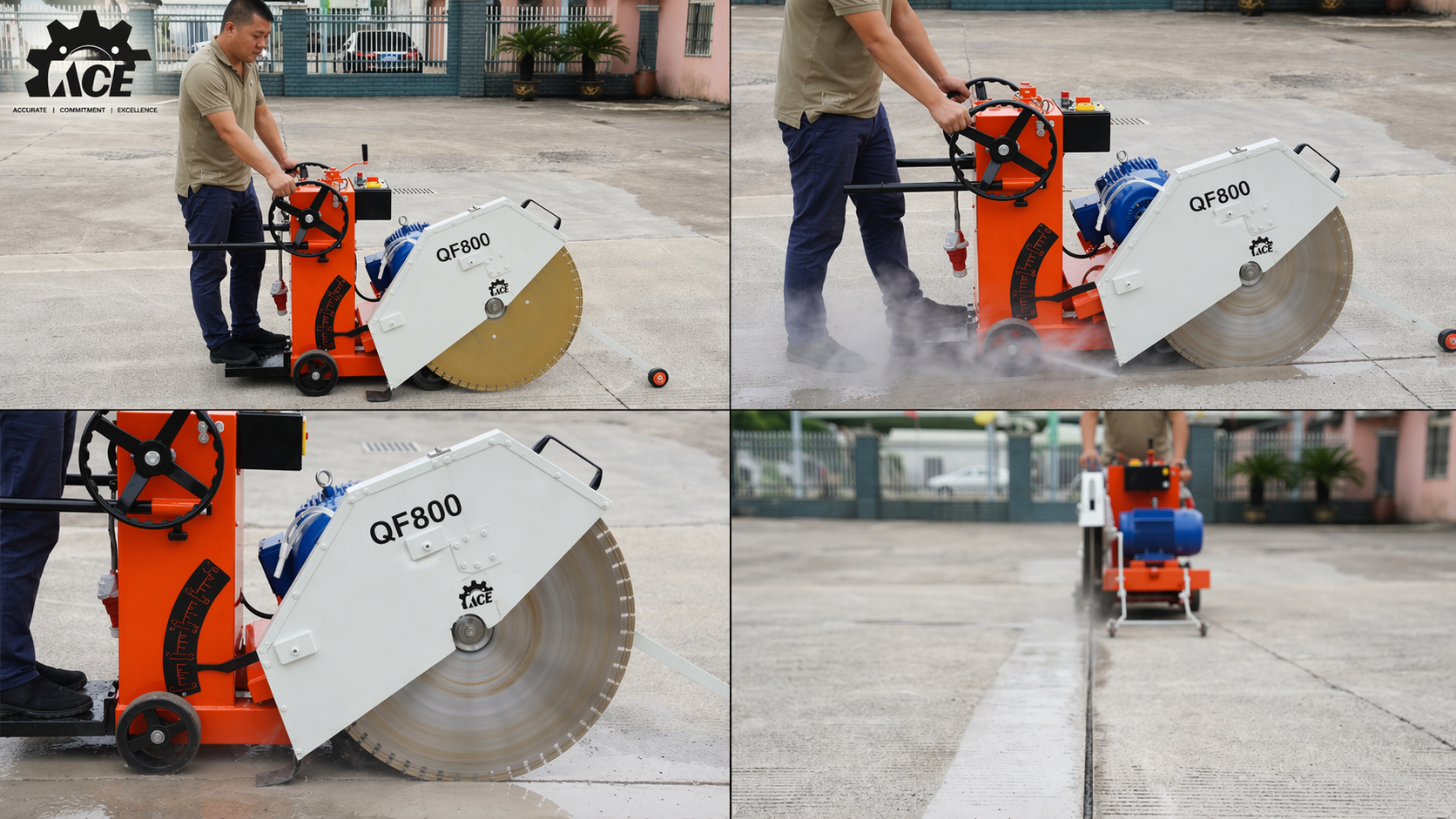
Choosing a road saw sounds easy until the real jobsite starts asking difficult questions. Are you cutting concrete or asphalt? Is the pavement thin, thick, old, wet, reinforced, cracked, or all of these at the same time? Do you need a clean repair edge, a straight trench line, or only a short cut across a factory floor? A road saw is not just a machine with a blade. It is a tool that affects cutting speed, repair quality, blade life, operator comfort and how smoothly the next step of the project can continue.
A good road saw should match the jobsite, not just look powerful in a product photo. Some projects need a compact road cutting machine for small pavement repair. Some need a heavier walk-behind concrete saw for deep road cutting. Some users care most about cutting accuracy, while others need fast cutting for repeated asphalt repair work. The right choice depends on the material, cutting depth, blade size, power type, dust control and how often the machine will be used.
If you are still learning why road saws are useful, you can first read our related guide: The Advantages of Using Road Saws. That article explains the main road saw advantages for pavement repair, utility trenching, dust suppression and cutting efficiency. This article continues from that topic and focuses on a more practical question: how do you choose the right road saw for your own work?
The first question should not be “How much is the machine?” It should be “What will this machine cut most often?” A concrete road saw and an asphalt road saw may look similar from a distance, but the cutting conditions are not the same. Concrete is hard, dense and sometimes reinforced. Asphalt is softer, but it is usually more abrasive. That means the blade, machine power, cutting speed and water system all need to match the material.
If your main job is concrete slab cutting, expansion joint cutting or factory floor repair, you need a machine that can keep the blade stable and maintain a clean line. A walk-behind concrete saw is useful here because it gives the operator better control over long and straight cuts. If your main work is asphalt patch repair, parking lot maintenance or road surface opening, you should pay more attention to blade wear, machine mobility and cutting efficiency. Asphalt can be friendly to cut at first, but it can quietly eat blades like snacks if the wrong blade is used.
For contractors who need one machine for both concrete and asphalt, the road saw itself is only part of the answer. Blade selection is just as important. A machine such as the GFS120 concrete road cutter can be considered for common concrete pavement and asphalt surface cutting work. For users who handle different repair jobs, this type of walk-behind road saw offers a practical starting point.
Price matters, of course. Nobody wakes up excited to spend more money on construction equipment. However, cutting depth should come before price when choosing a road saw. If the machine cannot cut deep enough, a low purchase price may create higher costs later. The crew may need more passes, more breaking work, more labor and more time to finish the same job.
Cutting depth is mainly connected with blade diameter, machine power and frame stability. A smaller road saw may be enough for shallow cuts, light floor repair and small asphalt openings. A larger walk-behind concrete saw is better for thicker pavement, industrial slabs and road repair projects. When the cut becomes deeper, machine stability becomes more important because vibration can affect the cutting line, reduce blade life and make the operator’s work harder.
For heavier applications, the QF-700 semi-automatic concrete cutter is suitable for deeper road engineering, concrete repair and heavy surface cutting work. For general pavement cutting tasks where users need a balance between size and cutting ability, the QF-400 concrete road cutting machine can also be a practical option.
One common mistake is choosing the biggest machine simply because it looks more professional. A large road saw is useful for deep cuts, long cutting lines and heavy-duty projects. But if the working space is narrow, crowded or full of obstacles, a smaller machine may be easier to move, load and operate. Bigger is not always better. Sometimes bigger just means the operator spends extra time trying not to hit a wall, a truck, or someone’s expensive toolbox.
Compact road saws are easier to handle for sidewalks, driveways, small parking areas and repair corners. They are suitable for contractors who need mobility and simple operation. Larger walk-behind concrete saws are more suitable for road construction, industrial floor cutting and repeated pavement repair because they offer stronger cutting performance and better stability on long cuts.
For small and medium repair applications, the GFS-380 concrete road cutter can work as a compact concrete road cutter, asphalt cutter machine or small concrete floor saw. For larger roadwork and more demanding cutting conditions, the GFS-750 walk-behind concrete saw is better suited to heavy-duty concrete roads, asphalt pavements and industrial floor applications.
A road saw is only as good as the blade working with it. Even a strong machine can perform badly with the wrong blade. A diamond blade road saw is commonly used for concrete, asphalt and hard pavement cutting, but different materials need different blade designs. Using one blade for every material is like using one pair of shoes for the office, a muddy trench and a mountain road. It may work for a while, but nobody should call it a smart plan.
For cured concrete, the blade should be suitable for hard and dense material. For asphalt, the blade should handle abrasive cutting conditions. For green concrete, the blade choice may be different again because the material has not fully cured. If the blade is too soft or too hard for the material, cutting speed, blade life and edge quality can all suffer.
Before choosing a road saw, users should ask three blade-related questions. What material will be cut most often? What cutting depth is required? Will the machine be used for wet cutting or dry cutting? These questions help avoid mismatched equipment and unnecessary blade cost. For buyers who are new to this equipment category, the article Frequently Asked Questions About Road Cutting Machines can also provide helpful basic knowledge about road cutting machine use and common selection questions.
The water system on a road saw may look like a small detail, but it can make a big difference during real cutting work. Water helps cool the blade, reduce dust and improve visibility along the cutting line. This is especially important when cutting concrete because concrete dust can become a serious jobsite problem. A dry and dusty cut may look dramatic, but most professional contractors prefer results, not a small sandstorm.
Wet cutting can also help extend blade life by reducing heat. When the blade overheats, cutting performance drops and blade wear increases. A reliable water tank or water connection helps the operator maintain smoother cutting. For longer jobs, water capacity and water flow should be checked carefully because frequent stops for refilling can reduce productivity.
Road saw dust control is also connected with safety and comfort. Less dust means better visibility, a cleaner working area and a better environment for the operator and nearby workers. Of course, water creates slurry, so cleanup still needs to be planned. A wet jobsite is better than a dusty one, but the goal is not to create a concrete-flavored swimming pool.
The power source should match the working environment. A petrol road saw is often chosen for outdoor jobs because it offers good mobility and does not depend on an electrical supply. It is useful for road repair, parking lot cutting, asphalt pavement work and remote construction sites. If the project moves from one location to another, petrol power gives the operator more freedom.
A diesel road saw may be suitable for heavier outdoor cutting where strong power and durability are required. Diesel machines are often used in demanding road construction and infrastructure work. However, they may be heavier and less suitable for enclosed spaces. An electric road saw is usually better for indoor or semi-enclosed jobs because it does not produce exhaust fumes during operation. It can be a better choice for warehouse floors, workshops and indoor renovation projects.
The practical rule is simple. Outdoor and mobile jobs usually favor petrol or diesel. Indoor or low-emission jobs usually favor electric. If the customer is choosing a road saw for rental business, offering different power options may help serve more users. Some customers need freedom. Some need cleaner operation. Some simply need a machine that starts smoothly on Monday morning, which is already a small miracle in construction.
Another important factor is the operation method. Manual push road saws are simple, practical and suitable for many small to medium jobs. They are easy to understand and often easier to maintain. For contractors who need a reliable machine for common concrete and asphalt cutting tasks, a manual push model can be enough.
Semi-automatic or auto-walking road saws can reduce operator fatigue on longer cuts. They are useful when the project requires more consistent movement and controlled cutting speed. This can improve cutting quality and make the operator’s work easier, especially during long road cuts or repeated floor cutting. However, semi-automatic systems may also need more attention to operation and maintenance.
The choice should be based on job frequency and project size. If the machine is used occasionally, manual push may be more economical. If the machine is used often on long cuts, semi-automatic operation can improve productivity and comfort. The best choice is not always the most complicated one. It is the one that solves the daily job problem with the least trouble.
A road saw does not only work on site. It also needs to be transported, stored, cleaned and maintained. These practical details are easy to forget during purchase, but they become very real after delivery. If the machine is too large for the user’s vehicle or too heavy for normal loading, every project becomes harder before cutting even begins.
Maintenance access is also important. Operators should be able to check the blade, belt, water system, engine or motor, wheels and depth adjustment parts without fighting with the machine. Construction equipment already works in dust, water, vibration and rough conditions. A design that is easier to inspect and maintain will usually serve better over time.
Rental companies should pay special attention to this point. A rental road saw needs to survive different operators, different jobsites and different levels of kindness. Machines with simple operation, strong structure and easy maintenance are usually better for rental fleets. For direct contractors, easy maintenance also means less downtime and fewer delays.
Different applications need different road saw choices. For light floor cutting, a compact concrete saw may be enough. For asphalt patch repair, the machine should be easy to move and suitable for abrasive cutting. For utility trenching, cutting depth and straight-line control become more important. For heavy-duty road construction, the machine needs stronger power, larger blade capacity and a more stable frame.
For general floor and road cutting, the GFS-400 and GFS-500 walk-behind concrete saws are designed for concrete floors, asphalt pavements and road surfaces. For more demanding asphalt and concrete cutting tasks, the GFS-580 walk-behind concrete road cutter can support heavier cutting applications.
Buyers should not choose only by model name. They should compare cutting depth, blade size, power source, machine weight, water system and application range. A machine that is perfect for a small repair contractor may be too light for heavy roadwork. A machine that is excellent for road construction may be too large for small indoor floor cutting. Matching the machine to the job is the real secret.
The first mistake is buying only by price. A cheaper road saw may look attractive, but if it cuts slowly, vibrates too much or cannot reach the required depth, it will cost more in labor and rework. The second mistake is ignoring the blade. The blade is not a small decoration on the side of the machine. It is part of the cutting system.
The third mistake is choosing too small a machine for heavy work. A small road saw is practical for light repair, but it may struggle with thick pavement or long cutting lines. The fourth mistake is choosing too large a machine for narrow jobsites. A large machine may be powerful, but if it cannot move freely in the working area, that power will not help much.
The fifth mistake is forgetting dust and water control. Dust can affect safety, visibility and jobsite cleanliness. A reliable water system supports blade cooling, cutting quality and safer operation. The final mistake is not considering after-sales support and spare parts. A road saw works in tough conditions, so maintenance support matters more than many buyers expect.
The right size depends on cutting depth, material and jobsite space. Small road saws are suitable for light repair, sidewalks and shallow cuts. Larger walk-behind concrete saws are better for deeper concrete cutting, asphalt pavement and heavy-duty roadwork.
Yes, many road saws can cut both concrete and asphalt, but the blade must match the material. Concrete and asphalt have different cutting behavior, so blade selection is very important for cutting speed, blade life and edge quality.
A petrol road saw is usually better for outdoor work where mobility is important. An electric road saw is usually better for indoor or low-emission environments. The best choice depends on ventilation, power supply, cutting depth and project location.
Cutting depth decides whether the machine can fully cut through the required pavement layer. If the depth is not enough, the crew may need repeated passes or extra breaking work. This increases time, labor and repair difficulty.
If the job is occasional, renting may be enough. If the contractor handles concrete cutting, asphalt repair or utility trenching regularly, buying a road saw may be more cost-effective because it provides better control over machine availability, blade choice and maintenance.
Choosing the right road saw is not only about finding a machine that can spin a blade. It is about matching the machine to the material, cutting depth, jobsite space, power source and daily working needs. A good choice helps the operator cut straighter, work faster, reduce dust, protect the surrounding pavement and finish repair work more professionally.
For concrete cutting, asphalt repair, floor cutting and utility trenching, the road saw should be treated as part of the whole construction process. It prepares the boundary before breaking, excavation or patching begins. When the cutting is controlled, the next steps become easier. When the cutting is poor, every later step becomes more difficult.
If you want to understand more about why road saws are useful on real jobsites, read our guide on the advantages of using road saws. If you are ready to compare different models, you can also explore our full range of concrete saw, floor saw and road cutting machine products for different cutting depths, power options and construction applications.

