Product knowledge popularization
A construction equipment supplier of construction machinery solutions for 30 years. WhatsApp:+86-18968212829
Language
A construction equipment supplier of construction machinery solutions for 30 years. WhatsApp:+86-18968212829
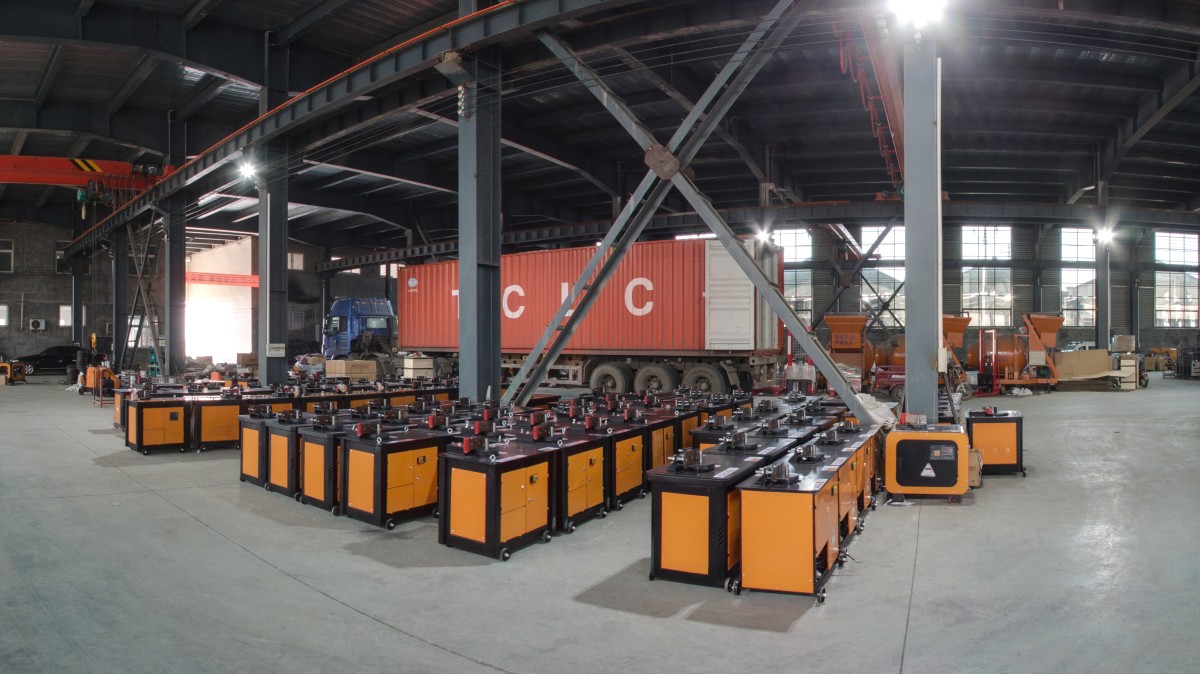
On almost every construction site, there is one moment that separates organized work from complete chaos: when workers begin processing rebar. Steel bars arrive straight, heavy, and stubborn, but engineering drawings demand hooks, angles, curves, and precise dimensions. This is where the rebar bending machine becomes one of the most important pieces of equipment on site.
Whether the project is a bridge foundation, a residential building, a tunnel structure, or a highway retaining wall, reinforcing steel must be bent accurately to maintain structural stability. Even a small bending error can create alignment problems during concrete pouring, and once concrete hardens, nobody enjoys discovering that a “small mistake” has become a very expensive problem.
Modern construction companies are no longer choosing rebar processing equipment based only on price. Contractors, engineers, and steel processing workshops now focus more on bending accuracy, machine stability, long-term durability, maintenance convenience, and production efficiency. A reliable steel bar bending machine does not simply save labor. It improves workflow coordination, reduces material waste, minimizes downtime, and helps projects stay on schedule.
In recent years, Google search trends also show growing interest in keywords such as automatic rebar bending machine, CNC rebar bending machine, and portable rebar bender. This reflects a major shift in the industry: construction teams are looking for smarter, faster, and more flexible steel processing solutions.
A rebar bending machine is specialized construction equipment designed to bend reinforcing steel bars into required shapes and angles according to engineering drawings. These machines are widely used in infrastructure projects, commercial buildings, precast concrete factories, bridge construction, railway systems, and foundation engineering.
The basic principle sounds simple: place the steel bar into the bending area, apply rotational force through the bending disc and shafts, and form the required angle. However, professional rebar processing is far more complicated than it appears. Different rebar diameters require different shaft sizes, torque outputs, and bending speeds. High-strength steel bars behave differently from ordinary carbon steel, and improper bending may damage the internal structure of the rebar itself.
This is why experienced engineers rarely focus only on “whether the machine can bend steel.” They focus on whether the machine can bend steel consistently, efficiently, and safely under continuous daily operation.
Most modern reinforcing bar bending machines include a motor system, gearbox, rotating disc, machine frame, electrical control system, and interchangeable bending accessories. Some advanced models also include digital angle control systems, programmable memory functions, and automated positioning technology.
Different construction environments require different bending solutions. There is no universal machine suitable for every project, which is why understanding machine categories is extremely important before purchasing equipment.
A manual rebar bending machine is commonly used for light-duty projects and small construction teams. Its structure is relatively simple, maintenance costs are low, and operators can quickly learn basic operation procedures. For projects involving smaller rebar diameters and lower production volume, manual equipment can still provide practical value.
However, manual machines also have obvious limitations. Bending accuracy depends heavily on operator experience, production speed is slower, and long-term continuous operation often creates fatigue-related inconsistencies. On modern high-efficiency construction sites, many contractors now view manual bending equipment as a temporary or supplementary solution rather than a primary production machine.
The automatic rebar bending machine has become one of the most widely used solutions in modern construction. Compared with manual systems, automatic machines improve production efficiency significantly while reducing dependence on operator skill.
Most automatic models use positioning holes or angle control systems to maintain accurate bending consistency. This improves repeatability during batch processing, especially when the same bending shape must be produced hundreds or thousands of times.
From an engineering perspective, the biggest advantage of automatic bending equipment is stability. When machines operate continuously under heavy workloads, stable mechanical structures become more important than simple peak performance numbers shown in product catalogs.
Experienced contractors often say that the best machine is not the one that bends fastest for ten minutes. It is the one that still bends accurately after ten hours.
A CNC rebar bending machine is designed for projects requiring high precision, automated programming, and complex bending sequences. These machines use computerized control systems to manage bending angles, feeding positions, and repeated production cycles.
For large infrastructure projects and steel fabrication workshops, CNC technology offers several advantages. First, it reduces human error during repetitive bending operations. Second, it improves production consistency across different shifts and operators. Third, it allows complex shapes to be produced more efficiently.
In many large construction projects, standardized processing has become extremely important because prefabricated structural systems require accurate component dimensions. Even minor deviations may affect installation alignment later during assembly.
In simple words, a CNC machine remembers details better than humans do on Monday mornings.
Construction sites do not always have stable electricity supply. Remote infrastructure projects, road construction areas, and temporary engineering sites often face unstable power conditions. In these situations, a diesel rebar bending machine becomes a practical solution.
Diesel-powered systems provide operational independence and are especially useful in outdoor environments where electrical installation is difficult or unreliable. Although diesel models may require additional fuel management and maintenance attention, they offer strong adaptability for harsh working conditions.
A portable rebar bender is designed for mobility and convenience. Unlike large stationary machines, portable models are easier to transport between construction sites and are commonly used for repair projects, small foundations, residential construction, and mobile maintenance work.
Portability becomes extremely valuable when contractors manage multiple projects simultaneously. Engineers understand this very well: moving a lightweight machine is always easier than moving an entire construction schedule because the machine arrived late.
The transition from manual equipment to automatic rebar bending machines is not simply a trend. It is largely driven by labor efficiency, project complexity, and quality control requirements.
Modern construction schedules are tighter than before, labor costs continue to rise globally, and engineering standards have become more demanding. Under these conditions, manual bending methods often struggle to meet production expectations consistently.
Automatic machines improve bending accuracy because mechanical positioning systems reduce operator-related inconsistencies. They also increase production speed, which directly affects project timelines. Faster bending means faster assembly, faster concrete pouring, and ultimately faster project completion.
Another important advantage is structural durability. Automatic machines are usually heavier and mechanically stronger than manual systems. Their reinforced structures resist deformation during long-term operation, especially when processing thicker rebar continuously.
Some contractors initially focus only on machine purchase cost. However, experienced project managers often evaluate equipment differently. They calculate labor savings, production efficiency, reduced material waste, maintenance frequency, and downtime risk over several years.
In many cases, the “expensive machine” eventually becomes the cheaper machine.
Many people outside the construction industry assume rebar bending is simply about making steel bars look correct visually. Engineers know the reality is more complicated.
Bending accuracy directly affects structural load distribution, reinforcement positioning, and concrete bonding performance. If rebar dimensions deviate from design requirements, reinforcement cages may not align correctly inside formwork, which creates installation stress and increases adjustment time during assembly.
In seismic regions, reinforcement positioning becomes even more critical because structural flexibility and load transfer depend heavily on correct reinforcement geometry. Improper bending angles may weaken reinforcement efficiency under dynamic loads.
This is why professional contractors prioritize stable angle control systems, repeatable processing accuracy, and reliable bending torque. Good bending equipment is not only about speed. It is about producing consistent structural reliability across thousands of steel components.
Even the best machine becomes dangerous when operated carelessly. Rebar bending equipment handles high torque, rotating components, and heavy steel bars, so proper operation procedures are extremely important.
Before operation begins, the machine should be placed on a stable and level surface. Operators should inspect the electrical system, rotating disc, bending shafts, safety guards, and emergency stop functions carefully.
Rebar should be inserted correctly between the shafts according to the required bending direction. During operation, workers must keep a safe distance from moving components and never attempt to adjust shafts, change angles, lubricate parts, or remove protective covers while the machine is running.
One of the most common mistakes on busy construction sites is rushing the next bending cycle before the rotating disc fully returns to its starting position. Experienced operators understand that saving three seconds is not worth damaging the machine — or damaging fingers.
After work is completed, the machine should be cleaned properly, power disconnected, and all accessories stored safely. Dust, steel fragments, and neglected lubrication points may seem harmless today, but they often become tomorrow’s maintenance problem.
Routine inspection is one of the simplest ways to extend machine lifespan and reduce unexpected downtime. Before operation, contractors should inspect several critical areas carefully.
Check whether the machine structure is stable and properly fixed.
Inspect grounding and electrical protection systems.
Ensure cables and switches are functioning normally.
Confirm emergency stop systems work correctly.
Inspect rotating components and safety covers.
Check bending shafts and accessories for wear or cracks.
Look for oil leakage or abnormal vibration.
Verify that the bending disc rotates smoothly.
Many machine failures do not happen suddenly. Most machines actually “warn” operators long before serious breakdown occurs through vibration changes, unusual sounds, temperature increases, or reduced bending stability.
Good operators listen to machines carefully. Experienced engineers know that machines complain differently from people, but they still complain.
Selecting the right rebar bending machine for construction projects requires balancing production requirements, working conditions, budget, and future operational plans.
Always confirm the maximum steel diameter and bending angle capacity required for your projects. Overloading a machine regularly reduces lifespan and increases maintenance risk.
For small projects, portable or manual systems may be sufficient. For medium and large construction sites, automatic or CNC systems usually provide better long-term efficiency.
If electricity supply is unstable, diesel-powered models may offer better reliability. For projects involving multiple locations, portability becomes more important.
Initial machine cost matters, but operating efficiency matters more over time. Machines with stable performance, lower maintenance requirements, and better durability often provide higher long-term value.
Even strong machines eventually require spare parts, technical support, or maintenance assistance. Reliable after-sales service can reduce downtime significantly during critical project periods.
Today, rebar bending machines are used across nearly every major construction sector.
Residential buildings
Commercial structures
Bridge engineering
Tunnel construction
Railway infrastructure
Road and highway projects
Foundation engineering
Precast concrete production
Steel fabrication workshops
Industrial construction
As global infrastructure investment continues growing, demand for efficient reinforcing steel processing equipment is expected to increase steadily. Contractors are under pressure to complete projects faster while maintaining higher quality standards, and this makes reliable rebar processing equipment more important than ever.
ACE Machinery focuses on manufacturing reliable construction equipment for contractors, distributors, and engineering companies worldwide. Our rebar bending machines are designed to combine stable mechanical performance, practical operation, and long-term durability.
We understand that contractors do not simply need machines that “work.” They need machines that continue working under demanding site conditions every day. This is why machine structure stability, component durability, bending consistency, and maintenance convenience remain key priorities during our equipment development process.
Stable machine structure
Accurate bending performance
Reliable continuous operation
Professional engineering support
OEM customization services
Global export experience
Efficient after-sales assistance
A rebar bending machine is not simply a steel processing tool. It is an important part of construction workflow efficiency, project quality control, and structural reliability.
Choosing the correct machine requires understanding project requirements, production goals, job site conditions, and long-term operational needs. Manual systems may still suit smaller projects, while automatic and CNC rebar bending machines provide major advantages for larger construction operations.
At the end of the day, construction projects depend on precision. Concrete may hide the steel forever once pouring is complete, but engineers know the truth: strong structures usually begin with properly bent rebar.
A rebar bending machine is used to bend reinforcing steel bars into required shapes and angles for construction and infrastructure projects.
Automatic and CNC rebar bending machines are generally better for large projects because they offer higher efficiency, consistent bending accuracy, and stable long-term operation.
Accurate rebar bending helps maintain correct reinforcement positioning, structural stability, and engineering safety during concrete construction.
Yes. Portable rebar benders are suitable for small projects, repair work, and construction sites requiring flexible machine transportation.
Regular inspection, proper lubrication, avoiding overload operation, and following correct maintenance procedures can significantly extend machine lifespan.

