The Advantages of Using Road Saws
On a construction site, cutting pavement is never just about making a line on the ground. It is about control. If the cut is straight, clean and deep enough, the next step becomes much easier. If the cut is rough, shallow or off-line, the whole job can quickly turn into a headache. Anyone who has repaired concrete or asphalt knows this feeling. One small bad cut can create extra breaking work, more material waste and a repair edge that looks like it lost a fight with the machine.
This is where a road saw becomes useful. A road saw is designed to cut hard flat surfaces such as concrete roads, asphalt pavement, factory floors, sidewalks and parking areas. It gives contractors a controlled way to open the surface before breaking, removing or repairing the damaged section. Compared with handheld tools or impact tools, it helps create a neater cutting edge, better cutting depth and a more predictable repair area.
The main road saw advantages are easy to understand when we look at real jobsite problems. Contractors want faster cutting, straighter lines, less damage around the repair area, better safety and fewer surprises after the machine starts working. A road saw helps with all these points. It is not a magic machine, of course. It still needs the right blade, the right operator and the right cutting method. But when used properly, it can make pavement cutting much more professional and much less chaotic.
What Is a Road Saw?
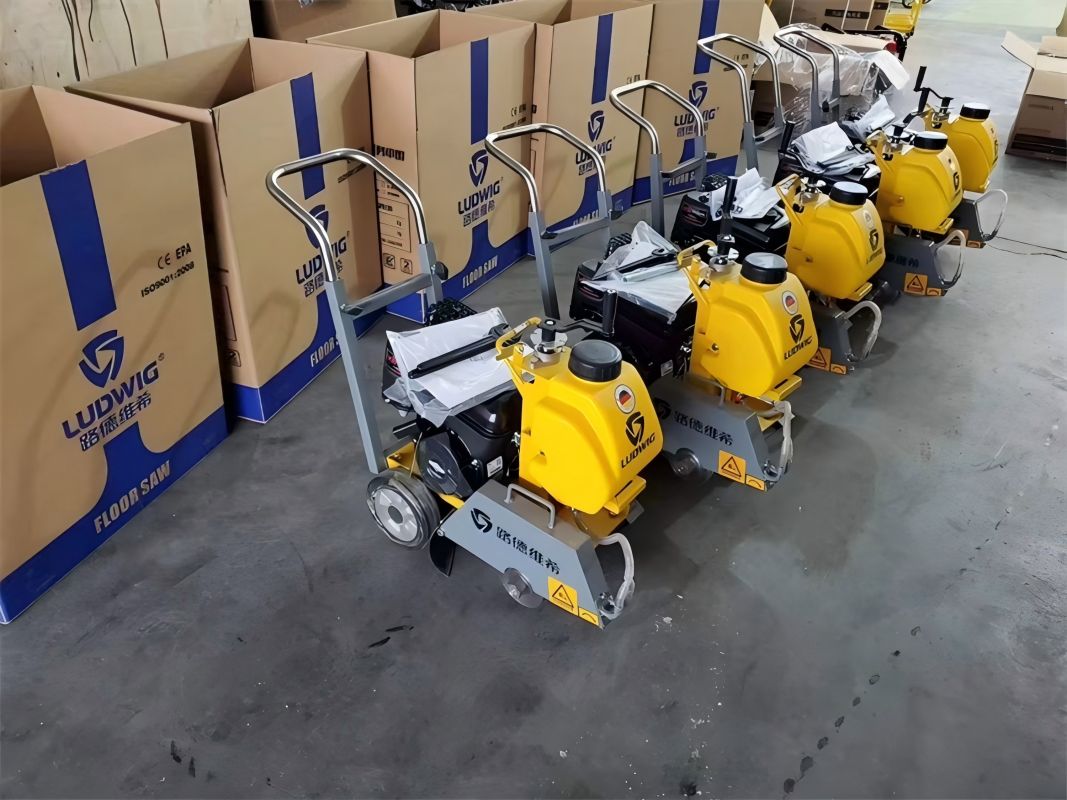
A road saw is a walk-behind cutting machine used to cut concrete, asphalt and other hard surfaces. It is also called a concrete saw, floor saw, slab saw, pavement cutter or road cutting machine. Different markets may use different names, but the working idea is almost the same. The machine uses a rotating blade to cut into the surface while the operator guides it along a marked line.
A concrete road saw is commonly used for cutting concrete slabs, expansion joints, damaged road sections and industrial floors. An asphalt road saw is often used for road maintenance, trenching, patch repair and pavement opening. In many cases, the machine works with a diamond blade because diamond blades are suitable for cutting hard and abrasive materials. For compact pavement and road repair jobs, a machine such as the GFS120 concrete road cutter can be used as a practical walk-behind road saw option for concrete pavement and asphalt surfaces.
A diamond blade road saw is especially useful when the job requires a clean and controlled cut. The blade needs to match the material. Cutting concrete and cutting asphalt are not exactly the same thing. Concrete is hard and dense, while asphalt is softer but more abrasive. Choosing the wrong blade is like wearing office shoes to a muddy construction site. Technically possible, but nobody will enjoy the result.
Main Road Saw Advantages for Construction Work
The first major advantage of a road saw is accuracy. In pavement repair, accuracy matters because the contractor usually does not want to remove more material than necessary. If only one damaged section needs repair, the saw cut should separate that area from the good pavement around it. A clean line helps the crew remove the damaged part without breaking the surrounding surface.
The second advantage is cutting efficiency. A road saw is designed to move forward along the cutting line. Once the depth is set and the blade is aligned, the operator can cut continuously. This is much more efficient than stopping every few seconds, adjusting the tool and trying to correct the line by hand. For longer floor and road cutting tasks, the GFS-400 and GFS-500 walk-behind concrete saws are suitable examples of machines designed for accurate and efficient concrete floor, asphalt pavement and road cutting work.
Another important point is depth control. The road saw depth of cut advantage comes from its larger blade size and stable machine structure. Many handheld tools are limited by blade diameter and operator control. A road saw can usually handle deeper cuts with better stability, which is useful for thick concrete slabs, asphalt pavement and utility trenching.
A road saw also improves working consistency. On a real jobsite, consistency is more valuable than one perfect cut followed by three bad ones. The machine helps the operator keep a steady cutting line and a more uniform depth. This makes the following work easier, whether the next step is breaking, removing, cleaning or backfilling.
Road Saw vs Angle Grinder: Which Tool Makes More Sense?
The comparison of road saw vs angle grinder is common because both tools can cut hard materials. However, they are made for different jobs. An angle grinder is useful for small cutting, trimming, edge work and detail correction. It is light, flexible and easy to carry. If you need to cut a small metal part or trim a short concrete edge, an angle grinder can be a good tool.
But when the job is long, deep or straight, a road saw is usually the better choice. A road saw runs on wheels, so the operator does not need to hold the full tool weight by hand. The machine frame keeps the blade more stable, and the larger blade can cut deeper. This makes it much more suitable for concrete floors, road surfaces, asphalt repair and trench lines.
An angle grinder can easily drift when the operator is tired or when the cut is long. Anyone who has tried to keep a handheld tool perfectly straight for several meters knows that human arms are not laser-guided equipment. A road saw does not remove all skill from the job, but it gives the operator a much better starting point. So the practical rule is simple: use an angle grinder for small cuts and detail work. Use a road saw when the cut must be long, straight, deep and clean.
Road Saw vs Jackhammer: Cutting Before Breaking
Many people ask: what are the advantages of using a road saw over a jackhammer? The answer is that a road saw and a jackhammer do different jobs. A road saw cuts the surface. A jackhammer breaks the material. In many professional repair projects, the best method is not choosing one or the other. It is using them in the right order.
If a jackhammer is used directly on concrete or asphalt without a saw-cut boundary, the impact can create rough edges and unwanted cracks. This may be acceptable for full demolition, but it is not ideal for controlled pavement repair. When only one section needs removal, the crew wants the damage to stay inside the repair area. The surrounding pavement should remain as untouched as possible.
A road saw solves this problem by creating a clean boundary first. After the cutting line is finished, the jackhammer can be used inside the cut area. This makes breaking and removal easier to control. It also reduces the chance of damaging the good pavement around the repair zone. This is one of the strongest benefits of road saw for pavement repair because it gives the project a clear edge before heavy impact work begins.
Benefits of Road Saw for Pavement Repair
Pavement repair often requires precision. A damaged area may be small, but if the cutting and removal are not controlled, the repair area can become much larger than planned. More removal means more labor, more backfill, more repair material and more time. A road saw helps avoid this problem by cutting a clear outline around the damaged section.
For concrete pavement, a clean saw cut creates a more regular repair edge. This helps the new material fit better and makes the repaired area look more professional. For asphalt pavement, a clean cut helps remove loose or broken edges before patching. It also makes the repair area easier to compact and finish. A road saw is especially useful for road repair, pothole repair, parking lot maintenance and utility work because asphalt and concrete can both break unevenly if they are only attacked with impact tools.
For contractors who need a heavier machine for demanding roadwork, the GFS-750 walk-behind concrete saw is designed for heavy-duty cutting of concrete roads, asphalt pavements and industrial floors. A machine in this class is more suitable when the job requires stronger cutting performance, deeper cutting capacity and stable operation on larger work areas.
How Does a Road Saw Improve Cutting Efficiency?
The question how does a road saw improve cutting efficiency can be answered in a very practical way. It improves efficiency by helping the operator cut faster, straighter and with fewer corrections. A road saw is built for pavement cutting, so the machine structure, blade position and power output all support continuous cutting.
First, the road saw allows the operator to follow a marked line more easily. Since the machine is supported by wheels, the blade stays more stable during movement. This is important for long cuts because even a small mistake at the beginning can become a big deviation at the end. Second, the road saw can use larger blades than many handheld tools. Larger blades can often cut deeper, which reduces the need for repeated passes. Fewer passes mean less time, less labor and less blade wear.
For heavier applications where cutting depth is a major concern, the QF-700 semi-automatic concrete cutter offers a 28-inch blade and a maximum cutting depth of 250mm, making it suitable for road engineering, concrete repair, stone processing and road building work. This type of deeper cutting capacity shows why road saws are often preferred when the project requires more than light surface cutting.
Road Saw Dust Suppression Advantages and Safety
Road saw safety should never be treated as a small topic. Cutting concrete and asphalt can create dust, noise, flying particles, blade heat and vibration. A good cutting process should protect both the operator and the people around the jobsite.
One important safety benefit is dust control. The road saw dust suppression advantages usually come from wet cutting. Many road saws can feed water to the blade while cutting. Water helps reduce dust, cool the blade and improve visibility. It also helps the operator see the cutting line more clearly, which improves accuracy. The water system is not just a decoration on the machine. It is like giving the blade a small drink while it does one of the toughest jobs on site.
Dust suppression is especially important when cutting concrete because concrete dust can contain fine particles that are harmful if breathed in. Less dust means a cleaner work area and better visibility. It also makes the jobsite more comfortable. Of course, water creates slurry, so cleanup still needs to be managed. A wet jobsite is better than a dusty one, but nobody wants to create a small concrete-flavored swimming pool either.
For users who want to understand more about common road cutting machine questions, applications and basic selection points, ACE also provides a helpful article on frequently asked questions about road cutting machines. Linking practical product knowledge with jobsite safety information can help buyers make better decisions before choosing a model.
Road Saw Advantages for Utility Trenching
The road saw advantages for utility trenching are very clear. Utility trenching often requires narrow and straight openings for pipes, cables, drainage lines or communication systems. Before excavation starts, the contractor needs to define the trench edges. A road saw can cut two straight lines along the planned trench, making the removal area cleaner and more controlled.
This is useful because trenching is not only about digging. It is also about restoring the surface after the work is finished. If the trench edges are rough and uneven, the repair will be harder to finish neatly. If the cut lines are straight, backfilling and surface restoration become easier. The road saw depth of cut advantage is also important here. A shallow cut may not fully separate the pavement layer, which can cause rough breaking during excavation. A deeper and more consistent cut helps the crew remove the surface layer more predictably.
For medium-to-heavy road cutting tasks, a machine such as the QF600 22-inch semi-automatic concrete cutter can be suitable for sidewalks, driveways and road surfaces. This kind of machine helps contractors complete pavement opening work with more control before excavation or repair begins.
Petrol Road Saw vs Electric Road Saw Advantages
The topic of petrol road saw vs electric road saw advantages depends mainly on the jobsite environment. A petrol road saw is usually better for outdoor projects where mobility and power are important. It does not need a nearby electrical supply, so it is suitable for road repair, asphalt cutting, outdoor concrete work and remote construction sites.
An electric road saw has different advantages. It is often better for indoor or semi-enclosed spaces because it does not produce exhaust fumes during operation. It can also be easier to start, quieter in some cases and simpler to maintain compared with petrol-powered machines. For indoor floor cutting, warehouse renovation or areas with strict emission concerns, an electric model may be the smarter choice.
The right choice depends on four questions. Where will the machine be used? How deep does it need to cut? Is there stable power on site? How long will the machine work each day? If the project is outside and power supply is limited, petrol is usually more practical. If the project is indoors and ventilation is a concern, electric is usually easier to manage. In short, petrol gives freedom. Electric gives cleaner operation. The best machine is the one that matches the jobsite, not the one that sounds strongest in a catalog.
Road Saw for Hire, Road Saw Rental or Buying a Road Saw?
Many contractors search for road saw for hire or road saw rental when they only need the machine for a short project. This makes sense for one-time repair jobs, small cutting tasks or companies that do not cut pavement often. Renting can reduce upfront cost and gives access to a professional machine without worrying about long-term storage and maintenance.
However, buying a road saw can be more economical for companies that do regular pavement repair, road maintenance, floor cutting or utility trenching. If the machine is used often, rental costs can add up quickly. Ownership also gives the company more control over machine availability, blade choice and maintenance condition.
For smaller cutting jobs, users may consider compact machines such as the GFS-380 concrete road cutter, which can work as a concrete road cutter, asphalt cutter machine or small concrete floor saw. For distributors and rental companies, offering different road saw sizes can help serve a wider range of customers, from small repair contractors to professional road maintenance teams.
How to Choose the Right Road Saw
Choosing the right road saw should start with the job, not the price. A low price looks attractive, but the wrong machine can cost more later through slow cutting, poor depth control, blade problems or repair delays. The first question should always be: what material will the machine cut most often?
If the main work is concrete cutting, choose a machine and blade suitable for hard concrete surfaces. If the main work is asphalt repair, choose a setup that handles abrasive asphalt well. If the machine will be used for both concrete and asphalt, blade selection becomes even more important. The second question is cutting depth. A deeper cut requires a larger blade and enough machine power. The machine frame also needs to be stable enough to keep the blade running smoothly.
The third question is dust control. A good water system can improve cutting comfort, blade cooling and jobsite safety. If the saw is used in public areas, indoor spaces or busy construction zones, dust suppression should be a priority. The fourth question is maintenance. A road saw should be easy to inspect, clean and service. Construction equipment does not live an easy life. It meets dust, water, vibration and operators who sometimes treat machines with less kindness than they treat their phones. A simple and serviceable design helps the machine survive real jobsite conditions.
For buyers who want to compare different concrete saw, floor saw and road saw options, the full concrete saw product category provides a useful starting point. From compact cutting machines to larger road saws, different models can match different cutting depths, jobsite conditions and project budgets.
FAQ About Road Saw Benefits and Safety
What are the main road saw advantages?
The main road saw advantages are cleaner cuts, better cutting depth, improved straight-line control, higher efficiency on long cuts and better preparation for pavement repair or utility trenching. A road saw helps define the cutting boundary before breaking or removal work begins, which reduces unnecessary damage around the repair area.
Is a road saw better than an angle grinder?
For long, straight or deep pavement cuts, a road saw is usually better than an angle grinder. An angle grinder is useful for small trimming work, but it is not designed for continuous road, slab or asphalt cutting. The road saw vs angle grinder choice depends on job size, depth and required accuracy.
What are the advantages of using a road saw over a jackhammer?
A road saw creates a clean cutting line, while a jackhammer breaks material by impact. Using a road saw before jackhammer work helps control the repair boundary and reduce uncontrolled cracking. This is especially useful for pavement repair, trenching and concrete slab removal.
How does a road saw improve cutting efficiency?
A road saw improves cutting efficiency by combining machine stability, larger blade capacity, controlled cutting depth and continuous movement along the cutting line. This makes it faster and more consistent for long cuts than many handheld tools.
What are road saw dust suppression advantages?
Road saw dust suppression advantages mainly come from wet cutting systems. Water can reduce airborne dust, cool the blade and improve visibility during cutting. This supports better jobsite safety, especially when cutting concrete, asphalt or other hard pavement materials.
Should I choose petrol or electric road saw?
Choose a petrol road saw for outdoor jobs where mobility and power are important. Choose an electric road saw for indoor or low-emission jobs where exhaust fumes, noise and ventilation are more sensitive. The best choice depends on the jobsite environment, cutting depth and power availability.
Conclusion: Better Cutting Means Better Repair
The biggest advantage of a road saw is control. It controls the line, the depth, the repair boundary and the cutting process. This control helps contractors work faster, reduce damage and produce cleaner results. That is why road saws are widely used in concrete cutting, asphalt repair, pavement maintenance and utility trenching.
Compared with an angle grinder, a road saw is better for long, straight and deep cuts. Compared with a jackhammer, it creates a clean boundary before breaking starts. Compared with rough cutting methods, it helps protect the surrounding pavement and reduce unnecessary repair work.
A road saw is not just a machine that cuts hard surfaces. It is a planning tool, a safety tool and a productivity tool. For contractors, rental companies and equipment buyers, choosing the right road saw can make pavement cutting more efficient, more professional and much easier to manage.
In the end, concrete and asphalt are hard materials, but the working method does not have to be hard to understand. Cut cleanly, control the boundary, manage the dust and choose the right machine for the job. That is where the real road saw advantages begin.

