A construction equipment supplier of construction machinery solutions for 30 years. WhatsApp:+86-18968212829
Language
A construction equipment supplier of construction machinery solutions for 30 years. WhatsApp:+86-18968212829
A cement mixer may look simple, but the mixing process is more technical than many users expect. The machine does not just rotate materials inside a drum. Its real job is to lift, drop and fold cement, sand, aggregate and water until the batch becomes even and workable. That is why people search not only for how does a cement mixer work, but also for how does a concrete mixer work. In real site work, these two questions mean the same thing. Users want to know how the machine creates a consistent mix and why one batch performs better than another.
To understand this clearly, it helps to start with the working principle first. Once that part is clear, capacity, operation and mixer types become much easier to judge. This is also why a good cement mixer capacity guide should never be separated from daily use and actual job needs.
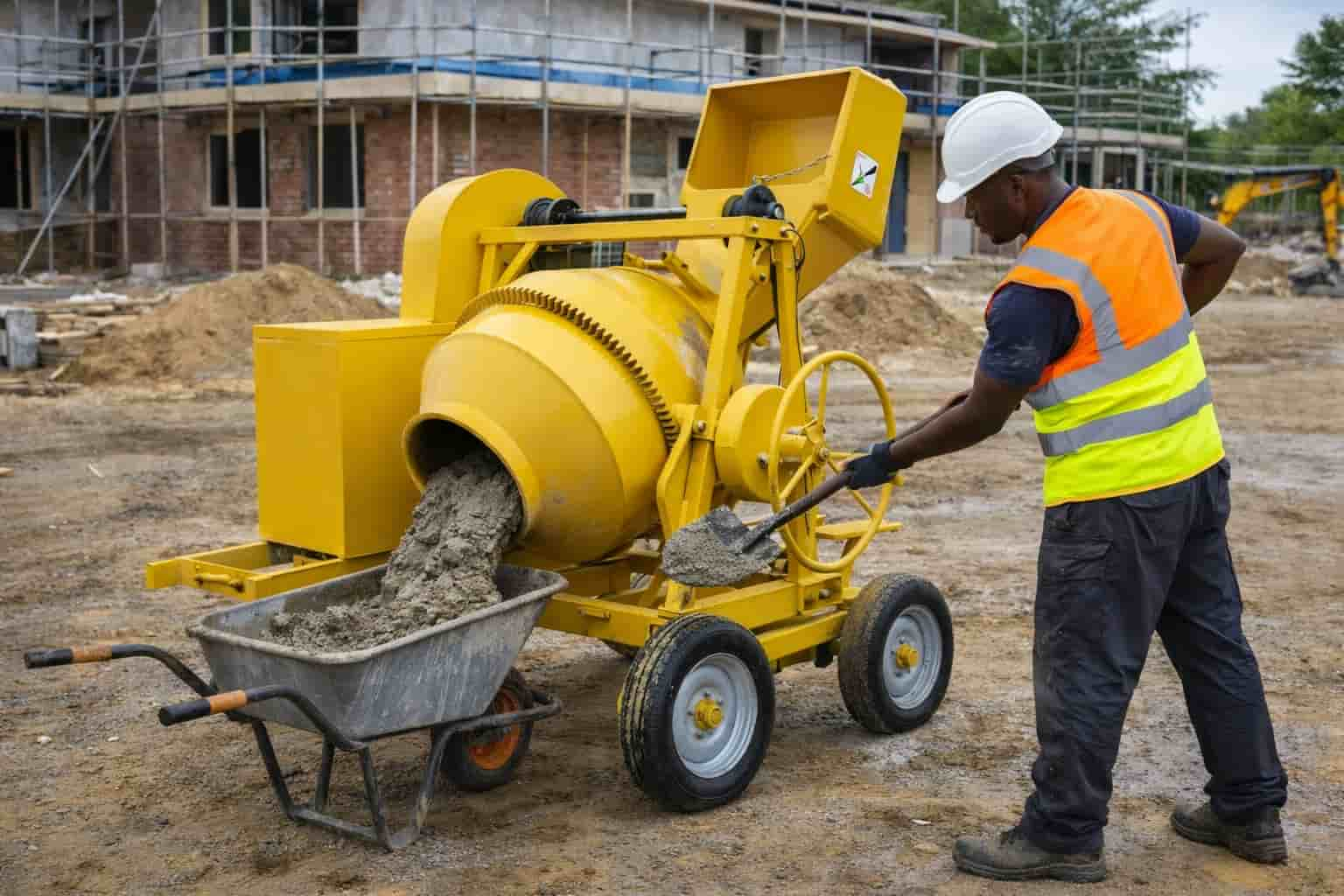
If we begin with the basic principle, the answer is straightforward. The drum rotates, and the blades fixed inside the drum carry part of the material upwards. When the material reaches a certain height, gravity pulls it back down into the rest of the batch. This repeated lifting and falling action blends cement, sand, aggregate and water into a more even mix. In other words, the machine depends on controlled movement rather than simple spinning.
This point matters because many people assume faster rotation always means better mixing. In reality, mixing quality depends on the balance between drum speed, blade shape, drum angle and batch size. If the drum turns too slowly, circulation becomes weak. If it turns too fast, the material may stick to the drum wall or separate instead of blending properly. So, when users ask how does a cement mixer work, the better answer is that it works by creating a stable mixing cycle inside the drum.
Inside the drum, the blades do the real work. They lift the material up and then allow it to fall back into the batch. This folding action breaks up dry pockets and spreads moisture more evenly across the mix. Over time, the ingredients become better coated, and the concrete reaches a workable consistency.
At the same time, the batch needs enough room to tumble. If the drum is too full, the material cannot lift and fall properly. Instead, it slides around as one heavy mass, and the mixing effect drops. That is why nominal drum volume and real output are never exactly the same. Good mixing needs both correct drum design and correct loading volume.
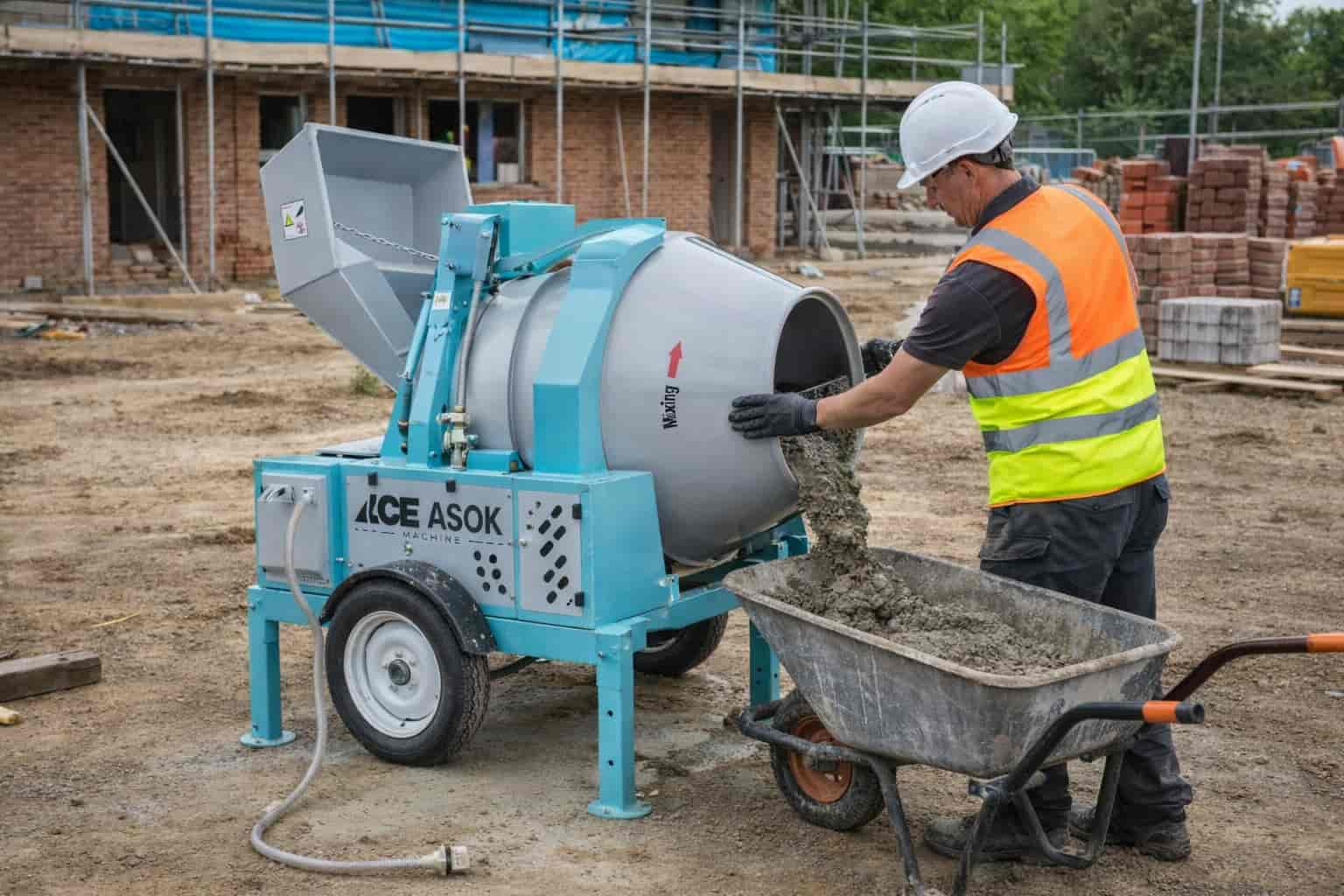
A proper cement mixer capacity guide starts with one simple rule: drum size is not the same as usable batch output. Many buyers focus on the advertised drum volume, but that number only tells part of the story. A portion of the drum must stay free so the mix can tumble and blend. Without that space, the machine loses mixing efficiency.
This directly affects site performance. A mixer that is too small forces the crew to run extra batches, which increases labour time and slows the pour. A mixer that is too large may be harder to move, harder to power and less practical for confined work areas. So, capacity should be matched to workflow, not judged by drum size alone.
The real question is not how large the drum looks on paper. The real question is how much concrete the machine can mix properly in one cycle. Usable output depends on drum shape, blade action, material type and how wet or dry the mix needs to be. That is why two mixers with similar drum sizes may still perform differently on site.
For small repairs, garden projects and light paving work, a compact portable mixer is often enough. For footing work, repeated slab batches or larger daily output, a higher-capacity unit usually makes better sense. In practical terms, the right machine is the one that keeps the job moving without overloading the operator or the motor.
Once the correct capacity is chosen, performance depends on proper operation. That is why users often search for how to use a cement mixer, cement mixer how to use and concrete mixer how to use. They do not only want to know how to start the machine. They want to know how to use it correctly, safely and efficiently.
The first step is positioning. The mixer should be placed on firm, level ground before loading begins. This improves stability, makes discharge easier and reduces the risk of tipping. A machine standing on uneven ground is harder to control and more likely to create inconsistent working conditions from one batch to the next.
After positioning, the next key point is the loading order. In most cases, the drum should be running before the full batch is added. Many operators begin with part of the water, then add the dry materials, and then adjust with the remaining water. This reduces build-up inside the drum and helps the mix form more evenly.
Water control is equally important. Too little water leaves the batch dry and difficult to place. Too much water makes the concrete easier to move, but it can reduce final strength. That is why experienced operators focus on consistency rather than speed alone. A good batch should look even in colour, texture and moisture before discharge begins.
One common mistake is overloading the drum. Another is adding too much water too quickly. Some users also allow hardened concrete to remain inside the mixer after use. That residue reduces usable capacity and affects future batch quality. For this reason, cleaning the machine after each batch is not just a maintenance step. It is part of maintaining mixing performance.
Mixing time also needs judgment. The goal is not to let the drum run for as long as possible. The aim is to produce a uniform batch with the correct workability. Once the mix looks consistent and moves evenly, it is usually ready for discharge.
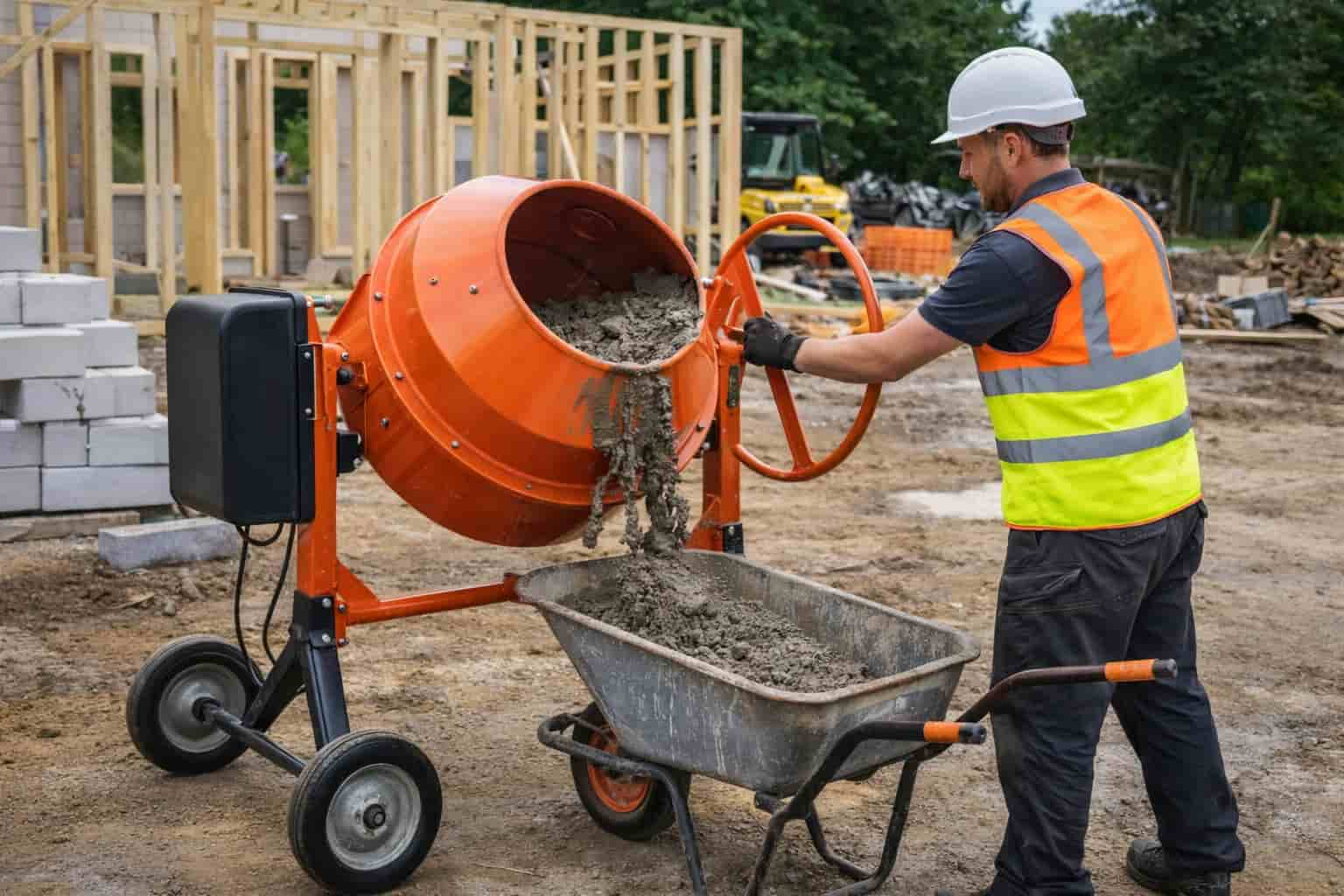
After understanding the working process and operating method, the next logical step is to compare the main types of cement mixers. Different machines solve the same mixing problem in different ways, and each design suits a different job condition.
The most common type is the concrete drum mixer. This is the familiar mixer used on many construction sites, repair jobs and landscaping projects. It is practical, easy to move and suitable for repeated batch work. For many users, it offers the best balance between portability, simplicity and output.
Within the drum mixer group, there are tilting drum mixers, non-tilting drum mixers and reversing drum mixers. Each version changes the way material is discharged, but the internal mixing principle remains similar. Beyond drum mixers, there are also pan mixers and continuous mixers. Pan mixers are often used where blending speed and uniformity are more important. Continuous mixers are better where concrete must be produced in a steady flow rather than in separate batches.
For most everyday site work, however, the drum mixer remains the most practical option. It is easier to operate, easier to maintain and well suited to portable use. That is why understanding different types of concrete mixers is not only about machine names. It is really about choosing the right design for the job.
At this stage, the connection between all the search terms becomes clear. How does a cement mixer work, cement mixer capacity guide, how to use a cement mixer and types of cement mixers are not separate topics. They are different parts of the same decision process.
A mixer works well only when its design suits the job, its capacity matches the required output and its operating method supports consistent batching. If one part is wrong, the machine may still run, but the quality of the concrete and the efficiency of the site will suffer. That is why experienced buyers do not choose a mixer by price or drum size alone. They choose it as part of the full site workflow.
So, how does a cement mixer work? It works by rotating a drum with internal blades that lift and drop materials until they form a consistent concrete mix. However, that mechanical principle is only the beginning. Real performance depends on correct capacity, correct loading order, stable site setup and the right mixer type for the job.
Once you understand that connection, choosing a mixer becomes much easier. A good machine is not simply the one with the largest drum. It is the one that matches your site conditions, daily workload and expected output. That is what leads to better batching, smoother operation and more reliable concrete quality.
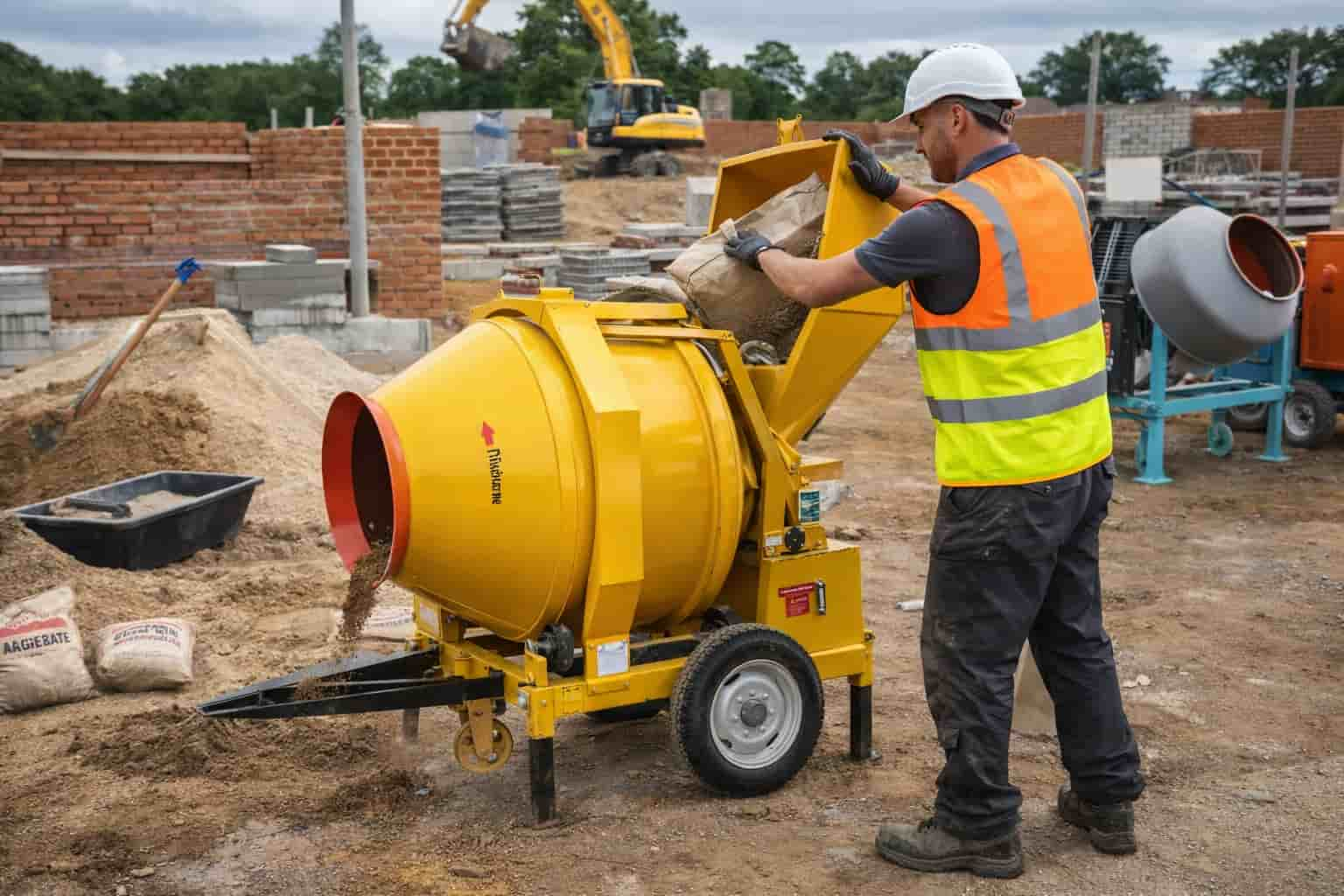
A cement mixer works by rotating a drum fitted with internal blades. These blades lift and drop the materials repeatedly so the batch becomes evenly mixed.
A concrete mixer works on site by combining cement, sand, aggregate and water inside a rotating drum. The materials tumble together until the mix becomes workable and consistent.
Place the mixer on firm, level ground first. Start the drum before full loading, control the water carefully, and clean the machine after each batch.
Drum size is the total volume of the drum, while mixing capacity is the amount of material that can be mixed properly in one batch. The two figures are not the same.
The main types include tilting drum mixers, non-tilting drum mixers, reversing drum mixers, pan mixers and continuous mixers.
A concrete drum mixer is a machine that mixes concrete inside a rotating drum. It is widely used because it is practical, portable and suitable for repeated site batching.

