Concrete Mixer Batch Size Guide: Mix Ratio, Drum Volume and Real Output
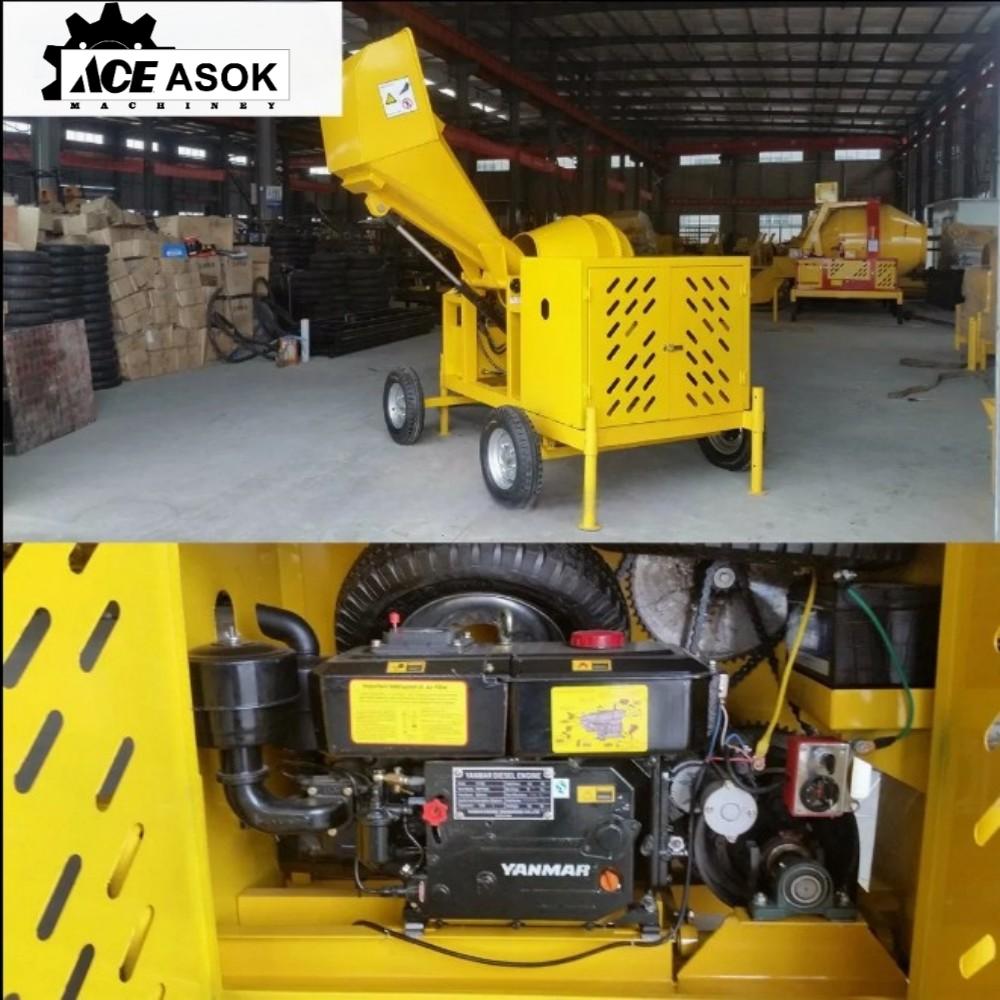
A concrete mixer batch size is easy to misunderstand. A machine may carry a 350L or 500L label, but that number does not always tell you how much finished concrete will come out after one cycle. It may refer to drum volume, loading volume or another rated capacity. On a real job, the useful number is the amount the mixer can handle properly and discharge repeatedly without struggling. That is what affects cycle count, labour and daily output.
Mix ratio is part of the same conversation, but it solves a different problem. The ratio tells the crew how cement, sand and aggregate are proportioned. Mixer capacity tells you how much of that material the machine can actually deal with. Confusing the two is a good way to end up with either an overloaded drum or a crew standing around waiting for the next batch.
Quick Concrete Mix Ratio Chart for Mixer Batches
For small site batches, ratios such as 1:2:3 and 1:2:4 are still useful because everyone understands them quickly. They are best treated as field references, not universal concrete recipes. If the job is structural, exposed to severe weather or controlled by an engineer's specification, the approved mix design comes first.
| Nominal Mix Ratio | Cement | Sand | Coarse Aggregate | Practical Reference |
|---|---|---|---|---|
| 1:1.5:3 | 1 part | 1.5 parts | 3 parts | Richer field mix where permitted |
| 1:2:3 | 1 part | 2 parts | 3 parts | Common general field reference |
| 1:2:4 | 1 part | 2 parts | 4 parts | Leaner field mix for lighter work where allowed |
| 1:3:6 | 1 part | 3 parts | 6 parts | Lean or non-structural concrete reference |
What Does 1:2:3 Mean in a Concrete Mixer?
A 1:2:3 mix is simply one part cement, two parts sand and three parts coarse aggregate. If the crew uses a 10-litre bucket, that becomes 10 litres of cement, 20 litres of sand and 30 litres of aggregate. The bucket size is not the important part; using the same measuring unit consistently is.
Water should be handled separately. It should not become a casual fourth number in the ratio, because the real water content also depends on moisture already sitting on the sand and stone.
If you need more detail on 1:2:3, 1:2:4 and similar field mixes, see the ACE concrete mix ratio chart. Here, the more useful question is how those proportions behave once they go into an actual mixer.
Water-Cement Ratio: Where Site Batches Often Drift
ACI defines the water-cementitious materials ratio, or w/cm, as the mass of mixing water divided by the mass of cementitious material. So if 50 kg of cementitious material is used at a w/cm of 0.50, the total mixing water is 25 kg.
That sounds tidy until the aggregates are wet. Sand stored outside after rain can already carry a fair amount of water into the drum. The operator may add exactly the same bucket of water as yesterday and still get a noticeably wetter mix.
Wet Sand Can Change the Mix Before the Hose Is Turned On
Aggregate normally makes up a large share of concrete volume. NRMCA puts the figure at roughly 60–75%. When most of the batch is sand and stone, surface moisture on those materials is not a small detail.
If damp sand is treated as dry sand, the extra moisture quietly becomes part of the mixing water. The mix may look smoother and easier to discharge, but the actual w/cm has changed. From the operator's point of view, nothing obvious happened. From the concrete's point of view, quite a lot happened.
Why Extra Water Feels Helpful at First
Adding water works quickly, which is exactly why it is tempting. NRMCA gives a practical rule of thumb that about 5 litres of extra water per cubic metre can increase slump by roughly 25 mm. On site, that difference is easy to notice.
The downside appears later. Water above the design amount can delay setting, reduce strength, affect durability and increase cracking risk. A wet mix may make the next ten minutes easier while creating problems that stay in the concrete for years.
Concrete Mixer Batch Size: Drum Volume Is Not Finished Output
This is where equipment quotations can become confusing. One supplier may show drum volume. Another may talk about loading capacity. A third may give discharge capacity. All three numbers can be correct and still describe different things.
| Capacity Term | What It Describes | What the Buyer Needs to Know |
|---|---|---|
| Drum volume | Total space inside the drum | Do not treat it as finished output |
| Loading capacity | Material loaded for one working cycle | Check the recommended working load |
| Discharge capacity | Mixed concrete available after one batch | Use this for job planning |
| Hourly output | Production over repeated cycles | Check what loading and cycle time were assumed |
A mixer needs spare space inside the drum because the blades have to lift and tumble the material. If the drum is packed too full, the machine may continue turning, but the materials have less room to move through the mixing path. More material in the drum does not automatically mean more useful concrete out of it.
The ACE guide to concrete mixer capacity and output efficiency goes deeper into this difference.
350L, 400L or 500L: Which Mixer Size Makes Sense?
The current ACE concrete mixer models include 350L, 400L and 500L classes with petrol, diesel and electric power options. These size labels are useful for narrowing the list, but they are not enough on their own.
| Mixer Class | Where It Often Fits | What to Confirm |
|---|---|---|
| 350L | Small pours, repairs, posts and mobile contractor work | Usable batch size, power source and discharge method |
| 400L | Regular site batching and repeated contractor work | Working capacity, blade layout, transmission and frame |
| 500L | Larger repeated batches on small and medium sites | Discharge volume, loading height, power demand and transport |
A bigger mixer earns its keep only when the rest of the site can keep up with it. If aggregate arrives slowly, the crew is small or the concrete has to be moved a long distance after discharge, a larger drum can spend a surprising amount of time waiting.
For that reason, contractors should compare usable batch output and cycle time rather than litres alone. Dealers and rental companies also need to look at transport, wheel strength, maintenance access and the type of customer likely to use the machine.
How Do You Turn a Mix Ratio into One Mixer Batch?
Take the simple 1:2:3 example again. Using one 10-litre bucket gives:
| Material | Example Quantity |
|---|---|
| Cement | 10 L |
| Sand | 20 L |
| Coarse aggregate | 30 L |
| Water | Controlled separately according to w/cm and aggregate moisture |
What it does not give you is 60 litres of finished concrete. Sand settles into the spaces between larger aggregate particles, cement paste fills smaller voids and the whole batch becomes denser as it mixes. Dry ingredient volume and final concrete yield are not the same number.
For simple field work, volume batching can be convenient. For engineered work, weighing materials and following the approved mix design gives much tighter control. A shovel is a useful tool; it is not a precision batching instrument.
Loading Order and Mixing Time Still Matter
Once the batch size is sensible, the next job is consistency. Materials should be measured the same way from batch to batch, and the mixer needs enough time to distribute cement paste through the aggregate properly.
Loading order varies with mixer design and material condition, so there is little value in pretending one sequence works for every machine. The ACE guide on how to mix concrete in a mixer covers the operating process separately. If you are checking rotation speed and mixing time, the guide to concrete mixer drum speed is the better reference.
Ready-mixed concrete gives a useful example of how carefully late water additions are handled. NRMCA notes that ASTM C94/C94M calls for 30 additional mixer revolutions at mixing speed after jobsite water or admixture is added. That rule applies to ready-mix trucks, not automatically to portable site mixers, but the basic lesson still stands: water added at the end still has to be mixed through the whole batch.
Common Batch Problems Seen on Site
| Problem | What Usually Happens | Better Approach |
|---|---|---|
| Drum filled too full | Material has less room to tumble | Stay within the rated working capacity |
| Water added by eye | Actual w/cm changes from batch to batch | Measure water and watch aggregate moisture |
| Wet sand treated as dry | Extra water enters unnoticed | Adjust added water when stockpile moisture changes |
| Mixing stopped too early | Batch may remain uneven | Follow the machine guidance and check the discharge |
| One mix used everywhere | The concrete may not suit the job | Follow the required specification |
| Buying from drum litres only | Real output may be lower than expected | Compare discharge capacity and cycle time |
What Should a Buyer Check Before Ordering?
Start with the job. How much concrete needs to be placed in one day? How large should each batch be? Is electricity available, or does the site need petrol or diesel? Can the mixer be moved easily between work areas?
Then look at the machine itself. Check discharge capacity, blade arrangement, drum construction, transmission, frame, wheels and service access. For a rental fleet or dealer, spare parts matter just as much as the first purchase price. A cheap mixer becomes less cheap when a common bearing or belt takes three weeks to arrive.
The ACE concrete mixer inspection checklist covers the mechanical side in more detail. Buyers comparing mobile equipment can also use the portable concrete mixer buying guide.
When asking for a quotation, send the expected batch output, concrete type, available power source, site access and normal daily workload. Those details give the supplier something useful to work with. “Send me your biggest mixer” usually does not.
Concrete Mixer Batch Size FAQ
Can a 350L concrete mixer produce 350L of finished concrete?
Not necessarily. The 350L figure may describe drum volume or another rated capacity. Check the model's usable mixing and discharge capacity before planning production.
Is drum volume the same as concrete output?
No. Drum volume is the physical space inside the mixer. The materials still need room to move, so usable batch size and finished output can be lower.
What is the best concrete mix ratio for a mixer?
The mixer does not decide the ratio. Nominal mixes such as 1:2:3 can be useful field references, but structural concrete should follow the required strength, exposure conditions and approved mix design.
Does wet sand change the amount of water needed?
Yes. Free surface moisture in the sand becomes part of the mixing water. If it is ignored, the actual w/cm can rise even when the operator adds the same amount of water as usual.
Should I choose a 350L or 500L mixer?
Choose from usable batch volume, daily output, power supply, crew size, transport and site access. The litre class helps narrow the options, but it should not make the final decision by itself.
Tags: concrete mixer batch size, concrete mixer volume, concrete mixer ratio, 350L concrete mixer, 500L concrete mixer, cement sand aggregate ratio, concrete mixer output, concrete mixer capacity, concrete batching, portable concrete mixer

