A construction equipment supplier of construction machinery solutions for 30 years. WhatsApp:+86-18968212829
Language
A construction equipment supplier of construction machinery solutions for 30 years. WhatsApp:+86-18968212829
How deep does a plate compactor compact? The short answer is that there is no single number that works for every machine, every soil type and every jobsite. A light forward plate normally works best on relatively shallow layers of granular material, while a heavier reversible plate can transfer useful vibration deeper into gravel, crushed stone and road base.
The real result depends on several things working together: machine weight, centrifugal force, vibration frequency, base-plate size, soil type, moisture content, lift thickness and the density required by the project. In other words, a plate compactor does not read the brochure before it starts work. The ground conditions still get the final vote.
This matters because a surface can look hard and flat while the material underneath is still loose. For contractors, rental companies and equipment buyers, the more useful question is not simply “What is the maximum compaction depth?” It is “What thickness of material can this machine compact reliably on my site?”
Suggested image: Plate compactor working on a prepared gravel base in controlled layers.
Alt text: plate-compactor-compacting-gravel-base-in-lifts
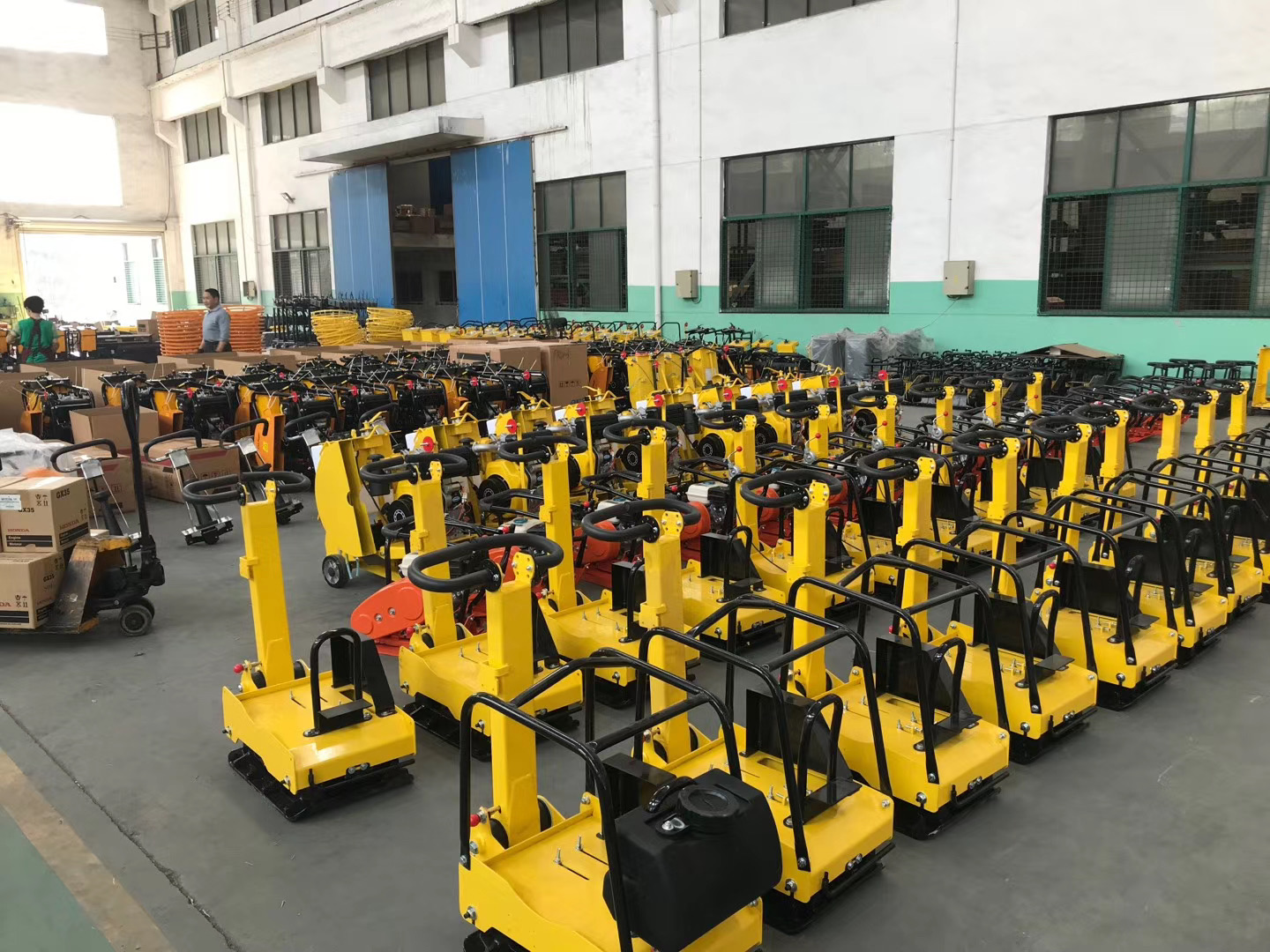
Plate compactor compaction depth changes with the size and type of machine. Small forward plates are commonly used for paving, landscaping and light base preparation. Medium and heavy forward plates handle larger areas and heavier granular layers. Reversible plate compactors are usually selected when the work becomes more demanding, such as trench backfill, foundations and road-base construction.
It is tempting to look at one number in a specification sheet and treat it as the answer. In practice, that can be misleading. A machine may perform well in clean gravel and much less effectively in wet mixed fill. The same compactor can therefore produce very different results on two jobsites only a few kilometres apart.
| Machine Class | Typical Use | Depth Consideration | Common Buyer |
|---|---|---|---|
| Light forward plate | Pavers, landscaping, small repairs | Best suited to relatively shallow lifts | Landscapers, small contractors, rental fleets |
| Medium forward plate | Driveways, paths, granular base | Suitable for heavier granular lifts | General contractors, hire companies |
| Heavy forward plate | Larger base areas and road repairs | More weight and force improve working capability | Civil contractors, road maintenance teams |
| Reversible plate | Trench backfill, foundations, road base | Usually selected for deeper and heavier compaction work | Utility, road and foundation contractors |
This is one of the most important points to understand when comparing machines.
Compaction depth describes how deeply useful vibration can affect the material under suitable conditions. Lift thickness is the thickness of loose material placed before each compaction stage.
Those two numbers are not automatically the same.
If a machine is advertised with a certain compaction depth, that does not mean you should place exactly that thickness of loose material and expect perfect density after one or two passes. Soil type, moisture, machine energy and project requirements still have to be considered.
A catalogue number is useful for comparison. It is not a replacement for jobsite judgement.
Buyers often compare engine power first because horsepower is easy to understand. However, engine output alone does not tell you how deeply the ground will compact. The vibration system and the material underneath the machine are just as important.
A heavier plate compactor applies more static load to the surface and generally has more potential to transfer energy into the ground. This is one reason heavier machines are often used for road base, trench backfill and foundation work.
However, heavier does not automatically mean better. If the machine is too large for a narrow paving job, you may gain compaction force and lose manoeuvrability at the same time. Bigger machines are useful, but they are not magic hammers.
The better approach is to match machine weight to material type, working area and required lift thickness.
Centrifugal force is generated by the rotating eccentric mass inside the exciter. It is usually shown in kilonewtons, or kN, and it is one of the most useful specifications when comparing plate compactors.
For example, ACE lists its C90 forward plate compactor at approximately 15 kN of vibration force. The larger C120 is listed at 120 kg with 20 kN of centrifugal force and is intended for materials such as sand, gravel and other granular fill.
These figures help buyers understand the difference between machine classes. They do not, however, guarantee a specific field density or compaction depth. The machine still has to work with the material, not against it.
Internal link suggestion: Link “120 kg forward plate compactor” to the ACE C120 product page.
Vibration frequency tells you how often the compactor vibrates. It may be shown as vibrations per minute, or VPM, or as hertz.
A higher vibration frequency can improve the movement of granular particles, but higher frequency does not always mean deeper compaction. Frequency works together with amplitude, machine weight, centrifugal force and soil condition.
For buyers, this means one specification should never be judged alone. A useful machine is the result of a balanced system, not a contest to see which brochure has the largest number.
The base plate affects both coverage and pressure distribution. A wider plate can cover more ground with each pass, which improves productivity on open areas. A smaller plate may be easier to control around edges, kerbs and narrow work zones.
For procurement teams, the practical question is simple: does the machine provide enough force and coverage without becoming difficult to transport or operate on the target jobsite?
Suggested infographic: Engine → exciter → centrifugal force → base plate → compacted material.
Alt text: plate-compactor-force-and-compaction-depth-diagram
Even a powerful plate compactor can only work efficiently if the material responds well to vibration. Granular materials usually do. Cohesive soils are more stubborn.
Gravel and crushed stone are well suited to vibratory compaction. When vibration reduces friction between the particles, they can rearrange and settle into a denser structure.
This is why a plate compactor for gravel is widely used for driveways, paving bases, road repairs, landscaping and trench backfill. As the lift becomes thicker or the project becomes larger, a heavier machine may be needed to maintain productivity and achieve the required result.
Sand also responds well to vibration because it is granular. However, moisture still matters. Very dry sand can resist particle movement, while material containing too much water may become unstable under the machine.
A plate compactor for sand therefore works best when the material condition is suitable, not simply because sand appears easy to compact.
Road-base material often contains different particle sizes. This can create a dense, strong layer when it is properly graded and compacted, but it may require more compaction energy than clean bedding sand.
For repeated road-base work, a heavier forward plate or reversible plate can often improve efficiency. Making ten more passes with an undersized machine may feel productive, but the ground does not award points for effort.
Clay behaves differently because its fine particles stick together. Vibratory plates are therefore not always the most efficient choice.
For cohesive soils and narrow trenches, a tamping rammer may be more suitable because it delivers a stronger vertical impact into the material.
Internal link suggestion: Link “tamping rammer for cohesive soil” to the ACE tamping rammer page.
| Material | Plate Compactor Suitability | Equipment Direction |
|---|---|---|
| Sand | High | Forward or reversible plate |
| Gravel | High | Forward or reversible plate |
| Crushed stone | High | Plate compactor sized to the lift |
| Road base | High | Heavier forward or reversible plate |
| Asphalt repairs | Suitable with correct equipment | Plate compactor with water system where required |
| Clay | Limited | Consider a tamping rammer |
| Very wet cohesive soil | Poor | Correct moisture before compaction |
This is where many compaction problems begin.
A trench may be 600 mm deep, but that does not mean you need a machine that can compact 600 mm in one pass. The correct approach is usually to place the material in controlled layers and compact each layer before adding the next.
A lift is simply a layer of material placed before compaction. The fill is added in stages so that the compactor can influence the full thickness of each layer.
This makes the process easier to control and reduces the risk of leaving loose material below a hard-looking surface.
Imagine filling a deep utility trench in one go and then driving a plate compactor across the top. After several passes, the surface may feel solid. Unfortunately, the material near the bottom may still be loose because vibration energy becomes weaker with depth.
This is how a job can look finished on Friday and start settling a few months later.
The better method is to place the fill in suitable lifts, compact each layer, then continue upwards.
Suggested diagram: Incorrect deep fill compacted only from the top versus correct multi-lift compaction.
Alt text: correct-plate-compactor-lift-thickness-method
A loose lift is measured before compaction. Once vibration rearranges the particles and reduces the voids between them, the final compacted layer becomes thinner and denser.
This is another reason buyers should be careful when comparing “maximum depth” claims. Ask whether the number refers to loose fill, compacted material or a manufacturer test condition.
Moisture can either help the compaction process or make it much harder. The goal is not “more water”. The goal is the right condition for the material being compacted.
When granular material is extremely dry, friction between the particles can make rearrangement more difficult. The machine may still vibrate normally, but the density improvement can become slower.
With suitable moisture, particles can move more easily under vibration and settle into a denser structure. The correct condition depends on the material and the project specification, so there is no single percentage that should be used for every site.
Too much water can create the opposite problem. The surface may pump, rut or feel unstable, and the compactor may begin to bounce instead of travelling smoothly.
If that happens, continuing to make pass after pass may only burn fuel and test the operator’s patience. The material condition should be corrected first.
Suggested image: Comparison of dry, workable and overly wet granular material.
Alt text: soil-moisture-for-plate-compactor-compaction
There is no universal number of passes because the answer depends on material type, lift thickness, machine size, moisture condition and the target density.
One rule is much more useful: extra passes cannot fully compensate for an excessively thick lift.
If the machine is mainly compacting the upper part of the layer, another five passes may simply compact the same upper zone again. This is why lift control is often more important than chasing a fixed number of passes.
Experienced operators often notice that the surface stops settling as quickly and the machine begins to travel more consistently. These signs are helpful, but they should not replace formal density testing when the project requires it.
Both forward and reversible plate compactors can handle granular materials, but they are suited to different workloads.
| Factor | Forward Plate Compactor | Reversible Plate Compactor |
|---|---|---|
| Operating weight | Usually lower | Usually higher |
| Compaction force | Light to medium work | Medium to heavy work |
| Travel | Forward only | Forward and reverse |
| Typical application | Paving, landscaping, small repairs | Road base, trenches, foundations |
| Transport | Usually easier | Requires more planning |
| Rental position | Broad light-duty demand | More professional heavy-duty demand |
A reversible plate does not guarantee a certain depth, but its higher operating weight and stronger vibration force normally make it better suited to demanding granular compaction.
Internal link suggestion: Link “reversible plate compactor” to the ACE reversible plate product or category page.
The easiest way to choose a machine is to start with the job rather than the model number.
For bedding sand, paving blocks, footpaths and small landscaping work, a compact forward plate is often the practical choice. It is easier to transport, simple to manoeuvre and usually provides enough compaction for shallow granular layers.
Contractors working on driveways, small foundations, pavement repairs and general base preparation normally need more flexibility. A medium forward plate can offer a useful balance between compaction force, working width and transport weight.
Trench work requires more care because the work area is narrow and material conditions can change quickly. Granular backfill may suit a reversible plate, while cohesive soil may call for a tamping rammer.
For road base, larger backfill jobs and repeated commercial work, productivity becomes more important. A heavier reversible plate can often complete the job more efficiently than a lighter machine making endless passes over the same ground.
Rental companies should think in terms of machine classes rather than one “universal” plate compactor. Useful buying factors include machine weight, centrifugal force, engine options, transport method, water-tank availability, paving mats, service access and spare-parts supply.
A well-planned rental fleet usually covers light, medium and heavy applications. One machine doing every job sounds convenient, but so does one spanner fitting every bolt.
ACE offers forward and reversible plate compactors for different jobsite conditions. The most useful way to compare them is by machine class and application rather than by one maximum-depth figure.
| ACE Model | Verified Public Specification | Practical Selection Position |
|---|---|---|
| C90 | Approx. 15 kN vibration force | Forward plate for sand, gravel and general granular work |
| C120 | 120 kg; 20 kN centrifugal force | Heavier forward plate for construction, civil and road-base work |
| C270 | Heavy reversible plate class | Foundations, backfill, gravel, sand and heavier applications |
The table does not assign a guaranteed compaction depth to each machine because actual field performance depends on the material, moisture, lift thickness and required density. For a serious construction project, that distinction matters more than an impressive-looking number in a catalogue.
If a machine is running but the ground is still not compacting properly, start with the simple causes before assuming something expensive has failed.
This is one of the most common reasons. If too much material is placed at once, the vibration may mainly affect the upper zone.
Wet material can become unstable and cause the machine to bounce or travel poorly.
If the material contains a large amount of clay, a plate compactor may simply be the wrong tool for the job.
A light plate is easy to move and excellent for smaller work, but it may become slow and inefficient on thick road base or heavy commercial backfill.
If performance suddenly drops, inspect the mechanical condition of the machine. Loose fasteners, belt problems, exciter issues or engine-related faults can reduce useful vibration.
Regular inspection is cheaper than discovering the problem halfway through a large job. Machines, unfortunately, rarely repair themselves out of professional pride.
A surface that looks firm is not always proof that the full layer has reached the required density.
For controlled earthworks, field density may need to be checked against a laboratory reference such as a Proctor compaction result, depending on the local standard and project specification.
This is particularly important for roads, foundations, utility reinstatement and other areas where future settlement can create structural or maintenance problems.
For buyers, the lesson is simple: choose a machine that can realistically handle the material and lift thickness, then follow the project’s density requirements rather than relying only on appearance.
There is no single depth for every plate compactor. Light forward machines are generally used on shallower granular lifts, while heavier reversible machines can work more effectively on thicker layers. Soil type, moisture, centrifugal force and required density all affect the result.
A heavy machine may influence a substantial depth of clean gravel, but 12 inches should not automatically be treated as a suitable lift for every machine. In many cases, dividing the fill into thinner layers gives more predictable and controllable compaction.
Lift thickness depends on the material, equipment class and project specification. There is no universal thickness that suits every plate compactor. The safest approach is to follow engineering requirements and compact the material in controlled layers.
Usually, a heavier machine has more potential to compact deeper, especially when it also produces higher centrifugal force. However, machine weight is only one factor. Soil type, frequency, plate size and moisture still affect the final result.
A plate compactor can affect some mixed soils, but it is generally better suited to granular materials such as sand, gravel and crushed stone. Cohesive clay often responds better to a tamping rammer or another compaction method.
For demanding granular work, it usually is. Reversible machines are generally heavier and produce more compaction force, making them well suited to road base, foundations and trench backfill.
Compaction depth is useful only when it is connected to the real jobsite. A machine that performs perfectly on a paving project may be too light for road base, while a large reversible plate may be unnecessary for a small garden path.
Start with the material, lift thickness, working area and required density. Then compare machine weight, centrifugal force, base-plate size, travel direction, engine options and service requirements.
This gives contractors, dealers and rental companies a much clearer way to choose equipment than simply comparing maximum-depth claims.
ACE offers forward and reversible plate compactors for paving, granular soil, road maintenance, trench backfill and general construction work. Buyers can use project details such as soil type, lift thickness, site size and target application to narrow the selection before comparing individual models.
Tags:
plate compactor, plate compactor compaction depth, compaction depth, plate compactor lift thickness, plate compactor for gravel, plate compactor for sand, reversible plate compactor, forward plate compactor, soil compaction, construction compaction equipment
plate-compactor-compacting-gravel-base-in-lifts
plate-compactor-force-and-compaction-depth-diagram
correct-plate-compactor-lift-thickness-method
soil-moisture-for-plate-compactor-compaction
forward-vs-reversible-plate-compactor-depth
ace-plate-compactor-size-and-force-comparison
plate compactor range — place after the machine-class table and link to the ACE plate compactor category page.
120 kg forward plate compactor — place in the centrifugal-force section and link to the C120 product page.
15 kN forward plate compactor — place in the ACE machine example section and link to the C90 product page.
reversible plate compactor — place in the forward-versus-reversible section and link to the relevant ACE reversible plate page.
tamping rammer for cohesive soil — place in the clay section and link to the ACE tamping rammer page.
plate compactor troubleshooting — reserve as a future blog link from the troubleshooting section.
1. How Deep Can a Plate Compactor Compact Gravel and Soil?
2. Plate Compactor Compaction Depth: Soil, Force & Lift Guide
3. How Deep Will a Plate Compactor Compact? Buyer’s Guide
4. Plate Compactor Depth Explained: Gravel, Sand and Road Base
5. Plate Compactor Lift Thickness and Compaction Depth Explained
1. Why Your Plate Compactor May Only Be Compacting the Surface
2. Compaction Depth Explained for Contractors and Equipment Buyers
3. Why More Passes Will Not Fix an Overly Thick Lift
4. Forward or Reversible Plate? Start With the Ground Beneath It
5. What Plate Compactor “Compaction Depth” Really Means
plate compactor, soil compaction, gravel compaction, sand compaction, road base compaction, lift thickness, centrifugal force, reversible plate compactor, forward plate compactor, tamping rammer
If you know the material type, required lift thickness and project area, include these details in your enquiry so the machine class can be matched more accurately.
Dealers and rental companies can also provide their main customer applications so a practical mix of forward and reversible plate compactors can be compared.
For projects with a specified density requirement, include the relevant job specification instead of selecting equipment only by machine weight or advertised compaction depth.

