Thermoplastic vs Cold Paint Road Marking Machine: Which Fits Your Project?
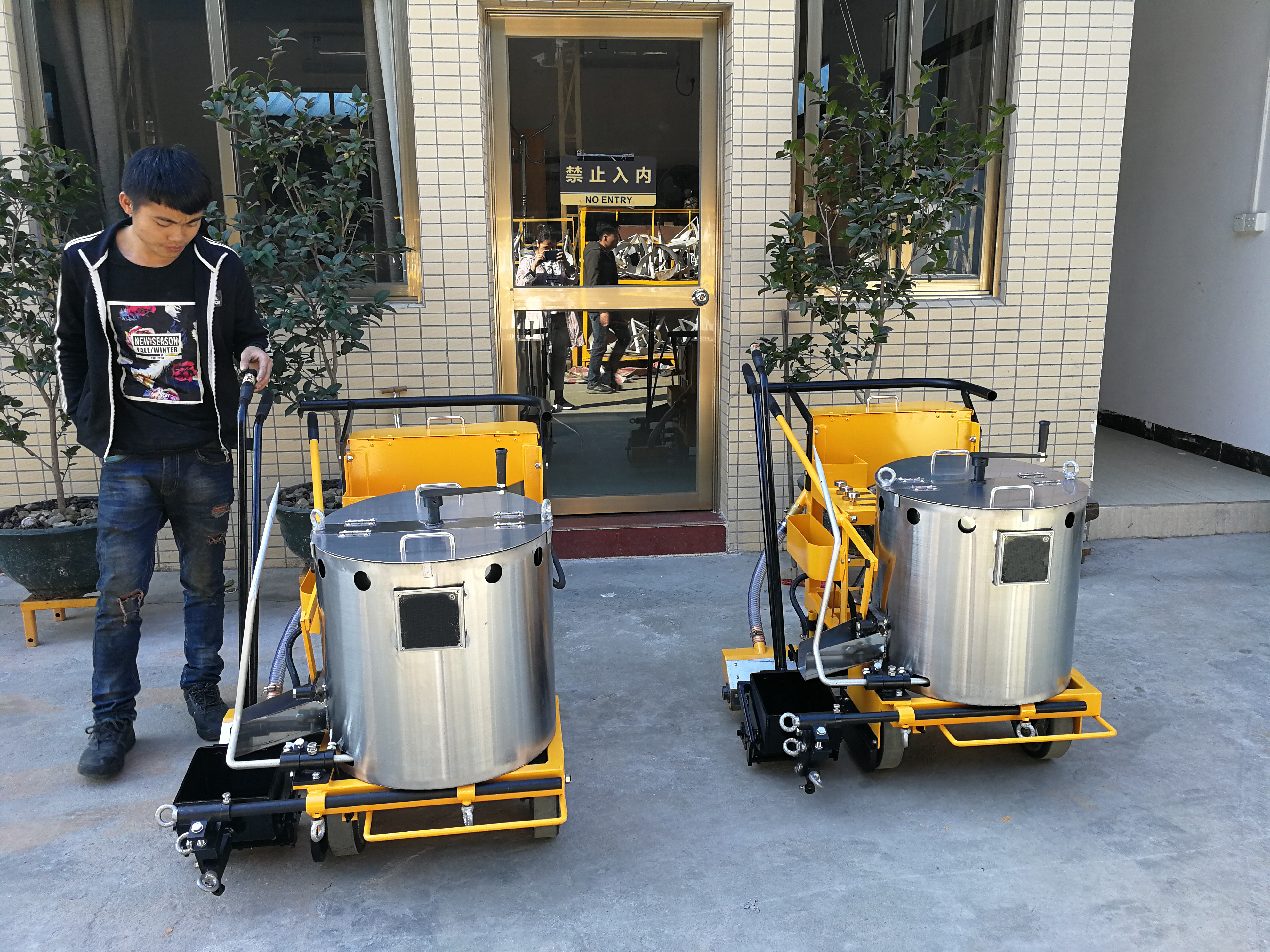
Choosing between a thermoplastic vs cold paint road marking machine is easier when you begin with the work rather than the equipment brochure. A contractor marking long highway lines has a very different production problem from a crew repainting parking bays at several locations in one day. Thermoplastic must be heated and kept workable before application; cold paint normally moves from the paint supply through a pump and spray system without a melting stage. That one difference affects almost everything around the machine, from morning preparation and material handling to line thickness, cleaning and the amount of supporting equipment that travels to site.
What Is the Real Difference Between Thermoplastic and Cold Paint Machines?
A thermoplastic road marking machine has two jobs to manage at the same time: applying the line and keeping the material in the correct working condition. Depending on the system, that can mean a heated tank, preheater, screed shoe or extrusion unit, together with a glass bead dispenser. A cold paint road marking machine has no thermoplastic melting stage, so more attention moves towards pump performance, spray pressure, gun position and nozzle selection.
The difference becomes clearer when application thickness is considered. FHWA pavement-marking test sections in Tennessee included sprayed thermoplastic at 40 and 90 mil and extruded thermoplastic at 120 mil. Paint sections in the research included applications at 12, 25 and 26 mil. Those figures belong to the test programme rather than being universal specifications, but they give useful engineering context. Moving a thick layer of hot thermoplastic onto the road is a different material-handling job from atomising a thinner liquid coating through a spray nozzle.
| What to Compare | Cold Paint Machine | Thermoplastic Machine |
|---|---|---|
| Material condition | Liquid paint | Heated thermoplastic |
| Material preparation | No melting stage | Heating and temperature control required |
| FHWA test examples | 12–26 mil | 40/90 mil spray; 120 mil extrusion |
| Main machine focus | Pump, gun, nozzle and spray control | Heating, material flow, application thickness and beads |
When Does a Thermoplastic Road Marking Machine Earn Its Extra Work?
Thermoplastic asks more from the crew before the first line reaches the pavement, so there should be a reason for taking on that extra work. Service life is one. FHWA maintenance guidance gives an approximate lifespan of 9–36 months for paint and about 72 months for thermoplastic in its crosswalk-material comparison. Traffic, pavement condition and snowplough activity can shorten those periods, so the figures are useful planning references rather than a promise that every thermoplastic line will survive six years.
On longer jobs, there is another issue that becomes obvious quite quickly: the marking machine can only work while it has material. Melting capacity, heated storage and transfer therefore matter when production becomes continuous. A larger engine on the applicator will not help much if the crew is standing beside it waiting for the next batch of thermoplastic. For long road lines, check the complete material route — melting, transfer, tank capacity, application width and bead supply — rather than comparing engine power in isolation.
This is where a preheater can make practical sense. It allows material preparation to take place alongside marking instead of turning every refill into a long interruption. For occasional arrows, crossings or short maintenance sections, a smaller arrangement may be enough. The correct setup depends on how much material the crew needs to put down during a working shift, not on how impressive the machine looks while parked.
Where Does a Cold Paint Road Marking Machine Work Better?
Cold paint has a simpler route to the pavement because there is no thermoplastic melting process to organise. That can be useful for parking areas, factory grounds, local streets and maintenance contracts where the crew moves regularly between relatively small sites. Fewer heating-related steps also mean fewer pieces of supporting equipment to organise before marking starts.
The simpler workflow does not make spray-system selection trivial. On an airless road marking machine, the pump has to handle the specified coating and the nozzle has to suit the required line width and delivery rate. Working pressure, gun arrangement and material viscosity all affect the result. An oversized engine cannot compensate for a worn nozzle or a pump that is poorly matched to the paint — machinery has many talents, but correcting the wrong specification by enthusiasm is not one of them.
Cleaning also deserves a line on the purchasing checklist. Paint remaining in the hose, gun or nozzle after work can cause trouble at the next start-up. Easy access to the fluid circuit, replacement nozzles and a sensible flushing procedure matter much more after several months of use than they do during a five-minute showroom inspection.
Why Do Line Thickness and Glass Beads Matter to Machine Selection?
A road marking machine is ultimately being asked to produce a specified line, not simply dispense material. Thickness affects material consumption and wear, while glass beads help provide nighttime retroreflectivity. Both therefore belong in the equipment discussion.
FHWA's review of US State specifications shows how much the required values can vary. Examples from Alabama and Florida specify initial white-marking retroreflectivity of 300 mcd/lux/m² for paint and 450 mcd/lux/m² for thermoplastic. North Carolina examples list 225 mcd/lux/m² for paint and 375 mcd/lux/m² for thermoplastic. These are agency-specific examples rather than universal targets, which is precisely the point: the machine settings and bead system should follow the project specification.
| FHWA Specification Example | White Paint | White Thermoplastic |
|---|---|---|
| Alabama | 300 mcd/lux/m² | 450 mcd/lux/m² |
| Florida | 300 mcd/lux/m² | 450 mcd/lux/m² |
| North Carolina | 225 mcd/lux/m² | 375 mcd/lux/m² |
For thermoplastic equipment, look at bead hopper capacity, dispensing adjustment and how evenly beads are dropped into the fresh marking. For cold-paint equipment, the bead system still has to work with the paint application rate and specified line. Simply having a bead dispenser fitted does not tell you whether the finished marking will meet the contract.
Traffic, Pavement and Climate Can Change the Answer
A thermoplastic machine may look attractive on paper because of the longer potential service interval, but road conditions get the final vote. FHWA guidance notes that snowplough activity can damage raised thermoplastic markings. Surface preparation matters as well: dirt, moisture and a poorly prepared pavement can undermine a marking before material durability becomes the main issue.
The pavement itself also affects the application method. Material adhesion, existing markings and surface condition should be checked before deciding how the line will be applied. A good machine cannot rescue poor preparation, just as a good paint specification cannot repair an unsuitable machine setup. On real projects, material, pavement and equipment have to be treated as one system.
Which Road Marking Machine Fits Your Project?
Start with the contract requirements: material type, pavement, line width, thickness, retroreflectivity and expected traffic exposure. Then look at production. How much marking will the crew complete in a shift? Will it work continuously along a road or move between several smaller sites? Does thermoplastic need separate melting capacity? How quickly must a cold-paint system be cleaned when changing material or finishing the day?
If thermoplastic is specified for sustained road work, heating capacity, material supply, application control and bead dispensing deserve as much attention as the marking machine itself. If liquid road paint is specified for frequent maintenance or smaller sites, a cold-paint spraying system can keep the equipment package more straightforward. Contractors comparing both systems can view the ACE road marking machine range to see how thermoplastic and cold-paint configurations differ.
There is no useful winner without knowing the project. The machine that fits is the one that can apply the specified material at the required thickness and visibility level without turning material preparation, cleaning or site movement into the slowest part of the job.
FAQ
Does thermoplastic road marking last longer than cold paint?
It can. FHWA crosswalk-maintenance guidance lists approximate lifespans of 9–36 months for paint and around 72 months for thermoplastic. Actual service life changes with traffic, pavement condition, climate and snow maintenance, so these figures should be used as reference data rather than guaranteed life.
Does a thermoplastic road marking machine need a preheater?
Not in every case. A separate preheater becomes more useful when material demand is high enough that melting and refilling interrupt continuous marking. Smaller or intermittent jobs may not require the same supporting equipment.
What should I check on a cold paint road marking machine?
Check paint compatibility, pump performance, working pressure, nozzle options, gun arrangement, required line width and cleaning access. These have a more direct relationship with spraying performance than engine power alone.
Can cold paint road markings use glass beads?
Yes. Glass beads can be used with suitable paint systems to provide retroreflectivity. The bead application and finished marking need to follow the project or road authority specification.
Is thermoplastic always better for busy roads?
No. Traffic is only part of the decision. Pavement condition, climate, snowplough use, required marking thickness, visibility targets and maintenance plans can all change which material and machine configuration makes sense.
Tags: thermoplastic vs cold paint road marking machine, road marking machine, thermoplastic road marking machine, cold paint road marking machine, cold paint marking machine, airless road marking machine, road line marking machine, pavement marking machine, road marking equipment, line marking machine

