A construction equipment supplier of construction machinery solutions for 30 years. WhatsApp:+86-18968212829
Language
A construction equipment supplier of construction machinery solutions for 30 years. WhatsApp:+86-18968212829
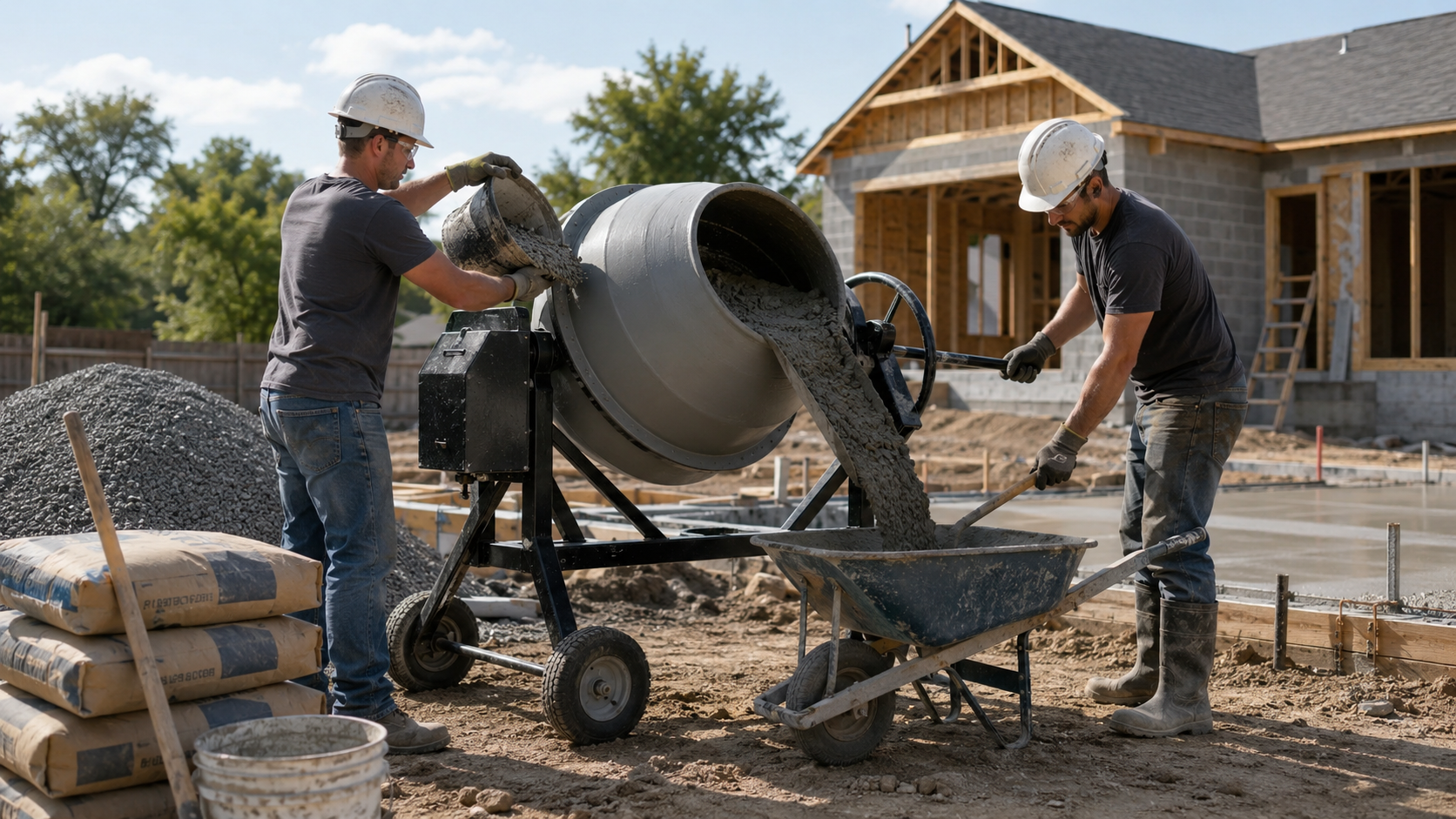
Choosing a cement mixer looks easy from a distance. You check the drum size, look at the motor, compare the price, and think the job is done. But on a real construction site, this simple choice can quietly decide whether your team works smoothly or spends half the day waiting, shouting, pushing wheelbarrows, and wondering why the concrete is still not ready.
The right cement mixer is not just a machine that turns around and makes noise. It controls your mixing speed, labour time, concrete quality, fuel or electricity use, and even the mood of the workers. A good mixer keeps the job moving. A wrong mixer can turn a simple pour into a slow-motion drama.
That is why learning how to choose the right cement mixer is not only a buying decision. It is also a cost-saving decision. When the mixer capacity, power type, operating weight and stability match the job, the whole site becomes easier to manage. You make fewer batches, waste less material, reduce downtime, and finish the work with better control.
Concrete work is all about rhythm. Cement, sand, aggregate and water must be loaded, mixed, discharged, transported, placed and finished at the right pace. If the mixer is too slow, workers wait. If the mixer is too large, concrete may sit too long before use. If the machine is unstable, every batch becomes more difficult than it should be.
This is why the cheapest cement mixer is not always the most economical choice. A low price can look attractive on paper, but if the machine creates extra labour, poor mixing or frequent delays, the real cost becomes higher. Engineers and contractors understand this very well: the purchase price is only the first number. The daily running cost is where the real story begins.
A well-matched mixer helps the team work in a steady flow. The material is loaded without rushing, the concrete mix stays more consistent, and the discharge process becomes cleaner. When the mixer supports the job instead of fighting against it, everyone saves time. Even the worker with the shovel looks less angry, which is always a good sign.
Many buyers start by checking cement mixer capacity, and that is correct. Capacity matters. But the mistake is thinking that a bigger drum always means higher efficiency. In real use, the total drum size and the actual working capacity of cement mixer are not the same thing.
The drum needs empty space inside so the concrete can tumble, fold and mix properly. If the drum is overloaded, the materials do not move well. The mixer may still rotate, but the result can be uneven concrete, dry pockets, spilled material and extra stress on the motor or engine. In simple words, the machine is spinning, but it is not really doing a good job.
This is where cement mixer drum capacity and actual mixing capacity must be understood separately. Drum capacity tells you the physical size of the drum. Mixing capacity tells you how much concrete the machine can prepare effectively in one batch. For construction work, the second number is more important because it decides how many batches your team must make in a day.
If the mixer is too small, the team must repeat the same process again and again. Load, mix, discharge, clean the edge, and start again. After many batches, the lost minutes become lost hours. If the mixer is too large for the job, the team may not place the concrete fast enough. Then the mix starts losing workability, and the finishing work becomes harder.
So the best cement mixer capacity is not the biggest capacity. It is the right capacity for your project size, crew speed and site condition.
This is one of the most practical questions buyers ask: what size cement mixer do I need for concrete work? The honest answer is: it depends on how much concrete you need, how often you mix, and how quickly your team can place each batch.
For small repair work, a compact portable cement mixer may be enough. It is easy to move, simple to operate, and suitable for paths, small bases, garden work and light construction jobs. For small construction sites, a medium-capacity mixer is usually more efficient because it reduces the number of batches without becoming too hard to move. For contractors who mix concrete every day, a stronger mixer with higher working capacity, stable frame and reliable power system will usually save more money over time.
A good way to decide is to estimate the concrete needed per day and divide it by the usable batch output. If the number of batches is too high, the mixer is too small. If the mixer often runs half-empty, it may be too large. A mixer should work hard, but it should not feel like it is preparing a banquet when you only need a small lunch.
The relationship between mixer capacity and pouring speed is simple but often ignored. The mixer must supply concrete at the same rhythm as the placing team. If it cannot keep up, workers wait. If it produces too much at once, workers rush. Neither situation is ideal.
This is why how mixer capacity affects concrete pouring speed is important for contractors. A balanced mixer allows concrete to arrive in a steady flow. Workers can place and finish the material without long gaps between batches. This improves surface quality and reduces the risk of weak joints between separate pours.
For example, when working on a driveway, pavement edge, floor slab or road repair section, continuous supply matters. If the mixer is too small, the first section may start stiffening before the next batch arrives. Workers then need more effort to blend and finish the surface. That extra effort means extra labour cost.
A mixer with the right capacity reduces this problem. It does not need to be huge. It just needs to match the team and the job. In concrete work, smooth rhythm often saves more time than raw machine size.
The choice between an electric and diesel machine is another major factor. Many buyers compare electric vs diesel cement mixer options only by price. But the better question is: where will the mixer work?
An electric cement mixer is a good choice when the site has stable electricity. It is easier to start, quieter during operation, and suitable for urban projects, indoor work, workshops, residential areas and fixed work locations. It is also friendly for jobs where noise and exhaust must be controlled.
A diesel cement mixer is more suitable for outdoor sites, remote areas and projects without reliable power. Road repair, rural construction, farm buildings and large open sites often need this kind of independence. A diesel mixer can keep working even when there is no power socket nearby. And on some sites, looking for electricity can take longer than mixing the concrete itself.
The right power choice saves time by reducing interruption. If you choose electric for a site without stable power, you may need cables, generators or extra waiting time. If you choose diesel for a small indoor job, you may create noise, fumes and unnecessary running cost. The power system should fit the real working environment, not just the catalogue page.
A portable cement mixer for construction can save a lot of time when the work area changes often. This is common in road repair, small building work, landscaping, drainage work and maintenance projects. When the mixer can move closer to the pouring area, workers spend less time transporting concrete by wheelbarrow or bucket.
This matters more than many people think. Moving wet concrete is heavy work. The longer the distance, the more time and energy workers lose. If the mixer sits far from the pouring point, the team may save money on the machine but waste money on labour.
However, portability should not mean weakness. A good portable mixer needs a strong frame, practical wheels, stable support and a drum strong enough for repeated use. It must be easy to move when empty, but steady when loaded. A mixer that moves easily during transport but dances during operation is not portable; it is a problem with wheels.
For contractors, the best portable mixer is one that balances movement and stability. It should help workers reach the job area, not create new safety risks once it starts mixing.
Even the best cement mixer cannot save a project if the mix is wrong. The machine can mix the materials, but it cannot magically fix poor proportions. That is why concrete mix ratio and water control are still very important.
A good concrete mix needs the right balance of cement, sand, aggregate and water. Too little water makes the mix hard to place and compact. Too much water may make the concrete look easier to pour, but it can reduce strength and increase shrinkage. In other words, adding too much water is like solving one problem today and inviting three problems tomorrow.
The mixer helps create a uniform mix, but the operator must still add water carefully. It is usually better to add water gradually and watch the consistency. The concrete should look workable, not soupy. If it flows like soup, something has gone wrong. Concrete is supposed to build a structure, not remind anyone of dinner.
The answer depends on the mixer size, batch volume and material condition. In general, concrete should be mixed until the colour and texture look uniform. Dry pockets, unmixed cement or uneven aggregate distribution are signs that the batch needs more time.
However, mixing for too long is not useful either. Over-mixing wastes time and may reduce workability if the concrete sits too long before placement. A skilled operator watches both the time and the material. The goal is not to spin the drum forever. The goal is to produce consistent concrete and discharge it while it is still easy to place.
This is where experience matters. A good mixer gives the operator better control, but good judgement makes the final result better.
Labour cost is one of the biggest hidden costs in concrete work. A cement mixer can reduce this cost only when it matches the job properly. If the machine is too small, workers spend too much time repeating batches. If it is hard to move, workers spend extra time transporting concrete. If it is unstable or difficult to discharge, the team loses more time during every cycle.
To understand how to reduce labour cost when mixing concrete, look at the full process. How long does it take to load one batch? How long does mixing take? Is discharge clean and fast? How far must workers move the concrete? How many people are needed around the mixer? These small details decide whether the machine saves labour or quietly creates more of it.
A well-chosen mixer reduces repeated handling. It supports smoother loading, better mixing and cleaner discharge. It also helps workers keep a steady pace throughout the day. When labour is expensive or the team is small, this benefit becomes very important.
For many contractors, saving ten minutes on one batch may not sound huge. But saving ten minutes on many batches, across many projects, becomes real money. Concrete work rewards efficiency. It does not reward unnecessary exercise.
Concrete waste is not only the material left inside the drum. It also includes spilled concrete, over-wet batches, uneven mixes, poor finishes and work that must be repaired later. Many of these problems start with choosing the wrong mixer.
If the mixer is overloaded, material may spill during mixing. If the drum is too small, workers may rush the batch and make mistakes with proportions. If the mixer is too large, the team may prepare more concrete than they can use in time. All these problems increase waste.
That is why how to avoid concrete waste with the right mixer size is a valuable question. The right mixer allows the operator to prepare a practical batch size, control the mix properly and discharge the concrete cleanly. It helps the team use the material before it loses workability.
For small contractors, material waste directly reduces profit. Cement, sand, aggregate and water may look simple, but wasted batches add up quickly. A good mixer protects material value by helping every batch become usable concrete.
A mixer should rotate, but the whole machine should not travel around the site by itself. That is why operating weight of cement mixer and stability are important.
A very light mixer is easy to move, which is useful. But if it becomes unstable when loaded, it can slow down the work and create safety risks. A heavier mixer may feel more stable, but it still needs to be practical for transport and positioning. The goal is balance.
For uneven ground, frame design, wheel size, support legs and drum balance matter. A stable cement mixer for uneven ground helps operators load and discharge concrete with confidence. It also reduces spillage and keeps the working area cleaner.
Stability is not only a safety issue. It is also an efficiency issue. When the mixer stands firmly, workers can focus on the concrete instead of fighting the machine. A stable machine creates a calmer site. And a calmer site usually gets more work done.
The real concrete mixer running cost includes more than fuel or electricity. It also includes labour, maintenance, spare parts, cleaning time, downtime and wasted material. A low-price mixer may look good at first, but if it stops often or cannot handle daily use, the total cost becomes higher.
A reliable mixer saves money because it keeps working when the project needs it. The drum should rotate smoothly. The motor or engine should match the workload. The frame should resist vibration. The discharge system should be easy to control. The machine should also be simple to clean, because dried concrete inside the drum can reduce performance.
For B2B buyers, rental companies and contractors, the best mixer is not always the cheapest machine. It is the machine with the lowest cost per usable batch. This is the number that really matters on site.
Road construction and repair work need special attention. The site may be outdoors, dusty, uneven and far from electricity. The work may involve kerbs, drainage channels, pavement repair, small foundations or roadside concrete sections. In these conditions, the mixer must be strong, stable and easy to move.
When thinking about how to choose a cement mixer for road construction, start with the working environment. Is there reliable power? If not, a diesel model may be better. Does the mixer need to move often? Then portability and wheel design matter. Is the ground uneven? Then stability and frame strength become important. How much concrete must be placed each day? That decides the required working capacity.
A road construction mixer should not only mix concrete. It should support the full job process. It should reduce carrying distance, provide steady batches and keep working even when the site is not perfect. Because on real road projects, the ground is rarely perfect, and the weather usually has its own opinion.
Before buying a mixer, do not only ask, “How much is it?” Ask better questions.
What type of concrete work will it handle most often? How many batches are needed per day? Is the site fixed or mobile? Is there stable electricity? Will the machine work on flat ground or uneven ground? How many workers will place the concrete? How quickly can each batch be used?
These questions help you choose a mixer that fits the real job. They also help avoid common mistakes, such as choosing only by drum size, ignoring actual working capacity, buying the wrong power type or selecting a machine that is too light for tough site use.
A good cement mixer should make the work easier from the first batch to the final cleaning. If it saves time, reduces waste and keeps workers moving smoothly, it is doing its job well.
The right cement mixer saves money in many small ways. It reduces batch cycles, shortens waiting time, improves mix consistency, lowers labour pressure and helps avoid wasted concrete. These savings may not look dramatic in one single batch, but they become very clear over repeated projects.
When choosing a mixer, do not focus only on the purchase price. Look at cement mixer capacity, actual mixing output, power type, portability, operating weight, stability and long-term running cost. These factors decide whether the machine will truly support your work.
A good mixer is like a good site worker. It does not complain, it keeps a steady rhythm, and it helps everyone finish faster. Choose the right one, and your project will save both time and money — which is exactly what every contractor wants before the concrete starts to set.

