Product knowledge popularization
A construction equipment supplier of construction machinery solutions for 30 years. WhatsApp:+86-18968212829
Language
A construction equipment supplier of construction machinery solutions for 30 years. WhatsApp:+86-18968212829
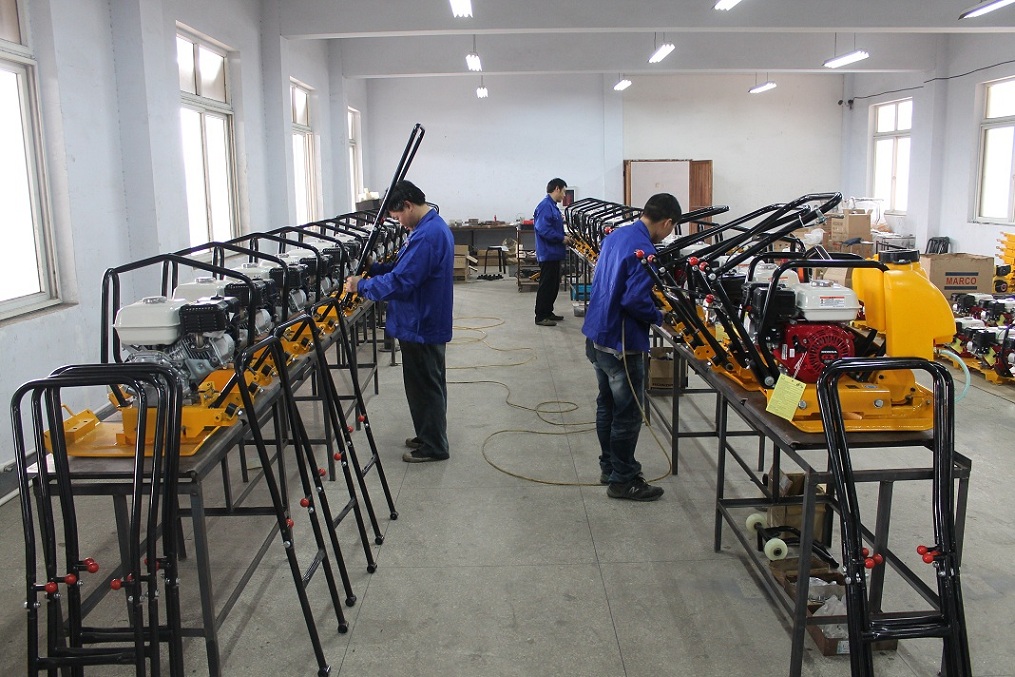
Choosing the right plate compactor for pavers depends on the paving material, the stage of construction and the compaction requirements of the project. A machine that works well on a gravel base may not be suitable for vibrating finished paving blocks. For the final surface, you need the correct centrifugal force, vibration frequency and, where required, a compatible protective pad.
This is where buying decisions can become confusing. A lighter machine is easier to transport, while a heavier model may deliver more compaction force. A rubber mat can help protect the surface, but it does not make every machine suitable for every type of paving. The right combination depends on what the job actually requires.
For contractors, the aim is to achieve a stable, even surface without damaging the blocks. Dealers and rental companies have another concern: choosing equipment that can handle different customer applications without creating unnecessary maintenance costs or damage claims.
This guide explains how to compare plate compactor weight, centrifugal force, vibration frequency, protective pads and working dimensions. It also shows how to use these specifications to make a more informed purchasing decision.
Yes. Plate compactors are commonly used when installing conventional interlocking concrete paving blocks. They help prepare the aggregate base and, where the paving system requires it, seat the installed blocks into the bedding sand. However, these are two different stages of construction, and they do not always require the same equipment.
Before choosing a machine, it helps to understand what needs to be compacted and why. The base provides support beneath the paving, while final surface compaction helps the installed blocks settle correctly and develop interlock through their joints. Treating both stages as the same job can lead to poor results.
A properly prepared base supports the paving and helps distribute loads into the ground. If the aggregate is poorly compacted, the finished surface may settle unevenly over time. This can happen even when the paving blocks themselves look perfectly level on installation day.
Base compaction depends on the aggregate type, moisture content, layer thickness and required density. The operator normally places and compacts the material in controlled layers rather than attempting to compact a deep fill from the surface.
For a more detailed explanation, ACE's guide to plate compactor compaction depth explains how these factors affect the depth a machine can compact effectively.
Once the paving blocks have been laid, the compactor has a different task. In a conventional sand-set interlocking concrete pavement, vibration helps seat the blocks into the bedding sand and supports the process of filling and consolidating the joints.
At this stage, the machine is working directly over the finished paving. The centrifugal force, vibration frequency and contact surface therefore need closer attention. A machine that prepares the base efficiently may be unsuitable for the final paving operation.
For conventional sand-set concrete block paving, the bedding sand is normally screeded before the blocks are installed rather than separately compacted like the aggregate base. Other paving systems may specify different procedures, so the manufacturer's instructions should always take priority.
| Construction Stage | Main Purpose | What to Check |
|---|---|---|
| Subgrade preparation | Create stable ground | Soil type, moisture and required density |
| Aggregate base compaction | Provide structural support | Compaction force, material and lift thickness |
| Bedding sand preparation | Provide an even setting layer | Paving system and screeding requirements |
| Final paver compaction | Seat blocks and develop interlock | Required force, frequency and surface protection |
| Joint filling | Stabilise the paving joints | Joint material and specified compaction sequence |
Understanding these differences makes the next decision easier: selecting a machine with the right vibration performance for the particular stage of work.
Operating weight is often the first specification buyers notice. It is easy to understand and useful when planning transport. However, weight alone cannot tell you how effectively a machine will compact a paving system.
For a better comparison, look at centrifugal force, vibration frequency, base-plate dimensions and operating weight together. Each affects the machine's behaviour, and the correct balance depends on the application.
Centrifugal force comes from the rotating eccentric mechanism inside the compactor. It is normally measured in kilonewtons (kN) and describes the dynamic force generated by the vibration system.
Higher centrifugal force can help with demanding compaction work, particularly when preparing granular bases. However, more force is not automatically better for finished paving blocks. The force must be suitable for the paving material and installation requirements.
Engine horsepower should not be confused with centrifugal force. Two machines with similar engines can produce different vibration forces because their eccentric mechanisms and machine configurations differ.
Vibration frequency describes how many vibration cycles the machine produces. Manufacturers commonly express this as vibrations per minute (VPM), while some engineering specifications use hertz (Hz).
To convert VPM into hertz, divide the figure by 60. For example, a machine operating at 5,500 VPM has a frequency of approximately 91.7 Hz.
Frequency matters because paving specifications may state an acceptable operating range. A machine with sufficient centrifugal force but an unsuitable vibration frequency may still fail to meet the specified requirements.
Operating weight affects handling and the machine's static load on the surface. A heavier plate may be useful for demanding work, but it also requires more planning when loading, unloading and moving around narrow areas.
The base plate affects coverage and manoeuvrability. A wider plate covers more ground during each pass, which can improve productivity on open paving areas. A compact plate, on the other hand, may be easier to control near edges, walls and garden features.
Neither option is automatically better. A machine should be large enough to complete the work efficiently without becoming difficult to handle in the available space.
The Concrete Masonry & Hardscapes Association (CMHA) provides technical guidance for conventional interlocking concrete pavements. Its Guide Specification for the Construction of Interlocking Concrete Pavement specifies a low-amplitude plate compactor with a minimum centrifugal force of 22 kN (approximately 5,000 lbf) and a frequency of 75–100 Hz for seating the specified paving units into bedding sand.
Another CMHA publication, Construction of Interlocking Concrete Pavements, gives a frequency range of 75–90 Hz alongside the same minimum force. These figures belong to their respective technical documents and application conditions.
This does not mean every garden patio, decorative paving product or natural stone installation needs exactly the same machine. It does mean that contractors should check the relevant project specification before making a purchasing decision.
The 22 kN figure is a minimum in the cited documents, not a universal maximum force for all paving blocks. A machine with a lower rating may be suitable for other approved applications, but it should not be presented as meeting this particular requirement.
For a closer look at these performance factors, ACE's plate compactor compaction force guide explains how kN, vibration frequency and plate dimensions affect equipment selection.
Once a machine has been checked against the required specifications, the next concern is protecting the paving surface. A steel base plate can leave marks when it moves directly across finished paving blocks, particularly on textured or decorative surfaces.
A suitable protective mat provides a contact layer between the steel plate and the paving. It can reduce abrasion and help limit surface marking, although it cannot remove every risk of damage.
Concrete paving blocks may have textured finishes, coloured surface layers or decorative patterns. Direct steel contact can mark these finishes, especially if grit or small stones become trapped beneath the compactor.
A properly fitted protective pad reduces direct contact between the metal base and the paving surface. This is useful during final compaction, when the blocks are already in place and their appearance matters.
However, the pad is not a substitute for selecting the correct machine. It cannot repair an unstable base, compensate for excessive vibration or prevent damage caused by unsupported edges.
Think of it as protective footwear for the machine. It can reduce unwanted contact, but the operator still needs to know where the machine should be walking.
Rubber and polyurethane pads are both used in paving applications, but their properties and mounting arrangements can differ. Some are made for particular base-plate shapes, while others use separate brackets or fixing kits.
Rather than assuming one material is always better, buyers should compare the pad manufacturer's recommendations, wear characteristics, mounting system and suitability for the paving surface.
ACE's official C80T/C100T plate compactor series lists an optional rubber mat for brick paving compaction. However, the published information does not confirm that every configuration uses the same mat or mounting kit. These details should be checked before ordering.
Start with the compactor's base-plate dimensions. The protective pad must fit the intended machine, and the fixing arrangement must keep it secure during operation.
Next, inspect the mounting brackets, bolts and contact surfaces. Loose hardware or an incorrectly fitted pad can create the very damage the accessory is supposed to prevent.
For dealers and rental companies, keeping the correct spare pads and mounting parts in stock can save considerable trouble. Customers should receive the right accessory with the machine, rather than discovering on site that the pad and base plate do not match.
Once the machine specifications and protective accessories are understood, the next step is to match them to the working conditions. A small garden path and a commercial paved area may use similar-looking blocks, but their access, production requirements and installation specifications can be quite different.
Small landscaping jobs often involve narrow paths, garden walls, steps and areas with limited access. A compact forward plate may be convenient for preparing suitable granular bases because it is easier to transport and manoeuvre.
However, its convenience does not automatically make it suitable for vibrating the finished paving blocks. The paving manufacturer's instructions and any applicable compaction specifications still need to be checked.
Driveways need a base that can support repeated vehicle loading. Proper material selection and compaction are therefore essential before the paving blocks are installed.
Once the base is complete, the final paving stage requires a separate check. The machine must deliver the specified vibration performance without causing unnecessary movement or damage to the installed blocks.
For contractors handling both stages, one machine may be sufficient if it meets all requirements. Otherwise, using different equipment for base preparation and final paving compaction can be the more sensible option.
Larger commercial sites place greater demands on productivity. Contractors need equipment that can cover substantial areas while maintaining the required construction quality.
Here, working width, travel direction and fuel consumption affect operating efficiency. However, these commercial advantages only matter after the machine meets the technical requirements of the paving system.
A faster machine is useful. A faster machine that fails inspection is considerably less impressive.
Decorative concrete pavers, natural stone and porcelain paving products can respond differently to vibration. Their surface finishes, thicknesses and support systems vary, so a method suitable for ordinary interlocking concrete blocks may be inappropriate for another material.
Before using a plate compactor on these surfaces, check the paving manufacturer's approved installation method. Where required, carry out a trial in a suitable area and inspect the result before continuing.
| Project Type | Main Concern | Selection Priority |
|---|---|---|
| Garden patio | Limited access and surface appearance | Manoeuvrability and approved protective pad |
| Walkway | Narrow working width and edges | Base-plate dimensions and operator control |
| Residential driveway | Vehicle loading and settlement | Base density and final paving requirements |
| Commercial paving | Productivity and compliance | Specified force, frequency and working width |
| Decorative paving | Surface marking and cracking | Manufacturer approval and trial compaction |
Forward plate compactors are commonly used on smaller landscaping and paving jobs. They are generally easier to handle and transport, making them practical where the operator needs to work around edges and obstacles.
Reversible plate compactors can move forwards and backwards without turning the machine around. This can improve productivity in restricted working areas, and many reversible models offer higher operating weights and centrifugal force.
However, a reversible plate is not automatically the better option for finished paving blocks. Its vibration frequency, force and protective pad compatibility must still match the installation requirements.
For contractors who handle both light landscaping and heavier construction work, having access to different machine classes may be more useful than expecting one model to do everything.
Even with a suitable machine, installation mistakes can damage paving blocks or leave an uneven surface. Some problems appear immediately, while others become visible only after the pavement has been used for a while.
The good news is that many of these problems can be reduced by checking the base, the protective pad and the paving sequence before compaction begins.
If the aggregate base is poorly compacted, the paving may settle unevenly later. Surface vibration cannot reliably correct loose material deep below the blocks.
Before laying pavers, check that the base meets the required level, thickness and density. Also confirm that drainage and edge restraints have been prepared according to the paving design.
A protective pad should be checked before each use. Look for tears, uneven wear, loose fixing parts and stones trapped against the contact surface.
Even a correctly fitted pad can leave marks if sharp debris is trapped beneath it. Cleaning the paving surface and checking the pad takes little effort compared with replacing damaged blocks.
Edge restraints help keep paving blocks in position during installation and service. Without sufficient restraint, vibration can move blocks out of alignment or damage their corners.
CMHA's relevant guide specification instructs contractors not to compact within 2 m (6 ft) of unrestrained paving edges. This requirement applies to the construction method covered by that specification and should be considered alongside the project's own instructions.
Joint material helps stabilise interlocking paving blocks. In conventional sand-set systems, dry joint sand is swept into the joints and consolidated according to the specified sequence.
Other products, including polymeric jointing sands, may have different requirements for vibration, cleaning and water application. Always follow the joint-material manufacturer's instructions rather than assuming the same procedure applies to every product.
Also remember that a compactor's water tank is not automatically required for block paving. ACE's workshop guidance mainly discusses water systems for asphalt work, where water helps prevent sticking. Their use on finished paving should depend on the paving and jointing materials involved.
Contractors generally know the projects they plan to complete. Rental companies and equipment dealers face a broader challenge because their machines may be used by customers working with different paving materials and site conditions.
For these buyers, choosing the right plate compactor involves more than comparing the purchase price. Accessories, spare parts, transport convenience and the risk of incorrect use all affect the cost of ownership.
A rental fleet serving landscapers may need compact forward plates for smaller projects, while customers working on road bases and commercial paving may require heavier equipment.
Instead of choosing one machine for every customer, dealers can divide demand into application groups. This makes it easier to recommend the correct weight class, centrifugal force and working width.
Some contractors also handle excavation, trenching and site preparation before paving begins. For these broader groundworks projects, ACE mini excavators and compact construction equipment can be considered alongside specialist compaction machinery. The excavator prepares or moves material, while the plate compactor performs the required compaction work.
If customers regularly work on concrete paving blocks, the protective pad should be considered during the initial equipment purchase.
Ask the supplier to confirm the accessory part number, mounting components and compatibility with the exact machine model. It is also worth checking whether spare pads and fasteners can be ordered separately.
This avoids the familiar situation where the machine arrives ready to work, but the correct protective accessory is still sitting on somebody else's order list.
Operating weight affects how easily customers can move the machine between jobs. Folding handles, transport wheels and accessible service components can make a noticeable difference during daily use.
Maintenance also matters. Air filters, drive belts, shock mounts, fasteners and protective pads should be inspected according to the relevant machine instructions. In dusty construction environments, regular cleaning and inspection help reduce avoidable downtime.
If the machine develops an engine starting problem, ACE's plate compactor troubleshooting guide explains how to check common fuel, ignition, oil-protection and carburettor issues before replacing parts unnecessarily.
For dealers operating mixed construction equipment fleets, spare-parts planning may also cover hydraulically powered machines such as excavators, loaders and rollers. In these cases, suppliers of hydraulic components for construction machinery can support the sourcing of pumps, valves, motors and related hydraulic parts.
These hydraulic components serve the relevant hydraulic equipment systems and should not be confused with the belt-driven exciter or engine components of a conventional petrol plate compactor. Keeping the two maintenance categories separate makes parts ordering more accurate.
A clear handover process can prevent many after-sales problems. Rental customers should know the intended applications of the machine, the correct protective pad and the limitations of using it on different paving materials.
For dealers, providing practical selection guidance can also build trust. Customers are more likely to return when the equipment they purchased works for the job they described.
ACE offers forward and reversible plate compactors for different construction conditions. The C80T/C100T series is particularly relevant to paving work because its official product documentation lists an optional rubber mat for brick paving compaction.
However, accessory availability does not confirm that every machine meets every paving specification. The correct model still needs to be checked against the required centrifugal force, vibration frequency and paving material.
| ACE Model | Operating Weight | Centrifugal Force | Frequency | Buying Consideration |
|---|---|---|---|---|
| C80T | 80 kg | 13 kN | 5,500 VPM | Compact forward plate; optional paving mat listed |
| C100T | 100 kg | 20 kN | 5,500 VPM | Higher-force forward plate; optional paving mat listed |
| C125-HD / CH | 126 kg | 25 kN | 4,300 VPM | Reversible plate; paving pad compatibility requires confirmation |
| C125-D | 137 kg | 25 kN | 4,300 VPM | Diesel configuration; suitability for final paver compaction must be checked |
Specifications are taken from the published ACE model tables and should be confirmed against the latest quotation and technical sheet. The C80T/C100T page also contains a conflicting general description referring to 15 kN, so the exact configuration must be checked before ordering.
The C80T and C100T fall below the 22 kN minimum specified in the CMHA interlocking paving documents discussed earlier, although their stated frequencies fall within the 75–100 Hz range. The C125 has more than 22 kN of centrifugal force, but its published 4,300 VPM equals approximately 71.7 Hz, which is below that frequency range.
This comparison shows why force alone is not enough. The C125's higher force does not establish compliance with those specifications, and its protective pad compatibility has not been confirmed from the available product information.
Buyers can compare the C80T/C100T forward plate compactors, the C125 reversible plate compactor and the wider ACE plate compactor range before discussing the exact project requirements with the supplier.
Before requesting a quotation, collect the main details of the paving project. This makes it easier for the supplier to recommend a suitable configuration and reduces the risk of ordering unnecessary or incompatible accessories.
| What to Check | Information to Confirm |
|---|---|
| Paving material | Concrete blocks, decorative concrete, natural stone, porcelain or another paving system |
| Construction stage | Aggregate base preparation or final surface compaction |
| Compaction requirements | Required centrifugal force, frequency and any applicable project specification |
| Machine dimensions | Working width, base-plate size, operating weight and transport needs |
| Protective pad | Material, dimensions, mounting system and model compatibility |
| Engine configuration | Preferred engine type and local service availability |
| Spare parts | Replacement pads, brackets, belts, filters and other service items |
| Documentation | Current model specification, operating manual and accessory instructions |
This checklist is useful for individual contractors, but it can also become part of a rental company's equipment handover process. A few clear questions before the job begins can prevent expensive misunderstandings later.
Yes, many conventional interlocking concrete paving systems require vibration after the blocks have been installed. However, the compactor must meet the relevant installation requirements, and a protective pad may be necessary. Always check the paving manufacturer's instructions before operating directly on the finished surface.
The correct size depends on the paving material, construction stage, required centrifugal force, vibration frequency and working area. A compact machine may suit some base-preparation tasks, while final compaction of installed pavers may require different specifications. Select the machine according to the project requirements rather than weight alone.
A protective mat is commonly used to reduce direct steel contact and the risk of marking finished paving blocks. Whether one is required depends on the paving material and manufacturer's instructions. The mat must also be compatible with the machine and correctly fitted before use.
Yes. Cracking or chipping can result from unsuitable equipment, poor base preparation, incorrect vibration, unsupported edges or inappropriate surface protection. A protective pad reduces some risks but does not prevent every type of damage. Follow the paving manufacturer's method and use a trial area when required.
A 15 kN compactor may suit certain granular base-preparation tasks or paving applications approved for that equipment. However, it does not meet the 22 kN minimum specified in the CMHA conventional interlocking paving documents discussed above. The correct answer depends on the paving system and construction stage.
Sometimes, provided the machine meets the requirements for both construction stages and has the necessary protective accessories. However, base compaction and final paver seating involve different performance and surface-protection needs. Some projects may therefore require different equipment.
Not automatically. Reversible compactors can improve productivity and manoeuvrability on some projects, but finished paving requires more than high centrifugal force. Vibration frequency, paving material and protective pad compatibility must also be considered. A heavier machine should not be selected simply because it is more powerful.
When selecting a plate compactor for pavers, start with the paving material and construction stage. These determine the requirements the machine must meet. From there, compare centrifugal force, vibration frequency, base-plate size, operating weight and protective pad compatibility.
For contractors, this approach helps reduce avoidable surface damage and rework. For rental companies and dealers, it provides a clearer basis for choosing stock, matching accessories and supporting customers after purchase.
ACE supplies forward and reversible plate compactors for different construction applications, including models with optional paving accessories. Sharing the project specification, paving material and preferred equipment configuration helps narrow the selection before a quotation is prepared.
The aim is straightforward: choose a machine that meets the job requirements and helps the crew finish with a stable, even paving surface—not a neatly compacted collection of damaged blocks.
Concrete Masonry & Hardscapes Association (CMHA) — Guide Specification for the Construction of Interlocking Concrete Pavement.
CMHA — Construction of Interlocking Concrete Pavements.