Product knowledge popularization
A construction equipment supplier of construction machinery solutions for 30 years. WhatsApp:+86-18968212829
Language
A construction equipment supplier of construction machinery solutions for 30 years. WhatsApp:+86-18968212829
Getting good concrete is not only about buying the right cement. In real work, the final result depends more on the way the batch is mixed. A poor concrete mix ratio, too much water, or the wrong mixing order can all reduce strength and cause surface problems later. That is why many users search for how to mix concrete properly before they start a slab, footing, fence post or base. The goal is simple. You want a mix that is strong, even, workable and easy to place. To reach that result, you need the right materials, the right proportion, and a mixing method that stays consistent from the first batch to the last. Whether you are mixing concrete by hand or using a portable drum mixer, the same rule applies: if the batch is not controlled, the quality will not be controlled either.
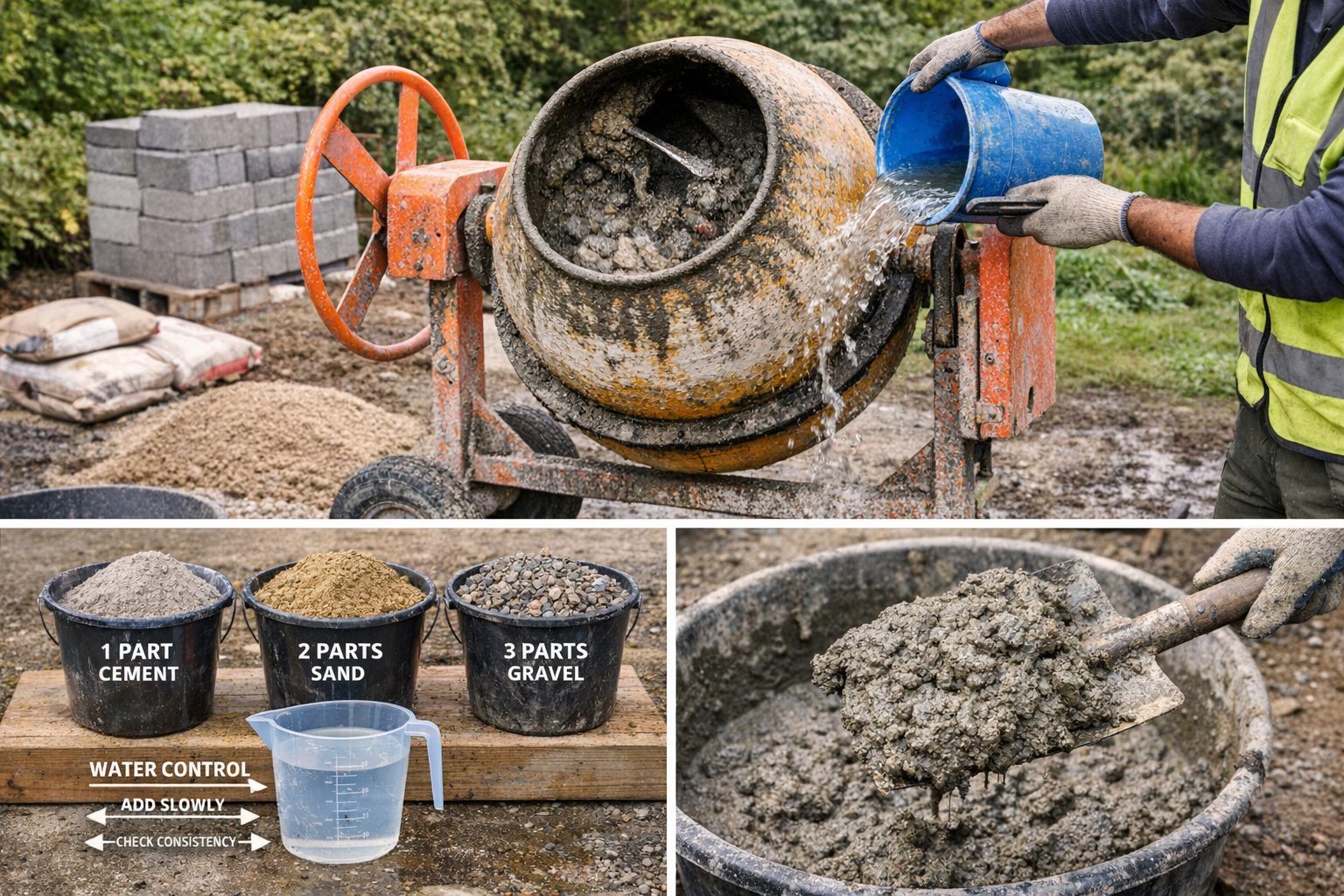
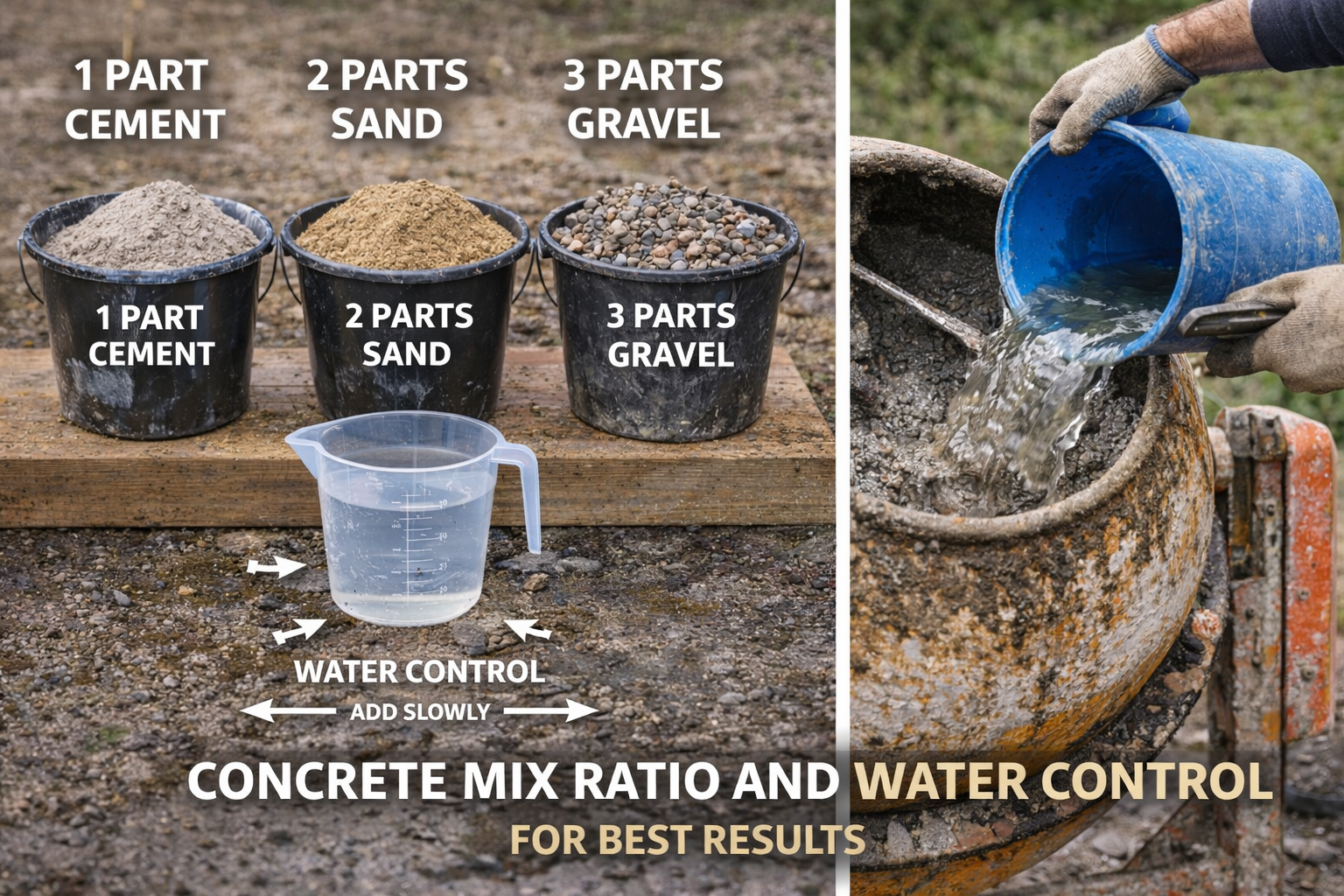
The first step is to choose a suitable concrete mix ratio for the job. Many problems begin because users start mixing without deciding what strength the concrete really needs. For general work, a common guide is a 1:2:3 ratio, which means one part cement, two parts sand and three parts aggregate. This is often used to explain basic mixing concrete proportions because it is easy to remember and easy to batch on site. However, not every project needs the same mix. A concrete mix ratio for footings may not be the same as the best mix for a driveway or slab. If you are using ballast, the proportion also changes. In practical terms, the best mix is not the strongest mix in every case. It is the mix that gives enough strength, good workability and stable placing for the job in front of you.
Once the ratio is chosen, keep the measurement method simple and repeatable. Do not batch by shovel if you want a stable result. A shovel of sand is rarely equal to a shovel of stone, and that makes the mix drift from one batch to another. It is much better to batch by bucket. This is especially important when you want to achieve a consistent concrete mix ratio by volume. On small sites, this one habit often makes a bigger difference than changing materials. If the ratio stays the same, it becomes much easier to control the mix, compare batches, and spot problems early.
After the dry materials are measured, the next key point is water. Many users focus on cement and aggregate, but the real control point is the water cement ratio concrete depends on. If too little water is used, the mix can be hard to turn and difficult to place. If too much water is used, the mix becomes loose and easy to pour, but the finished concrete becomes weaker. That is why questions such as how much water to mix concrete and best water ratio for concrete mix are so common. People are usually trying to solve the same issue: they want a batch that is workable without losing strength.
The safest method is to add water slowly. Do not pour all the water in at once. Start with most of the planned amount, then mix the batch and check it before adding more. This gives you better control of concrete mix consistency. A proper batch should hold together, coat the aggregate well, and stay plastic without looking like soup. If the mix becomes too wet, the problem is more serious than poor appearance. Many users ask, what happens if you add too much water to concrete. The answer is straightforward. The concrete may shrink more, crack more easily, and lose compressive strength. So when you want better workability, first check the ratio, the batching method and the mixing time. Water should be the last fine adjustment, not the first shortcut.
Once the ratio and water are under control, the next decision is how to mix. For very small work, mixing concrete by hand is still practical. It suits patching, minor repairs and jobs where access is limited. Hand mixing also helps users learn what a good batch looks and feels like. Still, hand mixing has limits. It takes more effort, it is harder to keep each batch the same, and it becomes inefficient once the volume increases. If you need several loads in one session, the better choice is usually mixing concrete in a concrete mixer.
A portable mixer improves consistency because the drum turns the materials more evenly than hand tools can. This matters even more when the job requires repeated batches, such as a shed base, path or footing line. Good portable concrete mixer operation is not complicated, but it does require discipline. The mixer should stand on firm, level ground. The drum should not be overloaded. The materials should go in a controlled order, and the batch should be checked before discharge. This is where a practical concrete mixer capacity guide becomes useful. If the drum is too full, the material cannot tumble properly, and the mix becomes uneven. In that case, the machine is running, but the batch quality is already falling.
For the concrete mixer drum mixing process, keep the sequence easy to repeat. Start with part of the water, then add some of the aggregate and sand, followed by cement, and then the remaining dry materials. After that, add the rest of the water slowly until the mix reaches the right consistency. Different products may suggest slightly different orders, so the bag instructions and mixer manual should always be checked. Even so, the key principle stays the same. Do not dump everything into the drum and hope it fixes itself. A staged loading order gives better blending and helps prevent dry pockets.
The same logic applies to mixing time. Users often ask how long to mix concrete or how long to mix concrete in a mixer. In practice, the answer depends on batch size and mixer type, but the goal is always uniformity. The mix should be even in colour, even in moisture, and even in texture. If part of the batch looks pale and dry while another part looks wet and heavy, it is not ready. The drum should keep turning until the paste coats the aggregate well and the whole batch behaves as one material. That is also the best way to improve drum mixer mixing consistency and reduce variation between batches.
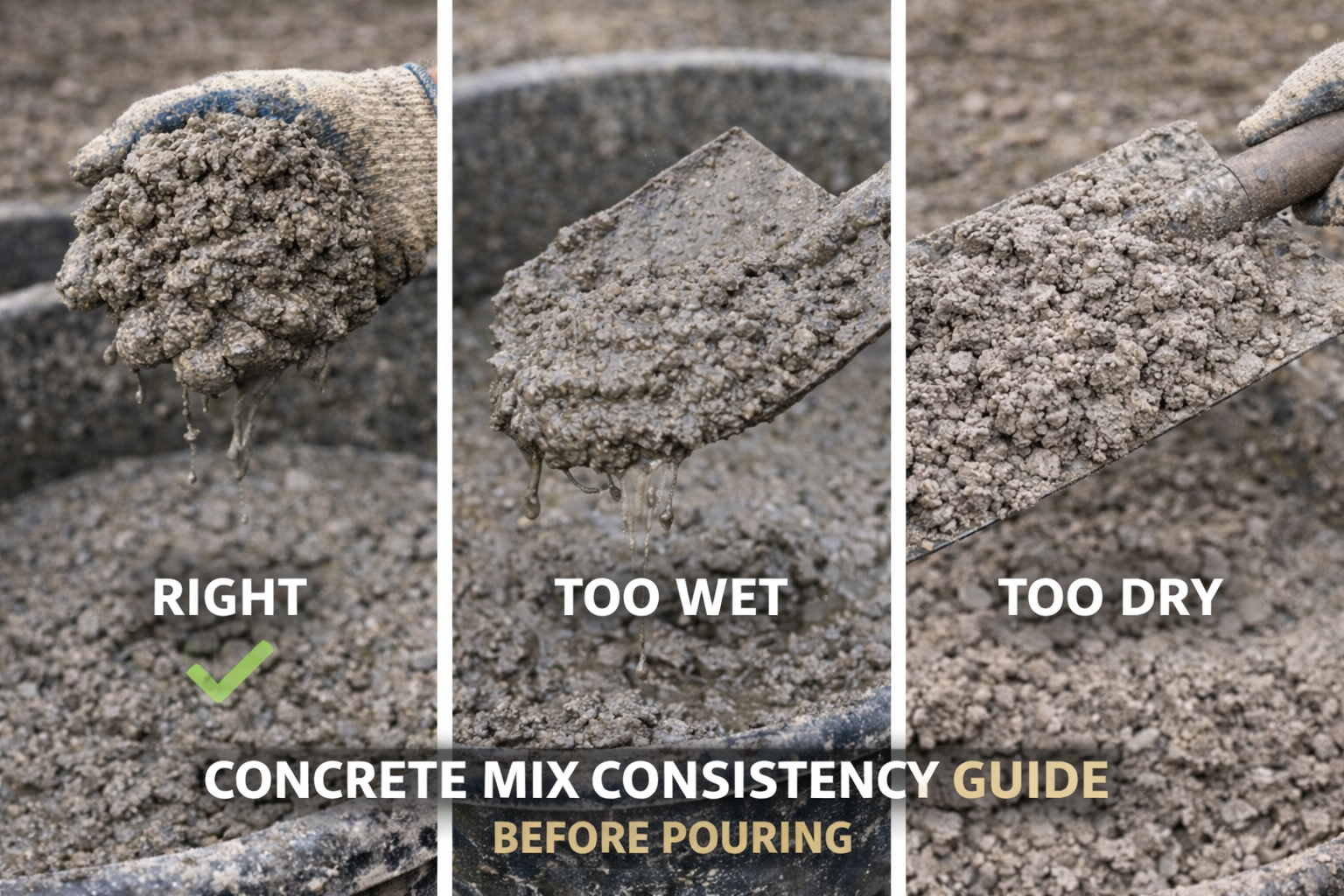
Before the batch is used, take a moment to check whether it is mixed properly. This step is simple, but it saves a lot of trouble later. A good batch should look dense, smooth and even. It should not contain dry cement streaks, isolated stones or water sitting on the surface. When handled with a shovel, the mix should keep its shape for a moment before slowly settling. That is a practical sign of correct concrete mix consistency. If it pours like slurry, it is too wet. If it breaks apart and refuses to bind, it is too dry.
This is also the easiest way to answer the question, signs concrete is mixed correctly. In daily work, the mix should feel balanced. It should move, but not run. It should hold together, but not feel harsh. Once you see that balance a few times, judging a batch becomes much easier. That is why experienced operators often focus less on theory and more on repeatable process. When the ratio, water, loading order and mixing time are all under control, the result becomes predictable. That is the real meaning of proper concrete mixing techniques.
At this point, the main risks are no longer hidden. Most weak batches come from a small number of common mistakes. One is changing the ratio halfway through the job. Another is adding extra water just because the batch looks stiff in the wheelbarrow. A third is overloading the mixer and expecting the drum to correct poor batching. There is also the issue of poor timing. If a batch is left too long before placing, the work becomes harder and the finish becomes less reliable. These problems often seem minor while mixing, but they show up clearly after the concrete hardens.
For that reason, the best approach is to keep the process simple and repeatable from start to finish. Measure the same way every time. Add water in a controlled way. Keep the batch size within the real mixer capacity. Watch the consistency, not just the speed of the job. When users ask how to mix concrete for best results, the answer is not one secret trick. It is a series of small correct decisions. If those decisions stay consistent, the concrete will usually perform as expected. Strong concrete is rarely an accident. In most cases, it is the result of careful mixing.

