Product knowledge popularization
A construction equipment supplier of construction machinery solutions for 30 years. WhatsApp:+86-18968212829
Language
A construction equipment supplier of construction machinery solutions for 30 years. WhatsApp:+86-18968212829
If you have ever stood on a jobsite wondering whether to use a jumping jack or a plate compactor, you are not alone. At first glance, both machines look like they do the same job. They both compact soil. They both help build a stable base. They both make life easier when the ground refuses to behave. But once the work starts, their differences become very obvious.
A jumping jack is built for tight spaces and deeper impact. A plate compactor is built for wider areas and faster surface coverage. One machine hops like it has had too much coffee. The other moves across the ground like it is quietly getting serious work done. That is why choosing the right tool is not just about the machine itself. It is about the soil type, the working area, and the result you need.
If you are still getting familiar with how a rammer works, you can first read our Jumping Jack Compactor Guide. If you want help choosing a model after reading this article, our Best Jumping Jack Compactor page is a useful next step. The two topics work well together, and they make this comparison easier to understand.
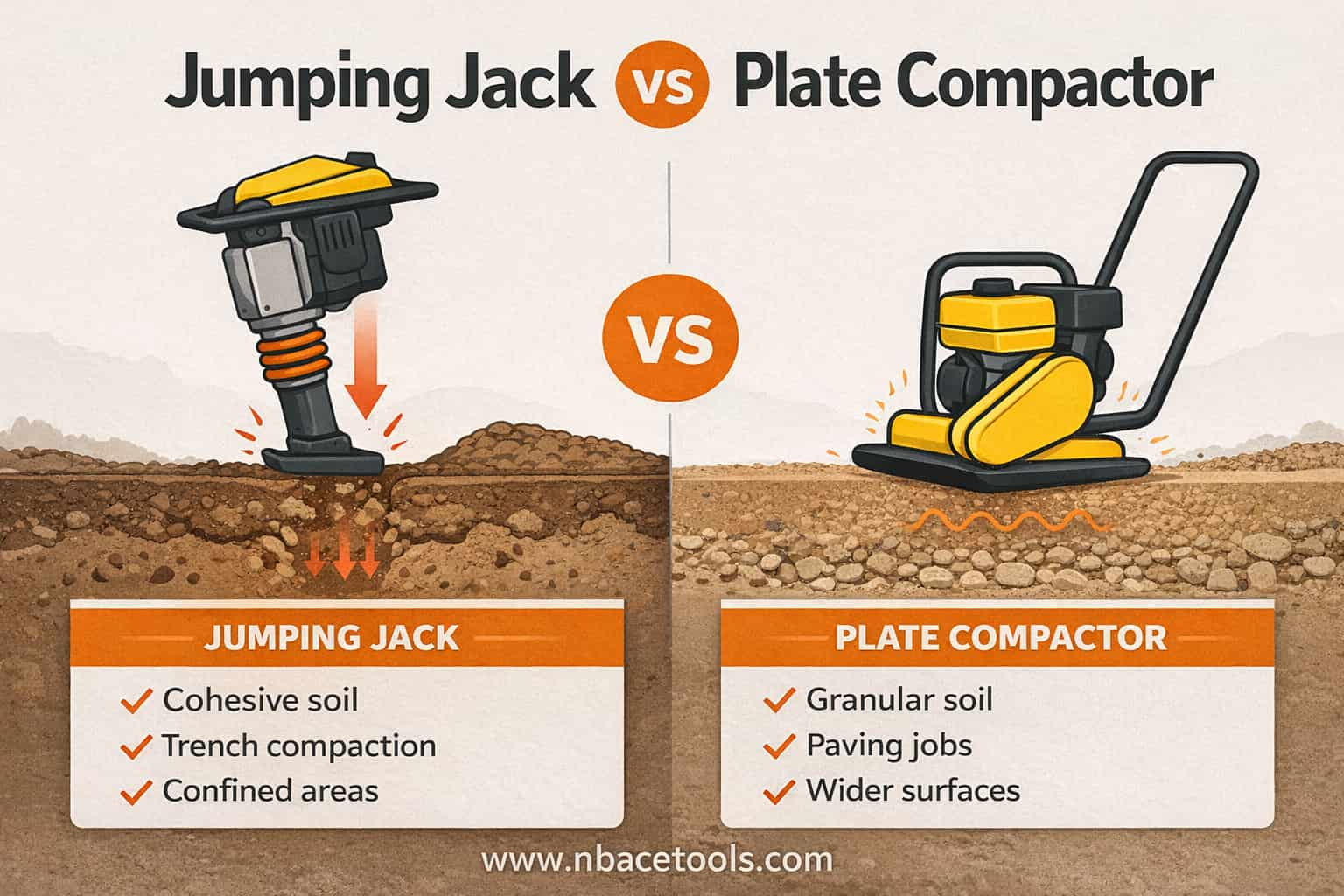
The real difference is in how they deliver force to the ground. A jumping jack uses repeated vertical impact. It drives force through a small foot and hits the soil again and again in a concentrated way. A plate compactor uses vibration. It spreads energy across a wider plate and works better when the material can move and settle more easily.
This is why people often compare compaction force, centrifugal force, and compaction depth when choosing between the two. These numbers matter, but they only make sense when matched with the right application. A bigger number on paper does not always mean better results on site. It simply means the machine was designed to work in a certain way.
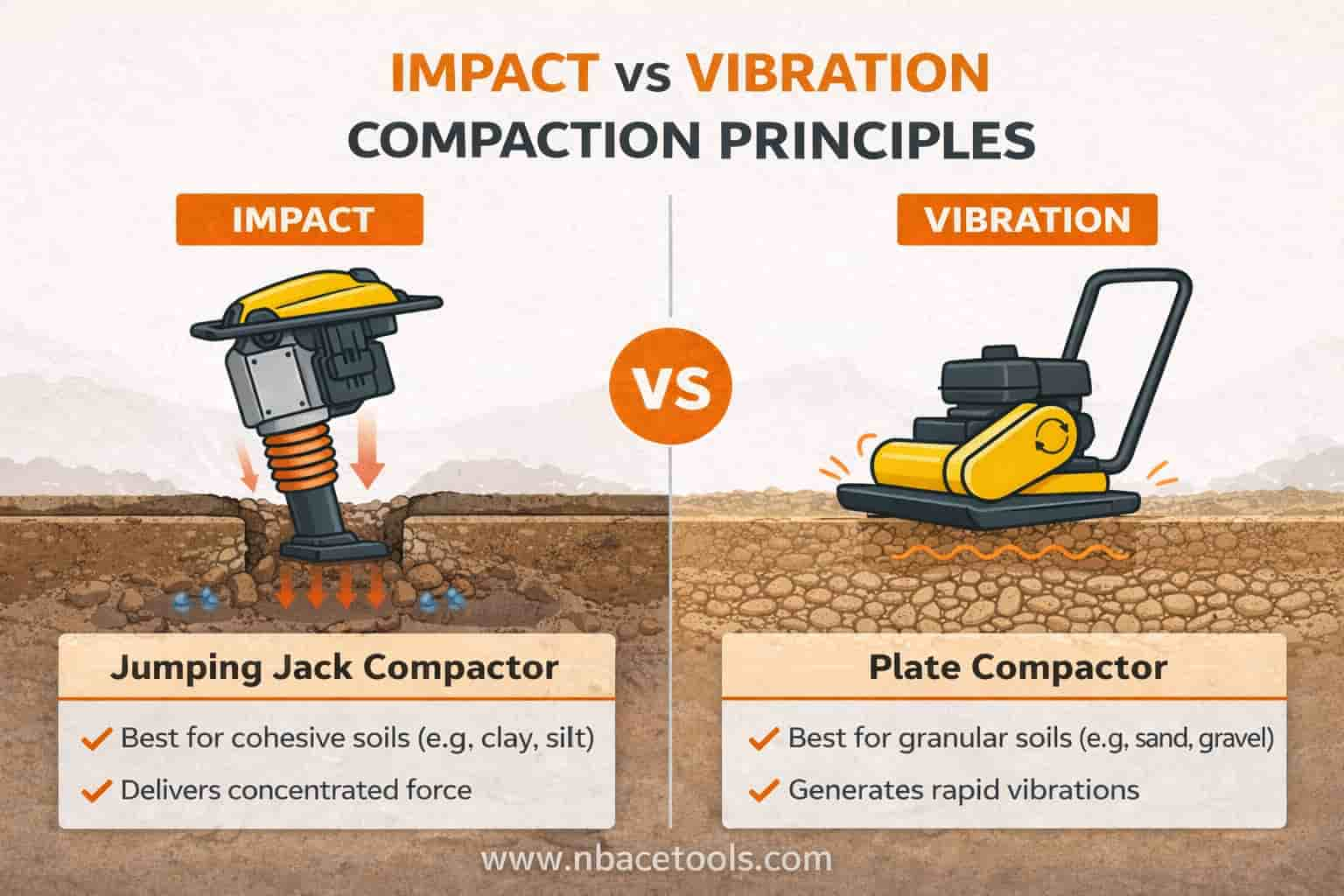
This is usually the first question that matters, and honestly, it should be. Soil has a personality. Some soil is loose and cooperative. Some soil is sticky and stubborn. If the material is granular, such as sand or gravel, a plate compactor is usually the better choice. It vibrates the particles into place and covers more ground in less time.
If the material is cohesive, such as moist clay, a jumping jack is usually the smarter tool. The impact action helps break resistance and compact the soil in a more direct way. That is why, when people ask about the best compactor for clay soil vs gravel, the answer often depends more on soil behaviour than on machine size.
So, if your material is loose and free-draining, the plate compactor usually wins. If the soil is sticky and packed with attitude, the jumping jack steps in and says, “Leave this one to me.”
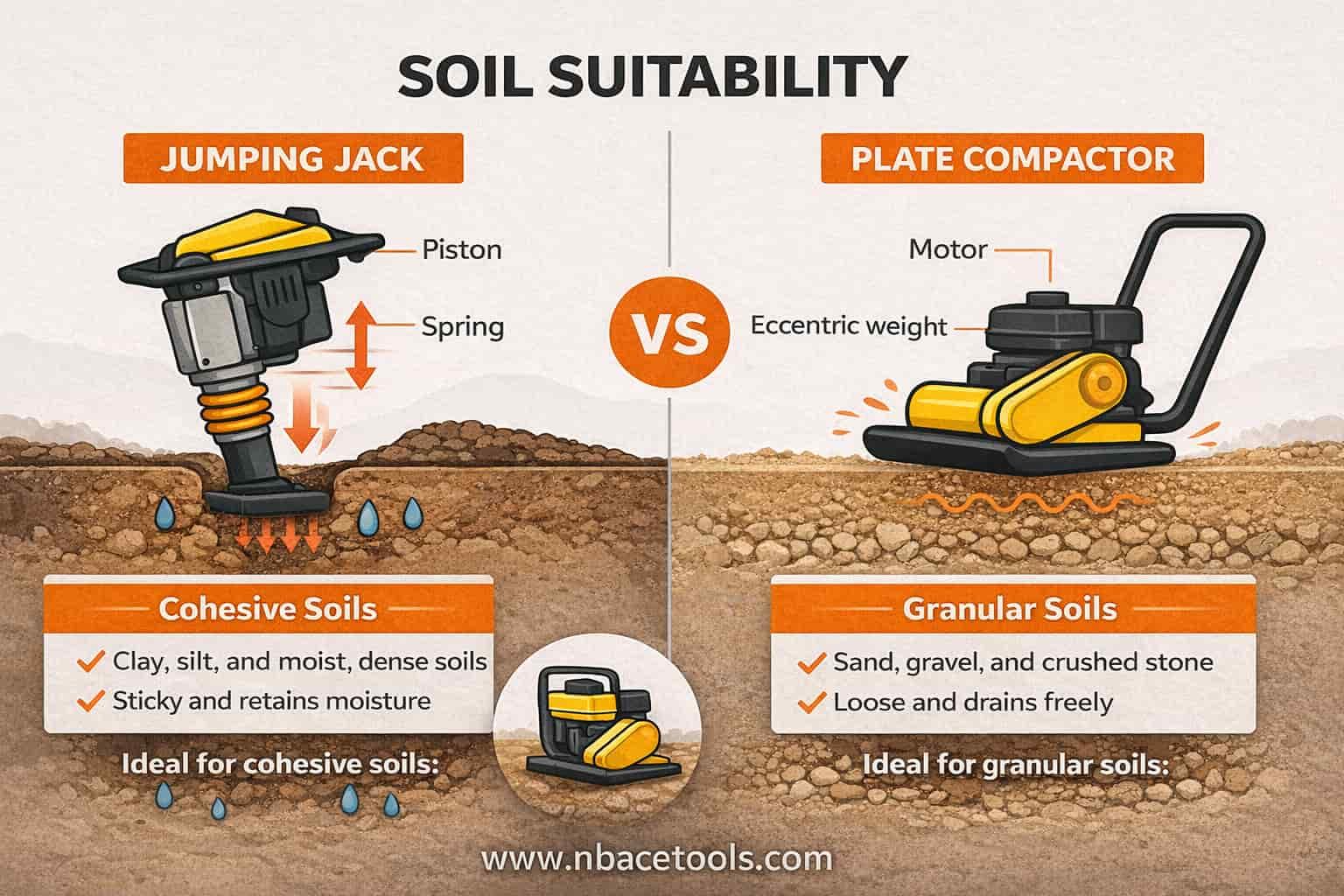
When the work area gets narrow, the jumping jack starts to shine. Its slim foot can reach into trenches, corners, and tight backfill zones where a plate compactor becomes awkward. This makes it a strong choice for jumping jack for trench compaction, utility work, and best compactor for retaining wall backfill.
A plate compactor can still be useful near these areas, but it is usually better on the upper layer or on the wider section around the trench. In other words, the jumping jack is the better specialist in small, difficult spaces. It gets into places a plate compactor would rather avoid.
This is also why compaction depth in confined spaces is often discussed with rammers instead of plates. The rammer does not need much room to do a serious job. That is part of its charm and part of its value.
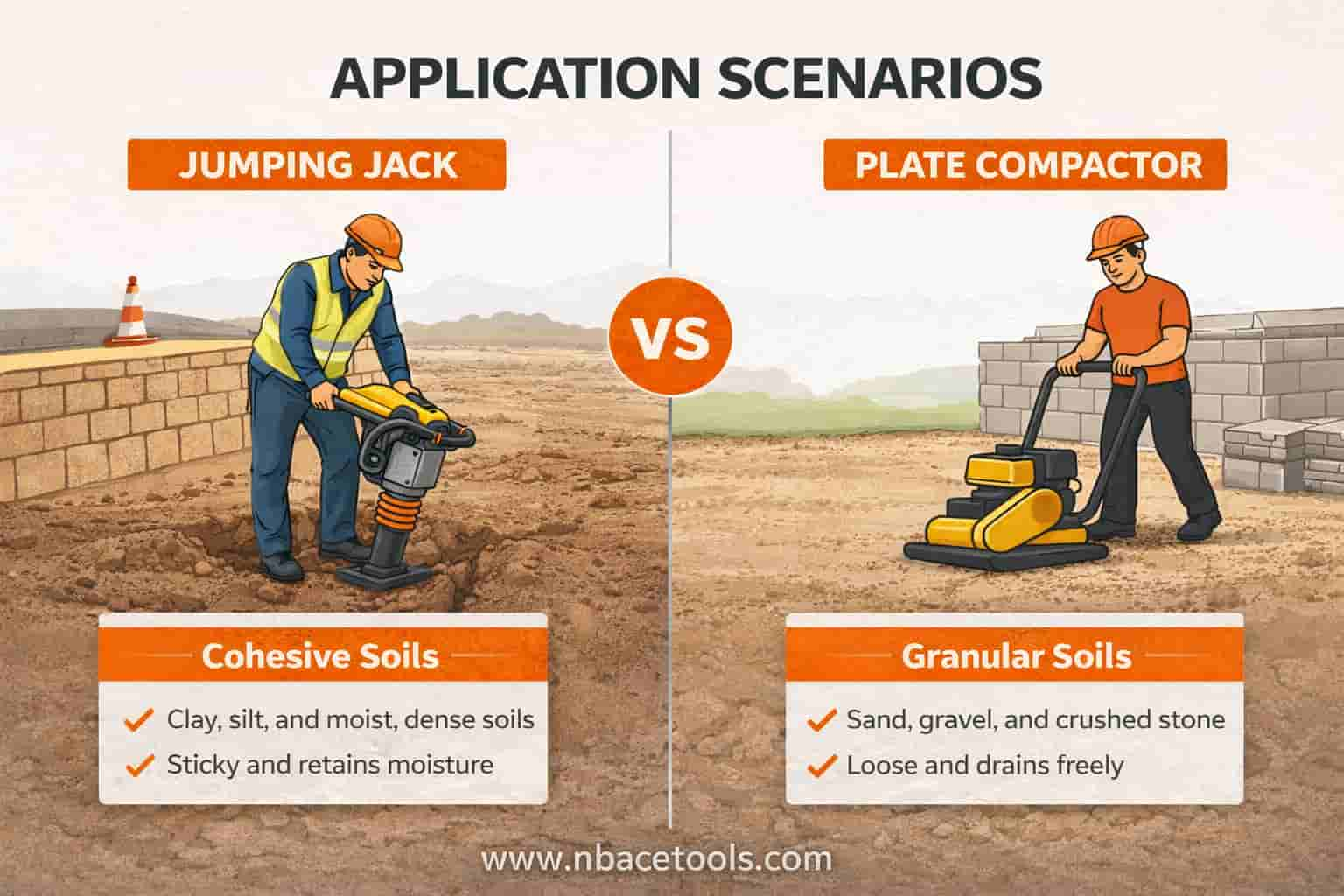
Once the area opens up, the plate compactor usually becomes the more practical choice. It moves faster, covers more surface, and leaves a flatter finish. That makes it a better fit for plate compactor for block paving, paths, patios, driveway bases, and similar jobs where surface consistency matters.
This does not mean the jumping jack is useless there. It simply means it becomes slow and less efficient when the space is wide. You can use a jumping jack across a large open area, but that is a bit like using a teaspoon to empty a sand pit. It works, but your patience may not.
For paving work, the plate compactor also makes more sense because the vibration is more even across the surface. If the project needs a neat final finish, the plate compactor usually has the edge.
This is where many buyers get lost in the numbers. They see plate size effects on soil compaction, machine weight and compaction performance, and compaction efficiency, then suddenly everything starts to look like exam revision notes. The good news is that the idea is simple.
A larger plate helps cover more ground. More machine weight can help push energy into the material. Better efficiency means you finish the job faster with fewer passes. But these things only help when they match the task. A wide plate is useful on open ground, but not in a narrow trench. More weight is helpful, but not if the machine becomes hard to control in a small work zone.
So, instead of asking which spec is biggest, ask which spec is most useful for this site. That question usually leads to a better answer and fewer regrets.
In daily use, both machines can be reliable if they are looked after properly. A plate compactor often feels simpler because its motion is more straightforward and its working pattern is easier on the operator. A jumping jack has more repeated impact and usually works in harsher conditions, so regular inspection matters even more.
That said, easy maintenance is not only about machine design. It is also about access, service habits, and how the machine is used. Features like a folding handle can improve transport and operator comfort, but they do not change the basic rule: a neglected machine will eventually become a very expensive decoration.
If your team wants something for frequent trench work, the extra maintenance attention on a rammer is often still worth it. If the job is mostly flat granular base work, a plate compactor may feel easier to live with day to day.
Yes, and this is where many people make the best decision. Real projects are not always polite enough to fit into one machine category. You may need a jumping jack in the trench and a plate compactor on the wider top layer. You may need the rammer to compact a tight edge first, then the plate to finish the surrounding base.
So, when people ask, do I need a plate compactor after using a jumping jack, the answer is often yes. Not because the first machine failed, but because the second machine finishes a different part of the job better. On some sites, they are not competitors at all. They are teammates with different personalities. One jumps in first. The other tidies up after.
If your job involves cohesive soil, narrow trenches, or deep targeted compaction, the jumping jack is usually the better tool. If your project involves granular soil, wider areas, paving work, or smoother finishes, the plate compactor is usually the better choice.
So, the answer to when to use jumping jack vs plate compactor is actually quite simple. Choose the jumping jack when you need focused impact in tight places. Choose the plate compactor when you need faster coverage over a broad surface. And if the project includes both conditions, use both machines and let each do the job it was built for.
In short, one machine jumps, one machine glides, and both are useful. The trick is knowing which one should turn up first.

