Product knowledge popularization
A construction equipment supplier of construction machinery solutions for 30 years. WhatsApp:+86-18968212829
Language
A construction equipment supplier of construction machinery solutions for 30 years. WhatsApp:+86-18968212829
Features and Benefits of Construction Cement Mixer
Picture this: you’re on a dusty site, deadline looming, and the last thing you need is a lumpy mix that cracks before the week is out. A solid concrete mixer machine changes the game. It turns raw ingredients into reliable concrete fast, consistently, and with far less sweat. Here’s a no-nonsense look at what makes a construction cement mixer worth its weight in sand.
At its heart, a cement mixer is brilliantly simple yet clever. You load cement, sand, aggregate and water into a rotating drum. Internal blades tumble everything together like a giant washing machine for mortar. Turn one way and it mixes; reverse and it discharges. No guesswork, no weak spots.
The real magic happens in the drum’s steady rhythm. It keeps the mix moving so water and cement bind evenly. Skip this and you get patchy concrete that fails under load. Engineers love it because the process is predictable every single batch.

Not all types of cement mixer suit every job. Drum mixers dominate because they handle plastic to semi-dry concrete with aggregate up to 60 mm. Tilting-drum versions tip the whole bowl for quick discharge. Reversing-drum models spin backwards to push mix out cleanly.
Portable cement mixer units shine on smaller or remote sites. They wheel right where you need them, saving endless barrow runs. Larger self-loading versions add a hopper that lifts materials automatically. Choose based on daily volume and how far the power source sits from the action.
Capacity isn’t just a number—it decides whether your day runs smooth or stalls. A typical mid-size machine offers 350 litres discharge from 560 litres loading and delivers 10-14 m³ per hour. That’s enough for footings, slabs or small pours without constant refills.
Bigger drums mean higher output, but only if the power and blades keep pace. Undersize the mixer and you waste time waiting for batches. Oversize it and fuel or electricity costs climb. Match capacity to your daily target and watch productivity climb while material waste drops.
Power choice splits opinions faster than a bad batch. Electric vs diesel concrete mixer advantages come down to your site reality.
Diesel wins on remote jobs. A robust 16 hp water-cooled engine laughs at power cuts and delivers strong torque for thick mixes. It runs all day without plugs. Electric models, meanwhile, sip electricity quietly, need almost zero engine servicing and produce zero fumes—perfect for indoor or urban work. Running costs drop sharply too.
Both types share smart features like sealed gearboxes and protective covers that keep dust out. The trick? Pick diesel for mobility and grunt; electric for silence and low bills. Either way, you get reliable mixing without drama.
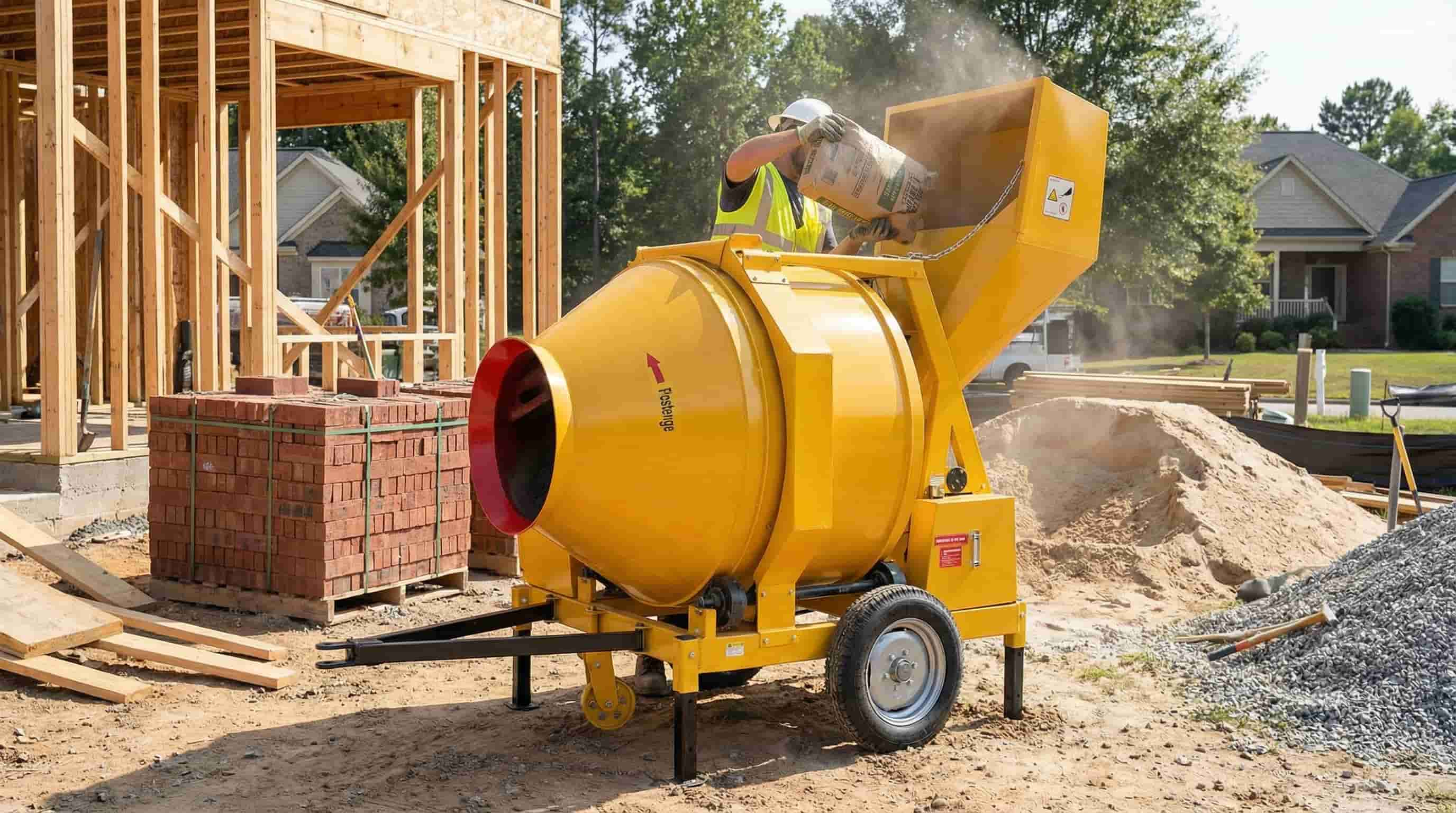
Manual mixing is a back-breaker that eats hours and leaves crews exhausted. A construction cement mixer flips that script. One operator loads the hopper, the machine does the heavy tumbling, and a hydraulic tipping hopper pours straight into the barrow or formwork.
No more shovelling wet concrete by hand. No more chasing inconsistent hand mixes. Crews finish pours faster, stay fresher and move to the next task. On tight schedules that single labour-saving leap can shave days off the programme and keep everyone smiling.
A 1600–1700 kg machine might feel heavy until you park it on uneven ground. That weight lowers the centre of gravity and stops the drum wobbling when full. Pair it with four oversized riding wheels and chunky 6.50-16 tyres and the portable cement mixer tracks straight even when dragged across rubble.
Drum walls of 6 mm wear-resistant steel shrug off daily punishment. A sturdy frame and rational power transmission mean fewer breakdowns. Result? You focus on the pour, not on coaxing a shaky mixer back into line.
A well-designed concrete mixer machine isn’t just kit—it’s your silent partner that delivers consistent strength, slashes labour and keeps projects on schedule. Whether you need portable flexibility, diesel grunt or electric quiet, the right features turn “good enough” concrete into rock-solid results every time.
Ready to match the perfect mixer to your next site? Drop us a line at nbacetools.com. We’ve spent years fine-tuning these machines so your crews spend less time fixing problems and more time building.

