Product knowledge popularization
A construction equipment supplier of construction machinery solutions for 30 years. WhatsApp:+86-18968212829
Language
A construction equipment supplier of construction machinery solutions for 30 years. WhatsApp:+86-18968212829
In construction, landscaping, and road engineering projects, inadequate compaction often causes soil settling, surface cracks, premature asphalt failure, structural instability, and expensive delays or safety issues. These problems stem from insufficient centrifugal force or inconsistent vibration, leading to rework, budget overruns, and reduced project longevity.
Our solution: Our range of vibratory plate compactors delivers powerful, uniform compaction with centrifugal forces from 10.5KN to 20KN. Featuring reliable engines (including Honda GX160 options) and accessories like foldable handles, trolley wheels, and water tanks, they ensure stable bases quickly and cost-effectively.
The best vibratory plate compactor matches your material and project scale. For light soil compaction, select the C-60 (65kg, 10.5KN centrifugal force). Medium-duty tasks suit the C-77 (77kg, 13.5KN) or C-90 (90kg, 15KN). Heavy applications, including asphalt paving, benefit from the C-100T (100kg, 20KN) with water tank or C-120 heavy duty plate compactor. Honda plate compactors provide proven reliability across models.
Using a plate compactor brings many clear advantages to any job site. First, it creates uniform density in soil, gravel, sand, asphalt, and mixed materials much faster than manual methods. This uniform compaction removes air voids and makes the ground stronger, which helps prevent future settling or cracks.
Vibratory plate compactors use high-frequency vibration combined with downward force to pack particles tightly together. This increases load-bearing capacity, making the surface safe for buildings, roads, driveways, or patios. In road engineering, a well-compacted base lasts longer and handles heavy traffic better.
Heavy duty plate compactors reduce the need for extra layers or rework, saving time and money. Forward plate compactors are easy to move in tight spots, with small turning radii ideal for confined areas like trenches or around corners. Shock mounts on the handle cut down vibration to the operator, lowering fatigue during long hours of work.
Optional features add more value. Rubber mats protect brick or paver surfaces from scratches. Water tanks on models like C-80T and C-100T prevent hot asphalt from sticking to the plate, ensuring smooth finishes. Foldable handles and trolley wheels make transport simple—one person can move the machine without much effort.
Overall, plate compactors boost productivity, improve safety, and deliver durable results. They suit small gardening jobs, large civil works, and everything in between. Investing in a good vibratory plate compactor means fewer problems and better-quality work every time.

Picking the right plate compactor depends on your project needs, material type, area size, and compaction depth required. Granular soils like sand or gravel work best with higher vibration frequency (around 5500-5800 vpm), while cohesive soils or asphalt need greater centrifugal force and extras like water tanks.
Light-duty soil compactor tasks — such as small gardens, pathways, or landscaping — the C-60 forward plate compactor stands out. At 65kg with 10.5KN force and a 530×350mm plate, it is lightweight, easy to handle, and highly efficient in small spaces.
Medium-duty applications, like driveways, sub-bases, or general construction, suit the C-77 (77kg, 13.5KN) or C-90 (90kg, 15KN). These models offer balanced power, larger plates (560×430mm or 600×470mm), and good travel speed (20m/min) for faster coverage.
Heavy duty plate compactor needs appear in large sites or deep compaction jobs. The C-120 (120kg, 20KN) or C-100T (100kg, 20KN) provide superior depth (up to 40cm) and high efficiency (up to 660m²/hr). These are perfect for road engineering or big foundations.
Plate compactor for asphalt paving: Choose models with water tanks, such as C-80T or C-100T. The water layer stops sticky asphalt from attaching to the plate, giving a clean, even finish.
All models support optional trolley wheels and foldable handles. This road engineering plate compactor trolley feature allows easy movement across sites, especially in urban areas or multi-stage projects.
Honda plate compactors, powered by the reliable GX160 5.5HP engine, offer fuel efficiency, easy starts, and low maintenance. Alternatives like Loncin, Subaru, or Briggs & Stratton provide solid performance at different price points.
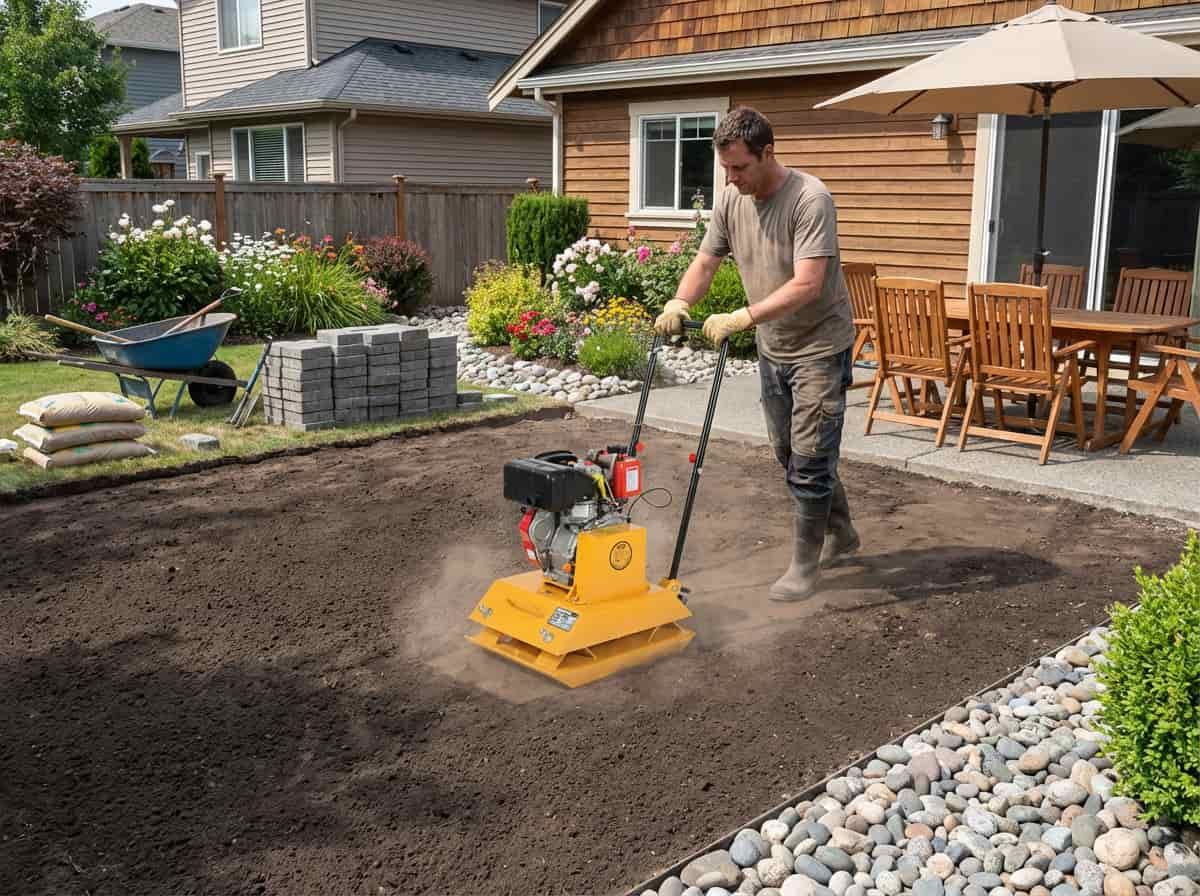
Moving heavy equipment slows down work on any site. Our plate compactor models include optional trolley wheels and foldable handles, making transport quick and simple. One operator can push or pull the unit without strain, which saves time and reduces injury risk.
This feature shines in road engineering, where jobs often involve multiple spots or tight access. Combine high compaction power with easy mobility, and you get faster project completion without extra crew.
Keep your plate compactor running smoothly with regular care. Daily checks include inspecting for loose parts, cleaning the plate of dirt or asphalt buildup, and checking engine oil and fuel levels. Wipe the base after use to prevent sticking.
For Honda plate compactors, change engine oil every 25-50 hours, clean or replace the air filter often, and use fresh fuel to avoid carburetor issues. Inspect spark plugs, belts, and shock mounts regularly—vibration can wear these parts over time.
Store the machine in a dry place, drain fuel if unused for long periods, and cover it to protect from dust. Proper maintenance extends life, cuts repair costs, and keeps performance high on every job.

A plate compactor, or vibratory plate compactor, compresses loose materials like soil, gravel, sand, and asphalt to create stable, level surfaces. It is essential in construction, road engineering, landscaping, and paving to prevent settling and ensure durable foundations.
Consider soil type (granular vs cohesive), compaction depth, area size, and features. Light tasks suit smaller models like the C-60; asphalt paving requires water tanks (C-80T/C-100T); heavy duty jobs need higher force (C-120). Honda plate compactors offer excellent reliability for demanding use.
Perform daily checks: inspect for loose parts, clean the air filter, check engine oil and fuel, and wipe dirt from the plate. After asphalt use, clean the base to prevent buildup. Regular oil changes, spark plug inspection, and vibration mount checks extend service life and ensure safety.
Yes—Honda GX160 engines deliver proven durability, fuel efficiency, and low emissions. They provide consistent power across models, reducing downtime and maintenance costs compared to generic alternatives, making them ideal for frequent professional use.
Absolutely. Models with water tanks (e.g., C-80T/C-100T) prevent asphalt from sticking to the plate, ensuring smooth, even compaction. Rubber mats are also available for protecting paved surfaces during finishing work.
Yes, when used correctly. Wear protective gear (boots, gloves, ear protection), operate on level ground, avoid loose clothing, and turn off the engine when not in use. Lift using handles or eyes, and never run on slopes or near edges. Regular maintenance prevents accidents from damaged parts.

