Product knowledge popularization
A construction equipment supplier of construction machinery solutions for 30 years. WhatsApp:+86-18968212829
Language
A construction equipment supplier of construction machinery solutions for 30 years. WhatsApp:+86-18968212829
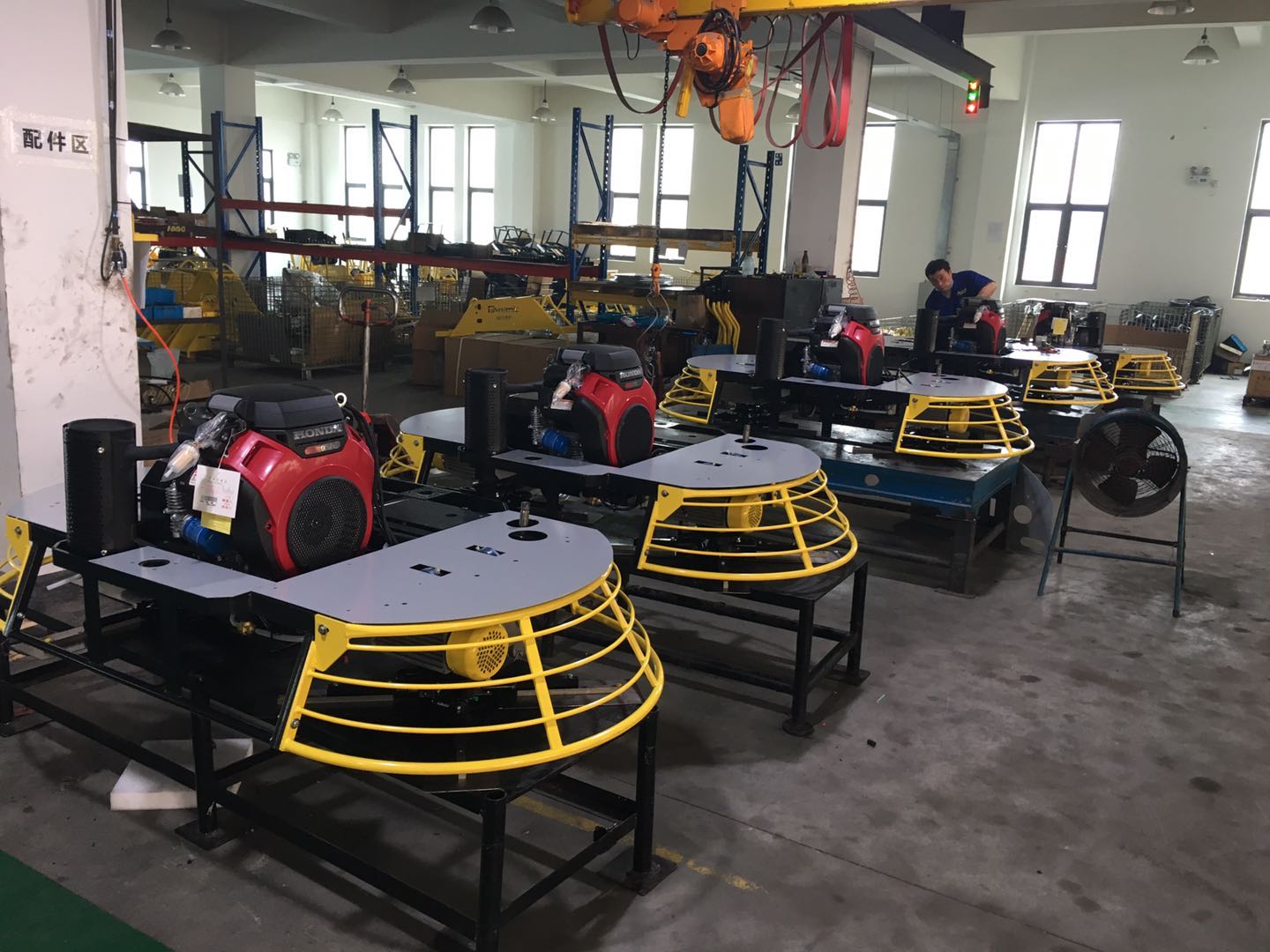
Buying a ride-on power trowel looks simple until the machine reaches the job site and the concrete starts setting faster than expected. Many contractors compare price first, engine brand second, and almost everything else later. That order often leads to poor finishing efficiency, operator fatigue, high maintenance cost or a machine that is simply too large, too small or too difficult to control for the actual slab. A concrete ride-on trowel should be selected according to slab size, working diameter, blade system, steering type, engine power, site access and long-term service support. Price matters, of course, but concrete rarely waits politely while a buyer realises they ordered the wrong machine.
The cheapest ride-on concrete finishing machine may look attractive on a quotation sheet, but the real cost appears during the pour. If the trowel cannot cover the slab within the finishing window, the crew may need extra labour, extra walk-behind trowels or emergency rental support. If the gearbox, blade arms or steering system wear quickly, the saving disappears into spare parts and downtime. A better way to compare price is to ask what the machine can finish per hour, how consistently it performs under load, and how easy it is to maintain after repeated use on abrasive concrete surfaces.
For dealers and rental companies, this point is even more important. A low-cost machine with weak parts support can become difficult to rent out after the first season. Contractors remember machines that help them finish cleanly, and they also remember machines that stop in the middle of a slab.
A ride-on power trowel is most useful on large, open concrete floors such as warehouses, factories, parking structures, logistics centres and industrial slabs. These projects need fast coverage and consistent surface quality across a wide area. However, a ride-on trowel is not automatically the right answer for every job. If the floor has many columns, narrow bays, wall edges, drainage channels or small rooms, the operator may spend too much time turning and correcting direction. In that case, a walk-behind machine may still be needed for edges and restricted areas.
Before buying, estimate the typical slab size your crew handles, not just the biggest job you hope to win. A contractor working mainly on residential slabs does not need the same machine as a team finishing airport aprons or high-traffic warehouse floors. Matching the machine to regular work brings a better return than buying the largest model for occasional use.
The working diameter affects productivity, manoeuvrability and surface control. A wider ride-on trowel working diameter helps cover large slabs faster, but it also needs more space to turn and more transport planning. A smaller ride-on model can be easier to move, easier to learn and more suitable for medium commercial floors. This is why buyers should compare working diameter together with machine weight, blade size and site layout.
For example, a compact ride-on trowel can be useful where transport access is limited or where the contractor needs a machine that enters earlier on the slab. A larger hydraulic ride-on power trowel is more suitable when the priority is high daily output, stable finishing pressure and long operating periods on open floors. Bigger can be better, but only when the site gives the machine room to work.
Engine brand is important, but it is not the whole story. Buyers should compare engine power, maximum speed, fuel capacity, cooling method, weight balance and how the power is transferred to the blades. A machine with a respected engine but poor structural matching may still feel weak under finishing load. On the other hand, too much power in a poorly balanced machine can make control harder, especially for less experienced operators.
A practical buying question is simple: will the engine, gearbox and blade system maintain steady performance during floating and finishing passes? For heavy slabs, dry surface conditions or long working hours, stable output matters more than a single impressive number in the brochure. Contractors should also confirm whether the engine is familiar in their local market, because easy access to filters, spark plugs and service knowledge reduces long-term risk.
Many buyers ask about hydraulic ride-on power trowel models only after they have struggled with operator fatigue. Mechanical steering is usually simpler, lighter and cost-effective, which makes it suitable for many standard jobs. Hydraulic steering can offer smoother control and easier operation on larger slabs, especially when the operator needs to work for long periods. The right choice depends on project scale, operator skill and expected machine utilisation.
If the machine will be used occasionally, a mechanical model may provide good value. If it will be used frequently on large industrial floors, a hydraulic system may reduce fatigue and improve control consistency. This is not only a comfort issue. A tired operator makes more finishing mistakes, and finishing mistakes are expensive once the slab hardens.
A concrete power trowel machine is judged by the floor it leaves behind. Blade speed, blade pitch adjustment, floating pan compatibility and finishing blade quality all affect the final result. During early floating, the machine must spread pressure without tearing the surface. During later finishing, the blade pitch must be adjustable enough to create a dense, smooth finish without burning or marking the concrete.
Buyers should ask whether the machine supports suitable floating pans and finishing blades for their concrete mix and slab requirements. They should also check how easily the blade angle can be adjusted from the operator position. A powerful machine with poor blade control is like a strong worker with slippery boots: energetic, but not always helpful.
A ride-on power trowel maintenance checklist should be part of the buying decision, not an afterthought. Key inspection points include blade wear, belt condition, gearbox lubrication, hydraulic oil level, steering response, engine oil, air filter, safety switch and loose bolts. Concrete finishing machines work in dust, vibration and wet surface conditions, so cleaning and routine inspection directly affect service life.
For overseas buyers, spare parts availability is often more important than a small discount. Dealers should confirm common wear parts before stocking a model, while contractors should ask how quickly blades, pans, belts, filters and steering components can be supplied. Good support turns a machine into an asset. Poor support turns it into a large metal chair with an engine attached.
Before placing an order, check the normal slab size, required finish quality, working diameter, engine power, steering type, blade compatibility, machine weight, transport dimensions, operator comfort, safety switch, lighting, water spray system, spare parts supply and local service options. If you are buying for warehouse floors, industrial floors or large concrete slabs, prioritise productivity, stable control and low downtime. If you are buying for mixed projects, choose a model that balances coverage with manoeuvrability.
The smartest purchase is not always the most expensive machine or the cheapest one. It is the ride-on power trowel that fits your concrete work, your crew, your transport method and your maintenance capability.
Choose the size according to slab area, open working space and finishing window. Large open floors usually benefit from wider machines, while medium slabs or sites with access limits may need a more compact ride-on model.
It is better for large, open floors where productivity and operator comfort matter. A walk-behind trowel is still useful for edges, small rooms and detailed areas where a ride-on machine cannot move freely.
Choose hydraulic steering when the machine will be used often on large slabs and operator comfort is important. Mechanical steering can still be a practical choice for standard work and lower ownership cost.
Check working diameter, engine power, blade pitch adjustment, steering type, machine weight, transport size, safety features, spare parts supply and after-sales support.

