How to Match a Thermoplastic Preheater to a Road Marking Machine: Capacity and Output Guide
Choosing the right thermoplastic preheater capacity is essential when planning a road marking operation. A preheater that cannot supply enough molten material may leave the marking machine waiting for the next batch, while an unnecessarily large system can increase equipment, transport and operating costs.
The correct selection depends on more than the size of the material tank. Contractors need to consider the road marking machine's hourly material consumption, the preheater's actual melting output, usable storage capacity and the time required for heating and material transfer. These factors must work together if the marking crew is expected to maintain a steady production rate.
This guide explains how to calculate thermoplastic material demand, compare preheater heating systems and match a preheater with different road marking machine configurations. It also examines the differences between separate melting equipment and integrated thermoplastic marking machines, helping contractors and equipment buyers make a more informed purchasing decision.
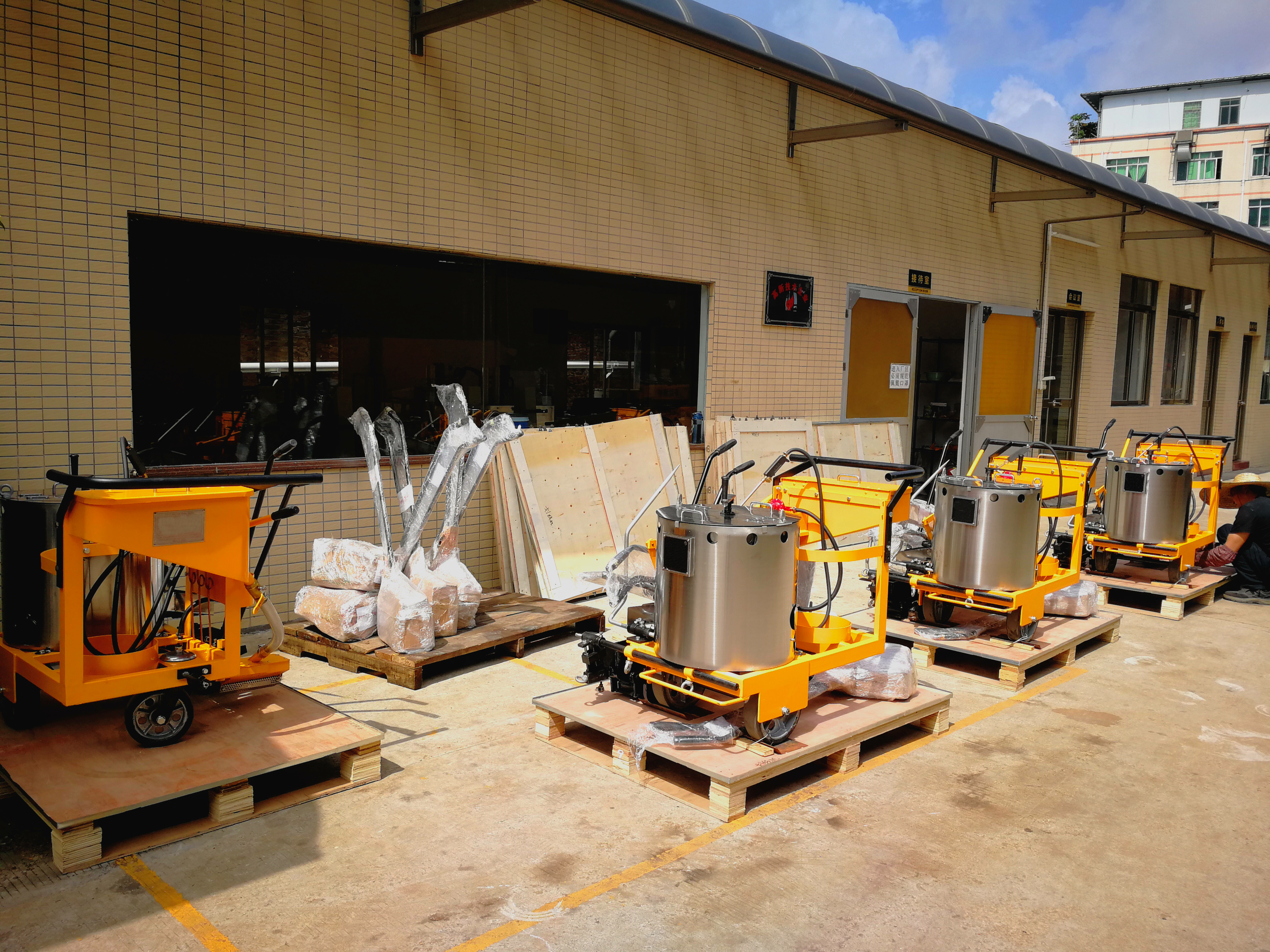
1. What Is a Thermoplastic Road Marking Preheater?
A thermoplastic road marking preheater is equipment used to heat, melt and prepare solid thermoplastic marking material before it is applied to a road surface. The material is normally supplied in solid form, such as bags of powder, granules or blocks, depending on the manufacturer's formulation.
During preparation, the material is heated and mixed until it reaches the working condition specified by its manufacturer. The molten thermoplastic is then transferred to a road marking machine or supplied directly to an integrated application system.
The purpose of a preheater is to prepare enough usable material for the marking operation. On larger projects, this preparation process can take place alongside road marking work, reducing unnecessary waiting between material batches.
1.1 How Does a Thermoplastic Preheater Work?
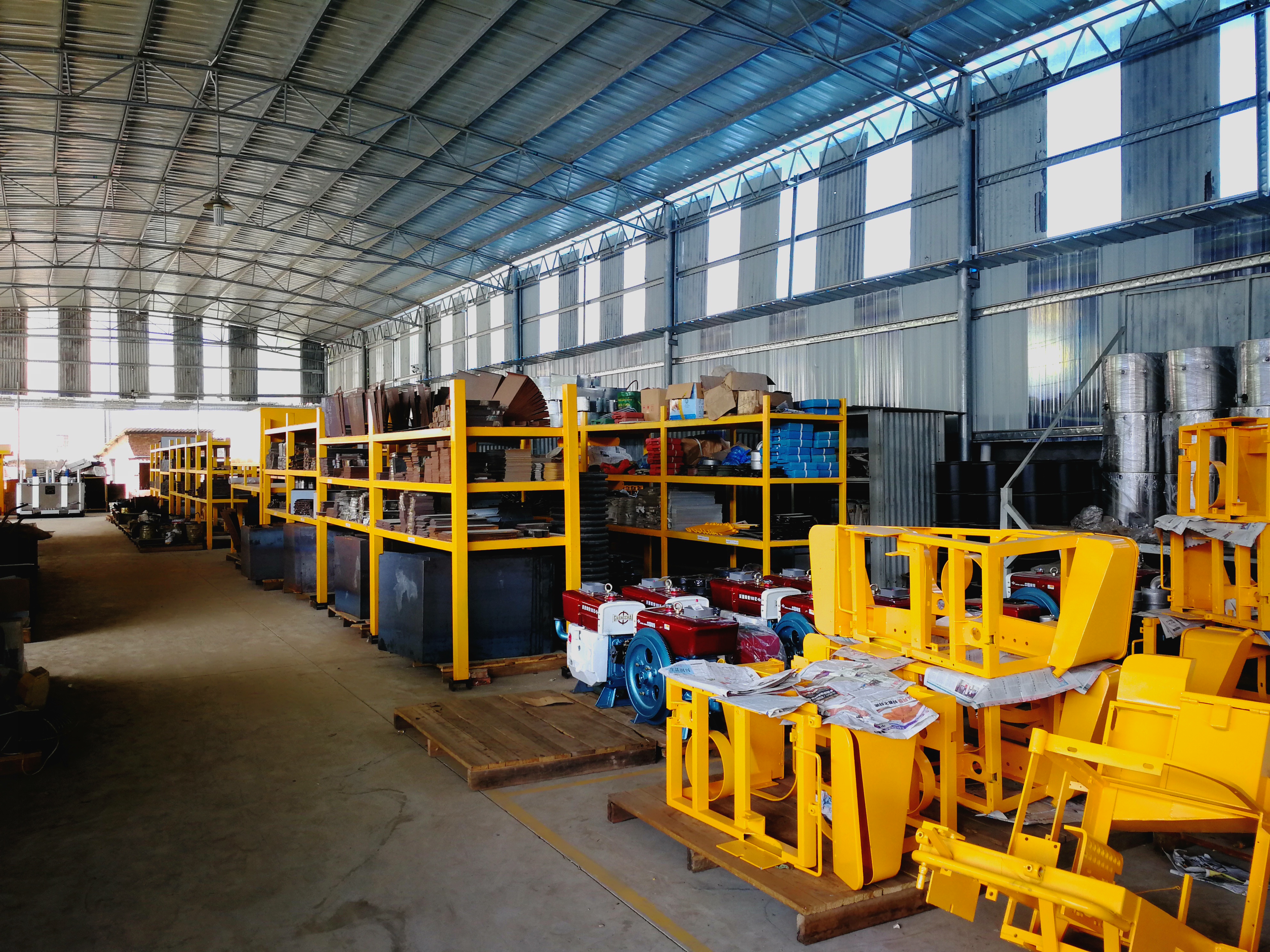
Although equipment designs differ, most thermoplastic preheaters perform several basic functions:
Material loading: Solid thermoplastic is added to the heating tank according to the equipment manufacturer's loading procedure.
Heating: A burner or another specified heating system supplies energy to melt the material.
Agitation: Mixing components help maintain material consistency during preparation.
Temperature monitoring: The operator checks material temperature against the thermoplastic manufacturer's recommended working range.
Material discharge: Prepared material is transferred to the road marking machine or application equipment.
Heating, mixing and temperature monitoring must be managed together. Simply reaching a particular temperature does not guarantee that the entire batch has melted evenly or is ready for application.
1.2 Separate Preheater vs Integrated Thermoplastic Melting System
Thermoplastic road marking equipment generally uses one of two arrangements: a separate preheater supplying a marking machine, or an integrated machine combining material melting and line application.
| Comparison | Separate Preheater | Integrated System |
|---|---|---|
| Equipment structure | Independent melting equipment and marking machine | Melting and marking functions combined |
| Material preparation | Prepared before transfer to the marking machine | Prepared within the integrated equipment |
| Capacity planning | Requires coordination between two equipment capacities | Depends on the integrated system's working capacity and melting performance |
| Operational consideration | Material transfer, refill timing and equipment coordination | Integrated heating, mixing, cleaning and application workflow |
| Purchasing consideration | Separate equipment, transport and operating arrangements | Combined equipment configuration and maintenance access |
For example, the ACE TW-H manual thermoplastic road marking machine is specified to work with a preheater. By comparison, the ACE TW-FJ combines a thermoplastic melting kettle, a mid-pressure furnace and a marking system in one machine.
These are different equipment arrangements, so buyers should compare their complete working processes rather than treating the two models as interchangeable preheaters.
1.3 Does Every Thermoplastic Road Marking Machine Need a Preheater?
No. Some thermoplastic road marking machines receive molten material from a separate preheater, while integrated models combine heating, mixing and marking functions.
The correct arrangement depends on the machine structure, material demand, project size and operating schedule. Buyers should confirm the required material supply configuration with the manufacturer before ordering a machine.
For a broader explanation of equipment types and application methods, see ACE's road marking machine working principle guide.
2. How to Calculate the Required Thermoplastic Preheater Capacity
The first step in selecting a thermoplastic preheater is to calculate how much material the road marking operation will consume. This provides a practical starting point for evaluating the required melting output and available material capacity.
The calculation should begin with the actual marking area rather than simply the total road length. A solid line, a broken line and a pedestrian crossing require different quantities of thermoplastic even when their route lengths are similar.
2.1 Calculate Daily Thermoplastic Material Consumption
For a basic marking project, the painted area can be calculated using:
Marked Area = Line Length × Line Width × Marking Factor
After calculating the marked area, estimate the thermoplastic material requirement:
Material Consumption (kg) = Marked Area (m²) × Material Application Rate (kg/m²)
The application rate should come from the thermoplastic manufacturer's technical data sheet, project specification or verified site records.
For example, consider a project with 1,000 metres of continuous line, a width of 100 mm and a specified application rate of 6 kg/m².
Line length: 1,000 m
Line width: 0.10 m
Marked area: 1,000 × 0.10 = 100 m²
Material requirement: 100 × 6 = 600 kg
The estimated thermoplastic requirement is therefore 600 kg, before any project-specific allowance for waste or additional material requirements.
For broken lines, crossings and symbols, the marking factor must reflect the actual painted area. ACE's road marking paint and glass bead consumption calculator explains how to calculate these quantities.
2.2 Calculate Hourly Material Demand
Daily consumption alone does not determine the required preheater output. Contractors also need to know how many effective working hours are available for applying the material.
Average Hourly Material Demand = Daily Material Consumption ÷ Effective Application Hours
Using the previous example, assume the crew applies 600 kg of thermoplastic during six effective marking hours.
600 kg ÷ 6 hours = 100 kg per hour.
This is the average material consumption during the stated application period. It does not mean the preheater must necessarily melt exactly 100 kg every hour, because the crew may prepare material in batches before or during marking work.
The equipment supplier should assess whether the proposed preheater can maintain the required supply after allowing for initial heating, batch preparation, transfer and operational interruptions.
2.3 Understand Tank Capacity vs Melting Output
One of the most common mistakes when comparing thermoplastic preheaters is treating tank capacity and melting output as the same specification.
| Parameter | Meaning | Why It Matters |
|---|---|---|
| Preheater tank capacity | The nominal material capacity of the heating vessel | Indicates how much material the equipment can hold |
| Usable working capacity | The practical quantity available for a particular operating cycle | Helps plan loading, discharge and batch management |
| Melting output | The amount of thermoplastic that can be prepared per unit of time | Determines whether the equipment can support the required production rate |
| Machine tank capacity | The quantity of material held by the road marking machine | Influences refill frequency and operating interruptions |
| Transfer capacity | The amount of prepared material that can be delivered within a given period | Determines whether material can reach the marking machine at the required rate |
A 500-litre preheater does not automatically melt 500 litres of thermoplastic every hour. Actual melting performance depends on the heating system, burner output, material properties, batch size, agitation and operating conditions.
For this reason, buyers should request a manufacturer's tested melting capacity rather than estimating hourly output from the tank volume alone.
2.4 Calculate a Practical Preheater Capacity Requirement
After calculating material demand, compare it with the usable batch capacity and actual melting output of the proposed preheater.
A practical assessment should include:
Material required per working day.
Average material consumption per effective marking hour.
Usable material capacity of each batch.
Initial heating time before marking begins.
Time needed to melt additional material.
Material transfer and machine refill time.
Planned breaks, cleaning and colour changes.
Some equipment manufacturers publish model-specific capacity rules. For example, Borum recommends a minimum total preheater volume equivalent to four times the marking machine tank capacity for a particular equipment selection method. This is a manufacturer-specific rule of thumb, not a universal engineering standard for every road marking system.
Its technical note also explains that splitting the required material capacity between two preheaters may improve melting workflow in the relevant operating arrangement.
Buyers can refer to Borum's thermoplastic preheater capacity technical note for the original example and equipment specifications.
The final capacity should always be confirmed against the proposed machine, thermoplastic formulation and supplier's actual performance data.
3. Direct Heating vs Indirect Heating: What Should Buyers Compare?
Heating system design affects how energy reaches the thermoplastic material. Two commonly used preheater arrangements are direct burner heating and indirect heating through thermal transfer oil.
3.1 Direct-Fired Heating System
In a direct heating arrangement, the burner heats the preheater vessel from below. Heat is transferred through the vessel structure to the thermoplastic material.
Borum describes its direct heating system as having a relatively simple construction, without a separate thermal oil reservoir. The manufacturer also identifies faster heating and higher melting capacity as potential advantages of its direct-heated equipment.
When comparing direct-fired models, buyers should check burner output, heat distribution, temperature monitoring, agitation and the manufacturer's specified operating procedure.
3.2 Indirect Heating with Thermal Oil
An indirect heating system uses a separate thermal transfer oil chamber. The burner heats the oil, which then transfers heat to the thermoplastic material through the vessel walls.
Borum explains that its indirect heating arrangement distributes heat through oil chambers positioned around the preheater. The manufacturer identifies temperature control and more uniform heat distribution as advantages of this particular system.
However, the additional oil circuit introduces components that require inspection and maintenance. Buyers should check oil specifications, service requirements, temperature controls and the availability of replacement parts.
3.3 Which Heating System Fits Your Operating Conditions?
| Factor | Direct Heating | Indirect Heating |
|---|---|---|
| Heat transfer | Burner heats the vessel directly | Thermal oil transfers heat from a separate chamber |
| System construction | Generally simpler | Includes an additional thermal oil circuit |
| Temperature distribution | Depends on vessel and burner design | Depends on oil circulation and chamber design |
| Maintenance focus | Burner, vessel and heating controls | Burner, oil circuit, vessel and controls |
| Buying consideration | Heating performance and temperature monitoring | Oil maintenance and temperature stability |
Neither system should be selected simply because one sounds more advanced. The correct choice depends on the required production rate, thermoplastic formulation, operating conditions, service support and the manufacturer's verified equipment performance.
For a detailed explanation of the two arrangements, refer to Borum's guide to thermoplastic preheaters.
4. How to Match a Preheater with a Road Marking Machine
Preheater selection should be based on the complete material supply arrangement. A road marking machine may have a large holding tank but still experience delays if the melting equipment cannot prepare material quickly enough.
4.1 Matching a Preheater with a Manual Road Marking Machine
The ACE TW-H is a manual thermoplastic screed-type road marking machine specified to work with a separate preheater.
Its published specifications include:
Thermoplastic tank capacity: 105 kg.
Machine weight: 125 kg.
Glass bead box capacity: 25 kg.
Specified paint temperature maintenance: 170–220°C.
Application thickness: 1.2–4 mm.
Daily work efficiency listed by ACE: 1,000 m².
These figures describe the marking machine, not the performance of a separate preheater.
When purchasing a compatible system, contractors should ask which preheater capacity and melting output are recommended for their planned daily workload. They should also confirm how molten material will be transferred and how often the machine needs refilling.
See the ACE TW-H manual road marking machine for its published specifications.
4.2 Matching a Preheater with a Self-Propelled Road Marking Machine
The ACE TW-A is a self-propelled thermoplastic road marking machine with a 5.5 HP Honda petrol engine and hydraulic continuously variable transmission.
Its published specifications include:
Stirring tank capacity: 120 kg.
Machine weight: 230 kg.
Glass bead box capacity: 25 kg.
Marking speed: over 800 m/h, depending on coating and line thickness.
Application thickness: 1.2–4 mm.
Marking width: available in several configurations.
Preheater requirement: Yes.
The listed marking speed should not be treated as a guaranteed continuous production rate. Actual material consumption depends on the line width, coating thickness, marking pattern and working conditions.
For this configuration, buyers should calculate expected material consumption at the intended working speed and confirm that the external preheater can support the required supply schedule.
View the ACE TW-A self-propelled road marking machine for its full specification.
4.3 Integrated Thermoplastic Melting and Marking Systems
Not every project requires a separate preheater. An integrated system combines material preparation and road marking functions within one machine.
The ACE TW-FJ all-in-one thermoplastic kneader marking machine is equipped with a specialised mid-pressure furnace and a manually driven chain system that operates the mixing impellers.
Its published specifications include:
Coating material tank capacity: 120 kg.
Glass bead box capacity: 25 kg.
Machine weight: 220 kg.
Specified heated coating material temperature: 170–220°C.
Application thickness: 1.2–4 mm.
Daily work efficiency listed by ACE: 150 m².
The machine also features a controllable fire-road valve, movable exhaust extraction stacks and removable covers that assist with kettle cleaning and colour changes.
Its 120 kg material tank capacity should not be interpreted as a melting output of 120 kg per hour. Buyers who need a specific hourly production rate should request verified melting performance data from ACE.
For smaller and more scattered marking projects, an integrated arrangement may simplify equipment coordination. However, its suitability still depends on the required production volume and the manufacturer's confirmed operating capacity.
Explore the ACE TW-FJ all-in-one thermoplastic kneader marking machine for further details.
4.4 Check Material Supply Compatibility Before Ordering
When a separate preheater is required, the following details should be confirmed between the equipment supplier and the marking contractor:
Material outlet and transfer arrangement.
Compatibility with the marking machine's receiving tank.
Usable material capacity per batch.
Working temperature requirements.
Time required for material transfer and refilling.
Operator access and safe material handling.
Cleaning arrangements after the marking operation.
A system that melts material quickly but cannot transfer it efficiently may still interrupt the marking operation. The complete material route deserves as much attention as the preheater specification.
5. What Should Buyers Check When Selecting a Thermoplastic Preheater?
Once the required material demand has been calculated, compare the technical specifications of the available preheaters. The following factors help contractors and equipment dealers evaluate whether a machine suits their projects.
5.1 Working Capacity and Actual Melting Output
Ask for both the nominal tank capacity and the tested melting output. The supplier should explain the test conditions, thermoplastic material used, initial heating time and the period over which the output was measured.
Where possible, request a performance test using a material formulation comparable to the one used on your projects.
5.2 Burner Power and Fuel Consumption
Burner output affects the available heating input, but it does not independently determine actual melting performance. Vessel design, insulation, material properties and operating procedures also affect the result.
Ask the supplier for the specified fuel type, rated burner output and expected fuel consumption under stated operating conditions. This information helps estimate daily operating costs and plan fuel supply.
5.3 Temperature Monitoring and Control
A suitable temperature monitoring system helps operators keep the material within the working range specified by its manufacturer.
Check the temperature sensor position, display accuracy, thermostat arrangement and alarm or shutdown functions where fitted. Also confirm how the operator checks that the material is heated consistently throughout the batch.
Do not apply one universal temperature setting to every thermoplastic product. Always follow the material technical data sheet and project requirements.
5.4 Agitation and Mixing System
Agitation helps distribute heat and maintain a consistent material condition during melting. Buyers should inspect the mixing arrangement, drive mechanism, operating direction and maintenance access.
Ask whether the agitator can operate safely during loading, melting and material discharge. The operating sequence should follow the equipment manufacturer's instructions.
5.5 Material Discharge and Transfer
The discharge system should suit the receiving road marking machine. Check outlet dimensions, transfer method, material flow control and cleaning access.
For a separate system, confirm that the transfer process does not become the slowest stage of the operation.
5.6 Cleaning, Maintenance and Safety
Thermoplastic can harden when it cools, making cleaning access an important purchasing consideration. Removable covers, accessible inspection points and suitable cleaning procedures can reduce maintenance difficulties.
Buyers should also review burner inspection requirements, exhaust arrangements, protective guards, emergency controls and the manufacturer's instructions for handling hot material. Operators must follow applicable local workplace safety requirements.
6. Common Mistakes When Buying a Thermoplastic Preheater
6.1 Choosing a Preheater by Tank Capacity Alone
A large tank does not guarantee high melting output. Compare the usable material capacity with the supplier's tested melting performance before selecting a model.
6.2 Ignoring the Road Marking Machine's Hourly Demand
If the marking machine consumes material faster than the preheater can prepare it, production may be interrupted even when the preheater tank appears sufficiently large.
6.3 Confusing Material Holding Capacity with Melting Output
A machine's tank capacity describes how much material it can hold. It does not indicate how many kilograms of thermoplastic can be melted in one hour.
6.4 Overlooking Heating and Refilling Delays
Initial heating, additional batches, transfer and cleaning all use working time. These activities should be included when planning the daily production schedule.
6.5 Ignoring Cleaning and Colour Change Requirements
Contractors who apply different marking colours should examine how the equipment is cleaned and how residual material is removed. Poor cleaning access can increase downtime between jobs.
| Common Mistake | Possible Consequence | What Buyers Should Check |
|---|---|---|
| Selecting by tank volume only | Insufficient melting output | Verified melting rate |
| Ignoring hourly demand | Marking machine waiting for material | Material consumption per hour |
| Ignoring transfer arrangements | Slow refilling | Discharge and transfer method |
| Poor temperature control | Inconsistent material condition | Temperature monitoring system |
| Limited cleaning access | Longer maintenance and colour changes | Removable covers and inspection access |
7. Thermoplastic Preheater Maintenance and Daily Inspection
Regular inspection helps maintain equipment performance and identify problems before they interrupt a road marking project. The exact maintenance schedule should follow the equipment manufacturer's manual.
7.1 Before Heating
Check the vessel, burner and fuel connections.
Inspect the agitator and its drive components.
Confirm that exhaust paths are clear.
Check temperature monitoring equipment.
Confirm that the machine is prepared for the specified material.
7.2 During Material Melting
Monitor material temperature against the material manufacturer's requirements.
Observe the heating and agitation process.
Follow the specified material loading procedure.
Watch for abnormal burner behaviour, leaks or unusual noises.
7.3 After Completing Marking Work
Follow the manufacturer's shutdown procedure.
Inspect the material outlet and accessible components.
Clean the equipment according to the specified procedure.
Allow the equipment to reach a safe condition before maintenance.
Record operating hours and maintenance findings.
Never open, clean or service hot equipment without following the manufacturer's safety instructions. Heating systems and molten thermoplastic can cause serious burns and fire hazards.
For problems involving overheating, material contamination, bubbles or uneven markings, see ACE's thermoplastic road marking defects troubleshooting guide.
8. Choosing the Right ACE Thermoplastic Road Marking Configuration
ACE offers different thermoplastic road marking machine configurations for contractors working on roads, parking areas, factory grounds and other pavement marking projects.
| Model | Configuration | Published Material Tank Capacity | Heating Arrangement |
|---|---|---|---|
| TW-H | Manual screed-type machine | 105 kg | Works with a separate preheater |
| TW-A | Self-propelled thermoplastic machine | 120 kg | Works with a separate preheater |
| TW-FJ | Integrated thermoplastic kneader marking machine | 120 kg | Integrated mid-pressure furnace |
These published tank capacities are not hourly melting-output figures. The required production capacity should be confirmed according to the intended application and verified equipment performance.
Contractors comparing complete systems can start with the ACE road marking machine range and review the relevant product specifications.
For a suitable equipment recommendation, provide the expected daily marking distance, line width, coating thickness, material formulation and available working hours. ACE can then help review the appropriate machine configuration and the additional technical information required for preheater matching.
9. Frequently Asked Questions About Thermoplastic Preheater Capacity
1. How do I calculate thermoplastic preheater capacity?
Start by calculating the daily thermoplastic material requirement from the actual marking area, coating thickness or specified application rate. Divide the daily quantity by effective application hours to estimate hourly material demand. Then compare this demand with the preheater's usable capacity, tested melting output and material transfer time.
2. What size preheater do I need for a road marking machine?
The required size depends on the marking machine's material consumption, daily workload, effective operating hours and batch preparation time. Tank capacity alone is not enough. Ask the equipment supplier to recommend a configuration based on the actual machine model and project requirements.
3. What is the difference between tank capacity and melting output?
Tank capacity describes how much material the vessel can hold. Melting output describes how much thermoplastic the equipment can prepare within a given period, usually measured in kilograms per hour. These are different specifications and should be checked separately.
4. Is direct heating better than indirect heating?
Neither arrangement is automatically better for every project. Direct heating can offer simpler construction, while indirect heating uses thermal transfer oil to distribute heat through a separate chamber. Compare actual melting performance, temperature control, maintenance and operating costs before selecting a system.
5. Does every thermoplastic road marking machine require an external preheater?
No. Some machines work with a separate preheater, while integrated systems combine melting and marking functions. Always confirm the required arrangement from the machine manufacturer's specifications.
6. Can a manual road marking machine work with a separate preheater?
Yes, if the machine is specified for external material supply. The ACE TW-H manual road marking machine is listed as working with a preheater. Buyers should confirm the compatible preheater configuration, transfer method and material supply requirements with the supplier.
7. What information should I provide when requesting a preheater quotation?
Provide the road marking machine model, required line width, coating thickness, daily marking distance, thermoplastic material type and effective working hours. If available, include the material technical data sheet and estimated consumption per square metre. These details help the supplier assess the required melting output and equipment arrangement.
8. Can a larger preheater always improve road marking productivity?
No. A larger tank may provide more storage capacity, but it does not automatically increase melting output. Productivity also depends on heating performance, agitation, material transfer, machine demand and the organisation of the marking crew.
10. Request a Road Marking Equipment Configuration from ACE
Selecting a thermoplastic preheater is ultimately a system-matching decision. The preheater, material transfer arrangement and road marking machine must be able to support the required production schedule without unnecessary interruptions.
If you are comparing thermoplastic road marking equipment, ACE can review your project requirements and discuss a suitable machine configuration.
Tell ACE your daily marking distance, required line width and coating thickness to help assess the material demand of your project.
For TW-H or TW-A configurations, ask ACE to confirm the compatible external preheater specifications and verified melting output.
For smaller or more scattered marking projects, compare the integrated TW-FJ configuration with separate preheater arrangements before requesting a quotation.
Contact ACE with your project details to discuss road marking machine specifications, equipment configuration and quotation requirements.