A construction equipment supplier of construction machinery solutions for 30 years. WhatsApp:+86-18968212829
Language
A construction equipment supplier of construction machinery solutions for 30 years. WhatsApp:+86-18968212829
In the field of construction engineering, ground compaction is a crucial link that determines the stability and durability of a project. With 29 years of in-depth experience in the construction machinery industry, Ningbo Aisiao Ke Machinery integrates its core values of "Customer First, Gratitude and Win-Win" into product R&D and services. The rammer series products developed by the company not only cover diverse construction scenarios but also, with exquisite craftsmanship and thoughtful services, have become a trusted "engineering partner" for construction teams around the world.
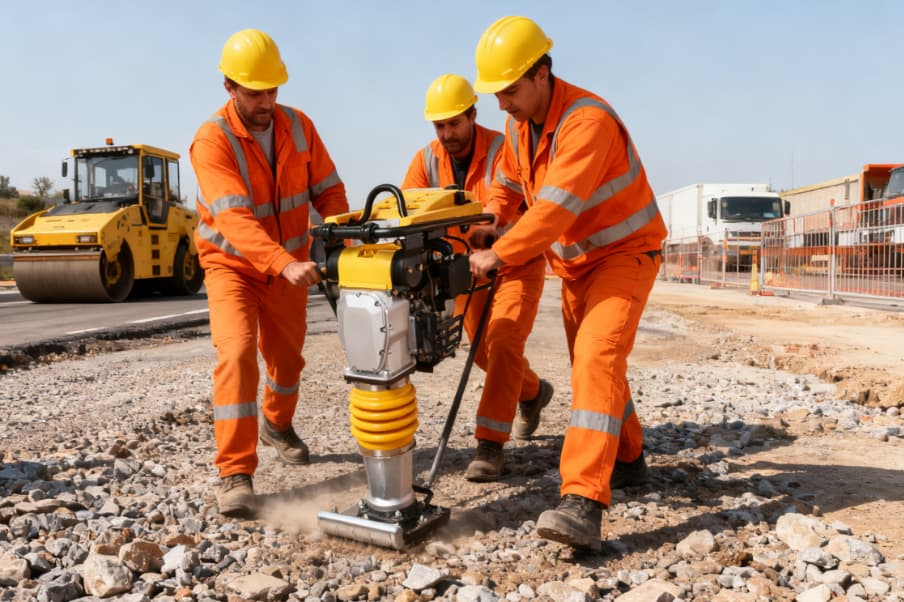
Core Advantages: Unlock a New Experience of Efficient Compaction
Ningbo ACE rammers feature "high efficiency, portability, and wide applicability" as their core strengths. From working principles to actual performance, they fully adapt to the complex needs of construction projects and provide reliable solutions for compaction operations in different scenarios.
Scientific Working Principle, Adapting to Diverse Construction Scenarios
The core function of a rammer is to compact loose materials such as soil and gravel through rapid impact actions, significantly improving the bearing capacity and stability of the ground. Based on this principle, Ningbo ACE rammers can be widely used in road construction, building foundation construction, trench backfilling, site leveling, and other scenarios. Whether it is a narrow roadbed trench or an open site, they can efficiently complete compaction operations, laying a solid foundation for the project.
Three Core Advantages to Enhance Construction Efficiency
High Efficiency: Relying on precise impact frequency and strong compaction force, Ningbo ACE rammers can quickly increase soil density, greatly shorten the time required for compaction operations, and help the project progress on schedule.
Portability: The product design emphasizes lightweight and compactness. With small size and light weight, it is not only easy to operate flexibly in narrow spaces but also reduces the difficulty of handling and lowers labor cost input.
Wide Applicability: Ningbo ACE rammers can be accurately adapted to various materials such as sandy soil, ternary soil, and asphalt concrete. Meanwhile, they support two power types—electric and fuel-powered—to meet the needs of different construction environments.
Scientific Decision-Making for Safe and Efficient Operations
To help customers maximize the performance of rammers, Ningbo ACE provides comprehensive guidance from four dimensions: "Selection Basis", "Quality Inspection", "Safe Operation", and "Maintenance", ensuring customers have no worries throughout the entire process from equipment selection to use.
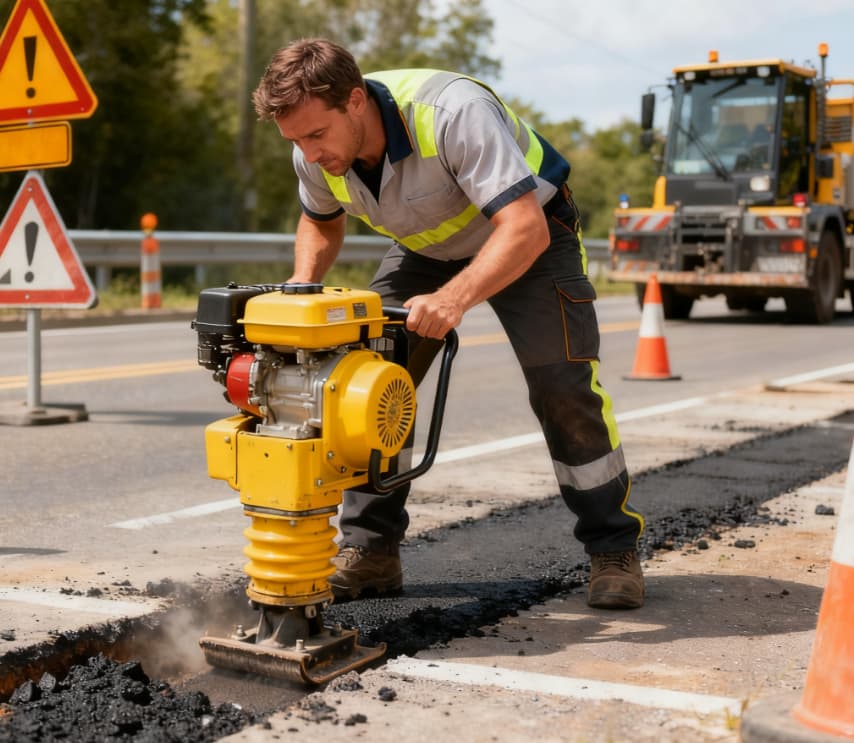
Match Needs for Accurate Equipment Selection
Clarify Work Requirements:Initially determine the equipment specifications based on the frequency of use, work intensity of the rammer, and the size of the construction site.
Select Power Source: If there is a stable power supply at the construction site and high requirements for noise and emissions, give priority to electric rammers; if it is an outdoor scenario without a power supply, fuel-powered rammers are more convenient, but fuel costs and later maintenance should be considered comprehensively.
Compare Compaction Force and Frequency: Different models of rammers vary greatly in compaction force and impact times. Appropriate parameters should be selected according to the compaction materials.
Focus on Quality and Reliability: Pay close attention to the equipment's manufacturing process, material quality, and warranty period to ensure long-term stable operation of the equipment.
Consider Size and Weight: If operations are required in narrow spaces or at heights, select models with small size and light weight to improve the convenience of operation and handling.
Value Additional Functions: Prioritize models equipped with shock absorption devices and adjustable compaction force to enhance operational flexibility and comfort.
Intuitive Judgment to Ensure Performance
Before receiving or using the rammer, the following methods can be used to inspect the equipment quality and ensure it meets the construction needs:
Appearance Inspection: Check whether the equipment has obvious damage, deformation, or cracks. Focus on inspecting the sturdiness of easily worn parts such as handles and bases to ensure no potential safety hazards.
Sound Inspection: After starting the equipment, listen to whether the operating sound is uniform and stable. If there is abnormal noise, there may be component failures.
Vibration Inspection: Feel whether the equipment's vibration is uniform during operation. If excessive vibration or abnormal local vibration occurs, check whether components such as shock absorbers and springs are normal.
Compression Performance Inspection: Use a pressure gauge to test the compression performance of the equipment. Insufficient compression force may affect the compaction effect and require timely maintenance.
Compaction Effect Inspection: Use the in-situ density method and sand cup method to test the compaction degree, ensuring the bearing capacity of the soil layer meets the standards after compaction; judge the uniformity of soil layer compaction through on-site observation and vibration sensor analysis to avoid soft areas.
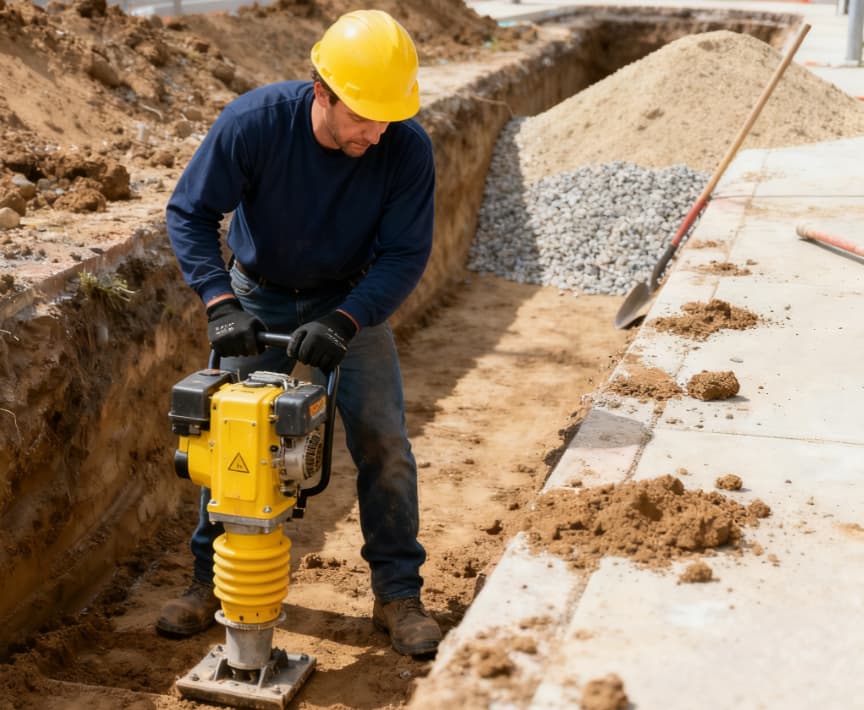
Standardized Operation for Rapid Troubleshooting
Safety Operation Precautions
Operators must wear protective equipment such as safety helmets and goggles; fully inspect the equipment before use; it is strictly prohibited to operate on soft and unstable ground to avoid equipment tipping or personal injury; strictly follow the operating procedures and do not overload or operate continuously for a long time in violation of regulations.
Common Fault Troubleshooting and Solutions
Failure to Start: First, check whether the power supply of the electric model is connected and whether the fuel-powered model has sufficient fuel. Then, check whether the spark plug is carbonized or damaged, and replace the spark plug if necessary.
Decreased Compaction Force: This may be due to aging springs, worn impact components, or insufficient engine power. Aging components need to be replaced or the engine should be repaired.
Abnormal Vibration: This is mostly caused by damaged shock absorbers or loose bases. The shock absorbers need to be replaced and the base bolts should be tightened.
Extend Service Life and Reduce Costs
After each operation, clean the equipment regularly to remove soil and gravel from the surface of the equipment, focusing on cleaning the air filter and base; inspect and replace components weekly; store the equipment standardizedly by placing it in a dry, ventilated environment without high temperature to prevent parts from rusting due to moisture and rubber parts from being affected by high temperature.
Customer-Centered, Win-Win for the Future
With the vision of "becoming a world-renowned brand of road equipment", Ningbo ACE will continue to innovate in the R&D of products such as rammers, continuously improve product performance and service quality, work hand in hand with customers around the world, and use high-quality construction equipment to help more high-quality projects be implemented, jointly laying a solid foundation for the development of the industry.

