A construction equipment supplier of construction machinery solutions for 30 years. WhatsApp:+86-18968212829
Language
A construction equipment supplier of construction machinery solutions for 30 years. WhatsApp:+86-18968212829
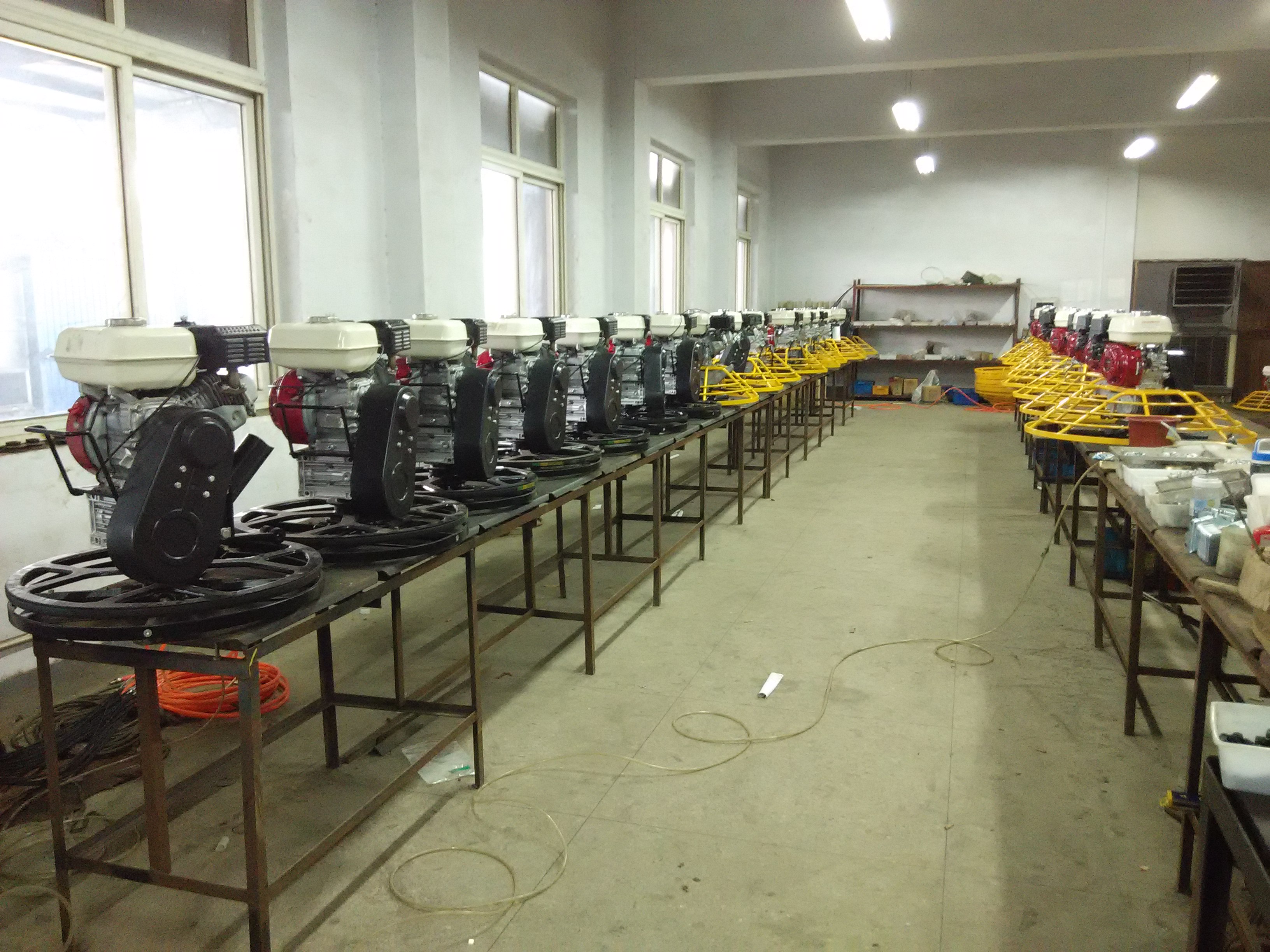
Choosing between a walk-behind and a ride-on power trowel can be harder than it first appears. At first glance, the difference seems obvious: one machine is operated on foot, while the other allows the operator to sit and control the equipment. But when it comes to an actual concrete project, there is quite a bit more to consider.
Take a warehouse floor, for example. A ride-on power trowel can cover large, open areas efficiently, but what happens when the floor is surrounded by columns, narrow passages and drainage channels? A smaller walk-behind machine may suddenly become much more useful. On the other hand, using a walk-behind machine to finish an enormous open floor can put unnecessary pressure on the crew and the working schedule.
So, which machine should you buy? The answer depends on the concrete area you need to finish, the layout of the site, the available working time and the type of projects you normally handle. Let's look at the practical differences and see what contractors and equipment buyers should consider before making a decision.
Both machines are used to finish concrete surfaces, but their operating methods and working arrangements are quite different. Understanding these differences makes it much easier to decide which type belongs on your site.
A walk-behind power trowel is operated by a person walking behind the machine and controlling it through a handle. As the blades rotate, the operator guides the machine across the concrete and adjusts its direction and blade pitch according to the finishing requirements.
Most conventional walk-behind models use a single rotor. Their compact structure makes them particularly useful around walls, columns, doorways and other areas where a larger machine may struggle to move comfortably.
They are also relatively straightforward to transport between jobs. For small construction contractors, this can make a real difference. You don't need a particularly large transport vehicle, and moving the machine around a busy site is generally less complicated.
Of course, the operator still needs experience. Guiding a machine across fresh concrete requires attention and a good understanding of how the surface is developing. The machine may be compact, but the job is still skilled work.
A ride-on power trowel takes a different approach. The operator sits on the machine and controls its movement using steering controls. Many commercial models use two counter-rotating rotors, each fitted with several blades, giving the machine a much wider working arrangement.
This makes ride-on equipment particularly useful on large warehouse floors, industrial buildings and commercial concrete slabs. Instead of walking behind the machine, the operator can work from a seated position and move across larger sections of the floor.
The trade-off is size. A ride-on machine needs enough room to enter, turn and move around safely. It also requires more careful transport planning and a suitable operator.
In other words, a larger machine can save time on an open slab, but it won't magically make a narrow doorway wider. Site access still matters.
The following comparison gives a general idea of what buyers can expect from each type. Individual models vary, so the manufacturer's specifications should always be checked before ordering.
| Comparison | Walk-Behind | Ride-On |
|---|---|---|
| Operating method | Operator walks behind the machine | Operator sits on the machine |
| Typical rotor arrangement | Single rotor | Usually twin rotors |
| Working coverage | Generally smaller | Generally wider |
| Manoeuvrability | Good in restricted areas | Needs more operating space |
| Edge finishing | More convenient around walls and columns | May require additional equipment |
| Operator workload | More walking and handle control | Seated operation |
| Transport | Generally easier | Requires more transport planning |
| Typical applications | Smaller slabs and restricted areas | Large, open concrete floors |
There is no need to treat one type as the winner in every situation. A walk-behind machine may be more practical on a complicated site, while a ride-on machine can make much better use of its capacity on a large, open floor.
The important thing is to match the machine to the work rather than buying equipment simply because it looks bigger or more powerful.
When contractors discuss a concrete project, the first figure they usually mention is the total floor area. That's useful, but it doesn't tell us how easy the floor will be to finish.
Imagine two warehouses, each with a floor area of 1,500 m². One has a wide, open layout with very few obstacles. The other has rows of columns, drainage channels, machinery foundations and several narrow sections.
Although the total area is the same, the working conditions are completely different. A ride-on power trowel may move comfortably across the first floor, while the second site could require a combination of larger and smaller machines.
Warehouses, logistics centres and industrial buildings often provide good working conditions for ride-on power trowels. There is enough space for the operator to move across the slab, and the machine can work along relatively long, uninterrupted paths.
In these conditions, a wider machine can reduce the number of passes needed to cover the main working area. This is particularly useful when the contractor has to coordinate concrete placement and finishing across a large section within a limited period.
Now consider a factory floor with dozens of columns. A ride-on machine may be suitable for the open sections, but getting around every column and finishing close to the walls can be awkward.
This is where a walk-behind power trowel becomes useful. Its smaller working dimensions allow the operator to move through tighter spaces and approach areas that are difficult for larger equipment.
The same applies to doorways, drainage channels, ramps and other restricted sections. These details may seem minor on a drawing, but they can have a noticeable effect on the equipment needed on site.
Before ordering a machine, ask the site team to look at the floor plan. Identify the open sections, mark the obstacles and check the access routes. It is also worth considering where the machines will enter and how they will move between working areas.
This simple exercise can prevent a common purchasing mistake: choosing equipment according to the total slab area without checking whether the machine can actually work across the whole floor.
A wider power trowel can cover more ground during a working pass, but that doesn't mean it will always finish a project faster. Concrete finishing involves several stages, and the machine is only one part of the process.
Working width and pan diameter are two specifications buyers should understand before comparing machines. A larger pan generally provides a wider working area, but the published pan diameter is not necessarily the same as the machine's effective coverage during actual operation.
This is particularly important when comparing twin-rotor ride-on machines. The dimensions of the individual pans, their arrangement and the overlap between working areas all affect how the machine covers the concrete.
For a buyer, the safest approach is to ask the manufacturer for the exact working dimensions and clarification of how they are measured. A number in a product catalogue is useful, but only when you know what it represents.
Engine power matters because the machine needs sufficient output to operate its mechanical system under the intended working conditions. However, a larger engine does not automatically mean higher finished output.
The gearbox, rotor design, blade arrangement, machine weight and concrete condition also influence performance. A 34 HP ride-on machine may be more suitable for a large open slab, but that doesn't make it a better option for every smaller job.
Think about the whole machine rather than focusing on one impressive number.
Even a powerful machine cannot compensate for poor site organisation. Concrete needs to be placed, levelled and finished in a planned sequence. If the placing crew falls behind or the finishing team cannot reach the next section in time, the equipment will spend more time waiting than working.
The condition of the concrete is equally important. Finishing should begin at the correct stage, after bleeding has stopped and the concrete has stiffened sufficiently for the required operation. Temperature, mix design and weather conditions all affect the available working window.
This is why contractors should plan the machine, operators and concrete placement together. A well-organised crew with suitable equipment will often achieve a better result than a larger machine working in a poorly organised operation.
For further guidance, see the American Concrete Institute's information on concrete finishing timing.
Not really. You may come across buying guides that suggest a particular square-footage limit for walk-behind or ride-on equipment. These figures can be useful as rough references, but they should not be treated as universal industry rules.
A relatively small open floor may be easier to finish with a ride-on machine than a larger floor divided into narrow sections. The layout, access, working schedule and available operators all influence the decision.
Rather than asking, "How many square metres can this machine finish?", start by asking, "How much usable floor can this machine comfortably work on under our site conditions?" That is a much better question.
For many contractors, a walk-behind machine is the more practical option when working areas are smaller, access is restricted or the equipment needs to move between different sites regularly.
Residential floors, garages, small commercial buildings and repair projects often do not require a large ride-on machine. A walk-behind power trowel can handle these jobs without taking up unnecessary space or increasing transport requirements.
It is also easier to position around smaller working sections where frequent changes of direction are needed.
Walls, columns and doorways are common features on construction sites. A compact walk-behind machine can move around these areas more comfortably and gives the operator direct control through the handle.
It is worth remembering that some edges may still require hand tools or other finishing equipment, depending on the site layout and required surface finish.
Smaller machines are generally easier to load, unload and move between jobs. This can be particularly useful for contractors who work on several projects rather than spending months on one large industrial floor.
ACE's HMR-100 walk-behind power trowel is one example. Its published working width is 980 mm, with a 1,000 mm pan diameter and a net weight of 90 kg. Engine options are listed between 5.0 and 6.5 HP.
For customers looking at a larger walk-behind configuration, the ACE HMR-120 is another model worth comparing. Its product page lists a 1,200 mm working width and a 9 HP engine, although the manufacturer should confirm the final working dimension because another section of the page gives a different measurement.
When the project involves a large open floor, the advantages of a ride-on machine become easier to understand. The operator can work from a seated position, and the wider rotor arrangement helps cover larger sections of concrete.
Large warehouses and factories often have relatively open floors with long working paths. These conditions suit ride-on equipment because the machine can move across the slab without constantly stopping to manoeuvre around obstacles.
For contractors regularly handling this type of work, a ride-on power trowel can become an important part of the finishing equipment fleet.
Commercial buildings and industrial projects may involve larger concrete pours and carefully planned finishing schedules. In these situations, the machine's working dimensions, engine output and operator controls should all be considered.
However, the largest machine is not always the right machine. It still needs to fit through the site entrance, move around the working area and operate safely alongside the other construction teams.
Ride-on machines may also make sense for rental companies serving customers who regularly handle warehouse floors and industrial concrete projects.
Before investing, consider how often the machine is likely to be rented, how it will be transported and whether local customers can obtain spare parts and servicing. A machine that looks impressive in a catalogue is not much use if it spends most of the year waiting in the rental yard.
ACE offers several ride-on models, including the ART-80 and ART-96, with different working dimensions and engine configurations.
There is no rule saying a contractor must choose only one type of power trowel. On larger projects, using both machines can be a sensible way to deal with different working conditions.
For example, a ride-on machine can handle the main open area of a warehouse floor. When the work reaches columns, walls or narrower sections, a walk-behind machine can take over where the larger equipment is less convenient.
This arrangement allows each machine to do the job it handles best. It also avoids the need to repeatedly move a large ride-on machine into areas where it has little room to manoeuvre.
Of course, the crew needs to plan the work properly. Both machines must be available at the right time, and the operators need to coordinate their movements with the concrete placing team. Otherwise, having more equipment can create more confusion rather than improving productivity.
Once you have decided which type of machine is more suitable, the next step is to compare the specifications. This is where buyers should look beyond the model name and check the details of the actual configuration being offered.
Check the pan diameter, working width and overall machine dimensions. For ride-on machines, ask for the dimensions of the individual rotors and clarification of the manufacturer's stated working coverage.
Also check the supplied blade types. Floating blades and finishing blades are used for different stages of concrete work, and blade pitch adjustment can affect how the machine performs during finishing.
Confirm the engine brand, rated output and rotor speed. These figures help you compare machine configurations, but they should be considered alongside the machine's mechanical design and intended application.
Do not assume that a higher RPM automatically produces a better finish. The correct operating speed and blade adjustment depend on the concrete condition and the finishing stage.
Check the machine's net weight, overall dimensions, lifting points and transport requirements. This is particularly important for ride-on models, which are substantially heavier than most walk-behind machines.
It is also worth checking whether the equipment can pass through the available access routes and whether the site has suitable lifting equipment for unloading and positioning.
Blades, gearboxes, engines and control components all need proper maintenance. Ask the supplier about the recommended service schedule, replacement blade specifications and the availability of commonly used spare parts.
For dealers and rental companies, this information is particularly useful when planning inventory. Having replacement blades and service components available can reduce unnecessary downtime for customers.
ACE offers several power trowel configurations for contractors with different concrete finishing requirements. The following models provide a useful starting point when comparing compact walk-behind machines with larger ride-on equipment.
The HMR series includes walk-behind machines with different working dimensions and engine options.
The HMR-100 has a published working width of 980 mm, a 1,000 mm pan diameter and a net weight of 90 kg. Its engine options are listed at 5.0–6.5 HP.
The HMR-120 is a larger configuration, with a 9 HP engine and a listed net weight of 102 kg. Its product page gives both 1,200 mm and 1,160 mm measurements in different sections, so buyers should confirm the exact specification before placing an order.
The ART series offers several ride-on configurations for larger concrete finishing applications.
The ART-65 has a published plate size of 1,570 × 750 mm and engine options of 13–14 HP. The ART-80 uses two 915 mm underpans and has a published plate size of 1,900 × 915 mm, with engine options of 22–24 HP.
For customers looking at a larger configuration, the ART-96 has two 1,175 mm working pans, a published plate size of 2,475 × 1,175 mm and a 34 HP Kohler engine. Its listed net weight is 392 kg.
| Model | Type | Published Dimensions | Engine Output | Net Weight |
|---|---|---|---|---|
| HMR-100 | Walk-behind | 980 mm working width; 1,000 mm pan | 5.0–6.5 HP | 90 kg |
| HMR-120 | Walk-behind | 1,200 mm listed working width* | 9 HP | 102 kg |
| ART-65 | Ride-on | 1,570 × 750 mm plate | 13–14 HP | 295 kg |
| ART-80 | Ride-on | 1,900 × 915 mm plate | 22–24 HP | 310 kg |
| ART-96 | Ride-on | 2,475 × 1,175 mm plate | 34 HP | 392 kg |
*The HMR-120 product page also mentions 1,160 mm in another section. Confirm the exact working dimension with ACE before ordering.
Note: Working width, pan diameter and plate dimensions are different measurements. The figures above are taken from ACE's published product information and should not be treated as directly interchangeable coverage figures. Final engine options and machine configurations should be confirmed in the quotation.
For smaller projects and restricted working areas, the HMR models may be worth considering. For larger open floors, the ART series provides several ride-on options with different dimensions and engine outputs.
If your projects include both types of working conditions, it may be worth discussing a combination of machines rather than selecting only one model.
Before asking for a quotation, prepare a few details about the project. A supplier can make a much more useful recommendation when they know what the machine will actually be used for.
| Information | What to Check |
|---|---|
| Concrete area | Total slab area and usable working sections |
| Site layout | Columns, walls, doorways and restricted access |
| Finishing requirements | Required surface finish and project specifications |
| Working schedule | Concrete placement volume and finishing time |
| Operators | Available trained operators |
| Machine configuration | Working dimensions, engine and blade arrangement |
| Transport | Vehicle capacity, lifting arrangements and storage |
| After-sales support | Spare blades, maintenance and replacement parts |
For dealers and rental companies, there is another question worth asking: what type of customer is most likely to rent or purchase the machine?
If most customers are small construction contractors, walk-behind machines may represent a larger share of demand. If the business mainly serves industrial flooring companies, ride-on equipment may be more relevant. The best inventory plan is based on actual customer demand, not simply on which machine has the biggest engine.
A walk-behind power trowel is operated by a person walking behind the machine, while a ride-on model allows the operator to sit on the equipment. Walk-behind machines are generally easier to manoeuvre in smaller areas, while ride-on machines are better suited to large, open concrete floors.
A ride-on power trowel is generally more suitable for large warehouse floors with enough space for continuous machine movement. Its wider working arrangement can help the crew cover larger sections. The floor layout and finishing requirements should still be checked before choosing a model.
There is no fixed area that applies to every walk-behind machine. Actual output depends on working dimensions, the number of finishing passes, concrete conditions and operator experience. The available working time also needs to be considered.
Yes. A walk-behind machine can be used on a large slab when the equipment capacity and working schedule are suitable. However, a ride-on machine may be more practical for large, open areas where wider coverage is needed.
Not every contractor needs both. However, on projects with large open areas and restricted edges, a ride-on machine can handle the main floor while a walk-behind machine takes care of smaller sections. This arrangement can be more practical than expecting one machine to handle every part of the job.
No. The final concrete finish depends on the concrete mix, surface condition, finishing time, blade configuration and operator skill. A larger machine can improve coverage on a suitable floor, but it does not automatically produce a better surface.
Check the working dimensions, rotor arrangement, engine output, rotor speed, machine weight, overall dimensions, safety controls and spare-parts availability. Also make sure the machine can enter the site and move comfortably within the available working area.
It depends on local demand. Walk-behind machines are useful for smaller contractors and restricted-access projects, while ride-on machines may attract customers working on large commercial and industrial floors. Rental companies should consider expected utilisation, transport costs, servicing and the availability of replacement parts.
When comparing a walk-behind vs ride-on power trowel, it is tempting to focus on engine power, machine size or the total area of the concrete slab. These figures are useful, but they only tell part of the story.
Look at the actual working area, check the access routes and consider how much time your crew has to complete the finishing work. A walk-behind machine may be all you need for a smaller or more complicated site, while a ride-on model can make more sense on a large, open floor.
And if the project includes both types of working conditions, using two machines may be the more sensible solution.
ACE offers HMR walk-behind and ART ride-on power trowels for different concrete finishing requirements. Share your project details with the ACE team to compare the available models, engine configurations and working dimensions before making your purchase.