A construction equipment supplier of construction machinery solutions for 30 years. WhatsApp:+86-18968212829
Language
A construction equipment supplier of construction machinery solutions for 30 years. WhatsApp:+86-18968212829
In industrial settings like factories, warehouses, and manufacturing plants, the demand for equipment that balances maneuverability and power has never been higher. Traditional heavy machinery often struggles with narrow passages, while smaller tools like forklifts lack the lifting and digging capacity needed for heavy-duty tasks. This is where mini excavators (also known as compact excavators) shine—they combine unparalleled accessibility with robust hydraulic power, making them irreplaceable for narrow space operations. Let’s explore why mini excavators are the top choice for businesses seeking efficiency in constrained workspaces.
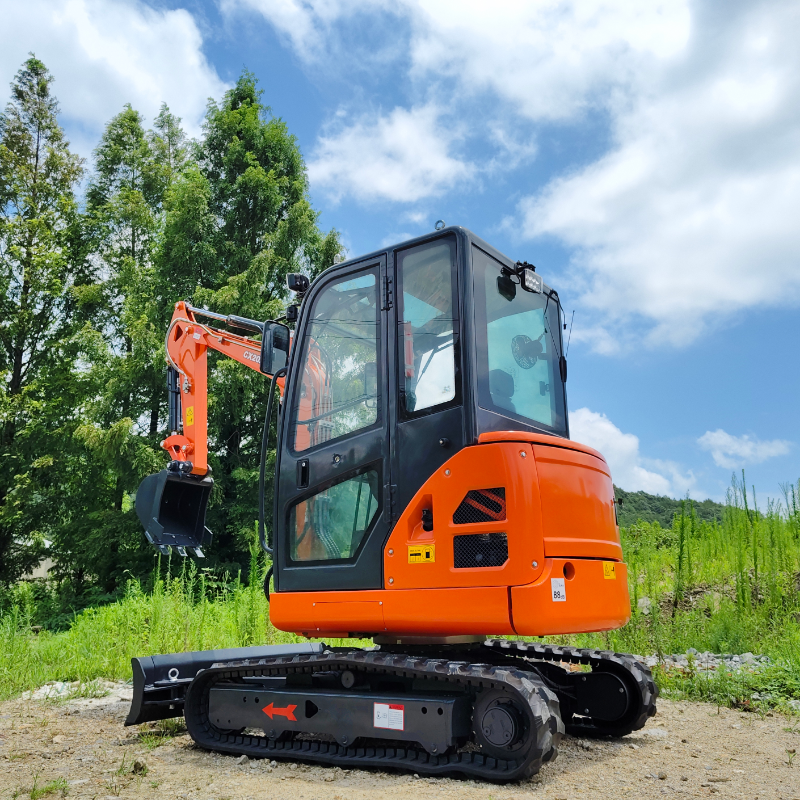
One of the most significant advantages of a mini excavator for factory use is its exceptional passability, a feature that even high-performance forklifts or large excavators can rarely match. Designed with a compact footprint, most standard mini excavators have a width ranging from 1 meter to 1.5 meters—perfect for squeezing through narrow factory aisles, standard doorways (compatible with most industrial and commercial door sizes), and tight gaps between dense shelving units or heavy production equipment.
Unlike large excavators that require extensive space for turning or positioning, mini excavators boast a minimal turning radius—some models even offer zero-radius rotation. This means operators can make precise movements in confined areas, such as between rows of warehouse racks or around bulky machinery, without the need to rearrange the workspace or halt production. For factories and warehouses where space is at a premium, this level of agility translates directly to reduced downtime and improved operational efficiency.
Don’t let their small size fool you—mini excavators pack a punch thanks to their high-quality hydraulic arm and bucket rod systems. These components deliver consistent, powerful performance, enabling the machine to pry, lift, and move hundreds of kilograms of heavy materials with ease. Whether you’re transporting heavy industrial parts across a factory floor, loading bulk materials like steel or gravel into storage, or handling demolition debris during facility renovations, a compact excavator rises to the challenge.
Compared to manual labor, which is slow, labor-intensive, and prone to injury, a mini excavator boosts productivity by 3 to 5 times for heavy lifting tasks. It also outperforms forklifts in scenarios that require both lifting and digging—for example, if you need to excavate a small trench for cable installation and move the excavated soil to a dumpster, a mini excavator can complete both tasks without switching equipment. This “all-in-one” capability reduces equipment rental costs and streamlines workflow.
Forklifts are often used for material handling, but they lack the digging and prying power of mini excavators—and their turning radius is still wider than most compact excavators, making them less suitable for extremely tight spaces. Large excavators, on the other hand, have ample power but are too bulky to navigate factory interiors or narrow warehouse corridors. They also require costly transportation and setup, which is impractical for small-scale, on-site tasks.
Mini excavators solve these pain points by blending the best of both worlds: narrow space maneuverability and heavy-duty lifting power. Many models also offer versatile attachments (such as grapplers, breakers, or augers), allowing them to adapt to tasks like waste handling, concrete breaking, or hole digging—further enhancing their value for factory and warehouse operations.
• Size Matching: Measure your narrowest passage or doorway to select a model with a width that fits—opt for 1.2m or smaller for ultra-tight spaces.
• Weight Capacity: Choose a 1.5 to 3-ton mini excavator for most factory tasks, as it balances power and agility for lifting hundreds of kilograms.
• Emission Requirements: For indoor use, select an electric mini excavator for zero emissions and low noise—ideal for compliance with factory environmental standards.
• Hydraulic System Quality: Prioritize models with reliable hydraulic systems to ensure consistent power delivery for heavy lifting and digging.
For businesses looking to optimize operations in narrow spaces like factories, warehouses, or indoor job sites, a mini excavator is the ultimate solution. Its unmatched passability eliminates space constraints, while its robust hydraulic power handles heavy-duty tasks with ease—outperforming forklifts and large excavators in versatility and efficiency. By investing in a mini excavator tailored to your space and weight needs, you can reduce labor costs, minimize downtime, and boost overall productivity. Whether you’re handling materials, conducting renovations, or maintaining facilities, a compact excavator delivers the power and agility your business needs.

