Product knowledge popularization
A construction equipment supplier of construction machinery solutions for 30 years. WhatsApp:+86-18968212829
Language
A construction equipment supplier of construction machinery solutions for 30 years. WhatsApp:+86-18968212829
Are You Struggling with Concrete Mixing in Narrow Sites or Small Projects?
As a contractor handling rural builds, pipeline repairs, or tight-space landscaping, you face inefficiencies from bulky traditional mixers that require multiple workers and vehicles. This leads to wasted time, higher labor costs, safety risks, and project delays. ACE ASOK Machinery's self-loading concrete mixers, like the SCM-300 and SCM-500, integrate loading, mixing, and unloading in one compact, gasoline-powered unit—boosting efficiency and cutting costs for your small projects.
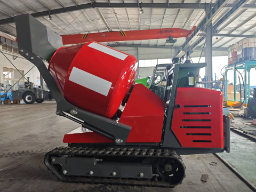
What is a Self-Loading Concrete Mixer?
A self loading concrete mixer integrates loading, mixing, transporting, and unloading into one compact machine. Unlike traditional mixers that require multiple pieces of equipment, these versatile units handle everything with minimal labor. Ideal for small projects, they save time and reduce costs. ACE Machinery's lineup, such as the SCM-300 and SCM-500, features gasoline-powered engines for reliable performance in remote or off-grid locations.
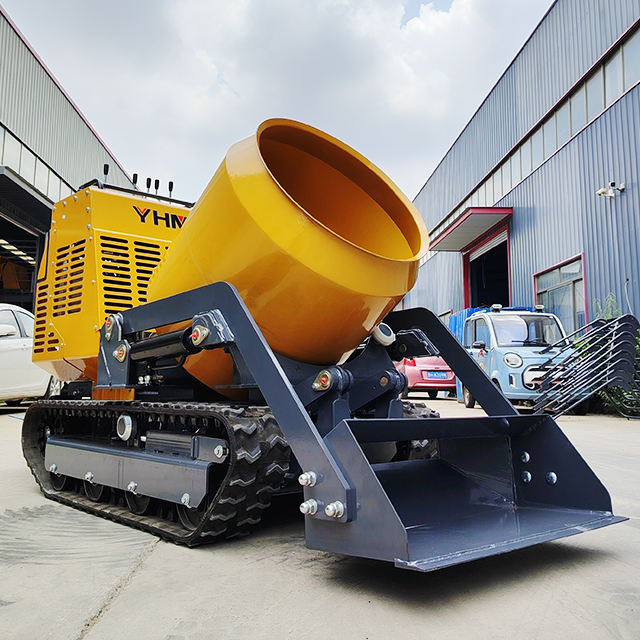
Key Features of Mini Concrete Mixers
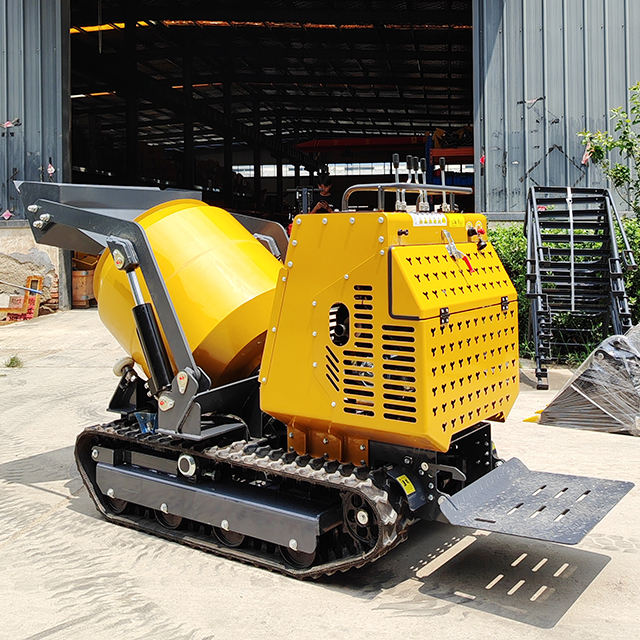
For larger batches, the SCM-500 provides a 500L total volume and 320L concrete per batch. With a RATO R740-1 gasoline engine delivering 15 kW, this gasoline concrete mixer excels in versatility, offering walking speeds up to 6 km/h and a climbing ability of 30°.
Advantages of Tracked and Crawler Concrete Mixers
The HT80 and LX-Mini are excellent portable concrete mixers with crawler designs. Featuring non-slip, wear-resistant tracks and hydrostatic drive systems, they navigate narrow sites effortlessly. Their gasoline engines ensure low noise and high stability, ideal for urban streets, barns, or airport runways.
Why Choose a Gasoline Self-Loading Mixer for Small Projects?
Compared to diesel options, gasoline concrete mixers like those from ACE are lighter (around 750-1000 kg) and more cost-effective for occasional use. They feature integral spraying for corrosion resistance and engineered rubber tracks for longevity.
Applications and Benefits
Portable Concrete Mixer: Easy to transport and operate by a single person, reducing labor costs.
Crawler Concrete Mixer: Excels in rough terrains with low ground pressure and high adhesion tracks.
High efficiency: Fast mixing, even discharge, and minimal transmission loss.
Durability: Thickened buckets, reinforced structures, and 1-year warranties.
These machines are not just tools; they're investments in productivity. With customization options like OEM/ODM and various attachments, ACE Machinery tailors solutions to your needs.
FAQSelf-Loading concrete mixers
Models like SCM-300 offer 300L charging capacity with 190 dm³ effective mixing, while SCM-500 provides 500L total volume and 320L per batch. Larger options like HT-2.0 go up to 2.0 CBM.
Yes, the compact design and crawler tracks make self loading concrete mixers for narrow sites ideal for tight spaces, with chassis widths as low as 850mm and minimum turning radii of 1000-1300mm.
Most models feature gasoline engines like Briggs & Stratton or RATO, with powers from 13.5HP to 15kW. Some, like HT-2.0, offer diesel options for heavier duties.
Tracked concrete mixers and crawler concrete mixers use rubber tracks for low ground pressure, climbing abilities up to 30°, and stable operation on mud or slopes.
ACE Machinery provides a 1-year warranty, 24h online support, and video inspections. Core components have up to 1.5 years warranty.
Yes, options include customized logos, colors, and attachments. Minimum order is 1 set, perfect for gasoline self loading mixers for small projects.
Portable concrete mixers are lightweight, easy to operate, and versatile for farms, construction, and home use, with self-loading and hydraulic dumping for efficiency.

