Product knowledge popularization
A construction equipment supplier of construction machinery solutions for 30 years. WhatsApp:+86-18968212829
Language
A construction equipment supplier of construction machinery solutions for 30 years. WhatsApp:+86-18968212829
Determine your needs: Type selection.
Ningbo ACE Machinery emphasizes that selecting the right concrete mixer begins with a clear understanding of project requirements across various industry sectors—such as residential construction, infrastructure development, landscaping, and precast manufacturing. For small‑scale residential tasks, the demand is for portable, compact units, while large infrastructure measures often require heavy‑duty stationary or towable drum mixers.
ACE’s 29 years of manufacturing experience, backed by a skilled R&D team, allows the company to deliver models tailored to the unique needs of contractors, landscapers, and municipal projects alike. Its robust QC and QA departments ensure consistent quality, and its flexible manufacturing means it can offer concrete mixer rental and concrete mixer for sale options with short delivery times (7–30 days), helping users match models to their workload and industry context efficiently.
Capacity selection: Matching project.
The capacity of the concrete mixer should align with the volume and pace of work: choose a smaller mixer for limited daily batches or a large one for continuous high‑volume demands to avoid delays or waste.
What is voltage rating?
Voltage rating specifies the electrical requirement for an electric concrete mixer—commonly 220 V for light, portable units or 380 V/415 V for heavy, industrial‑grade machines—ensuring safe, efficient operation on‑site.
How to mix concrete
Mixing concrete effectively requires first understanding the proper concrete mix ratio and then combining ingredients under controlled conditions. Typically, a standard mix ratio such as 1:2:3 (cement:sand:aggregate) or 1:1.5:3 is used to achieve a balance between strength and workability. Ningbo ACE Machinery recommends verifying project-specific requirements—for example, higher strength needs may call for lower water‑cement ratio or the addition of chemical admixtures. The process begins with measuring and dry blending of cement, sand, and aggregate, followed by gradual addition of water.
Ideally, the mixing process in ACE’s concrete mixers—in either rental or sale models—starts at a low speed to minimize dust, then shifts to higher speed to ensure homogeneity. This step-wise approach, supported by ACE’s manufacturing precision and quality control, ensures each batch meets strength and consistency expectations. A reliable mixer minimizes segregation and ensures that each component is fully coated, ultimately resulting in uniform concrete that meets engineering specifications.
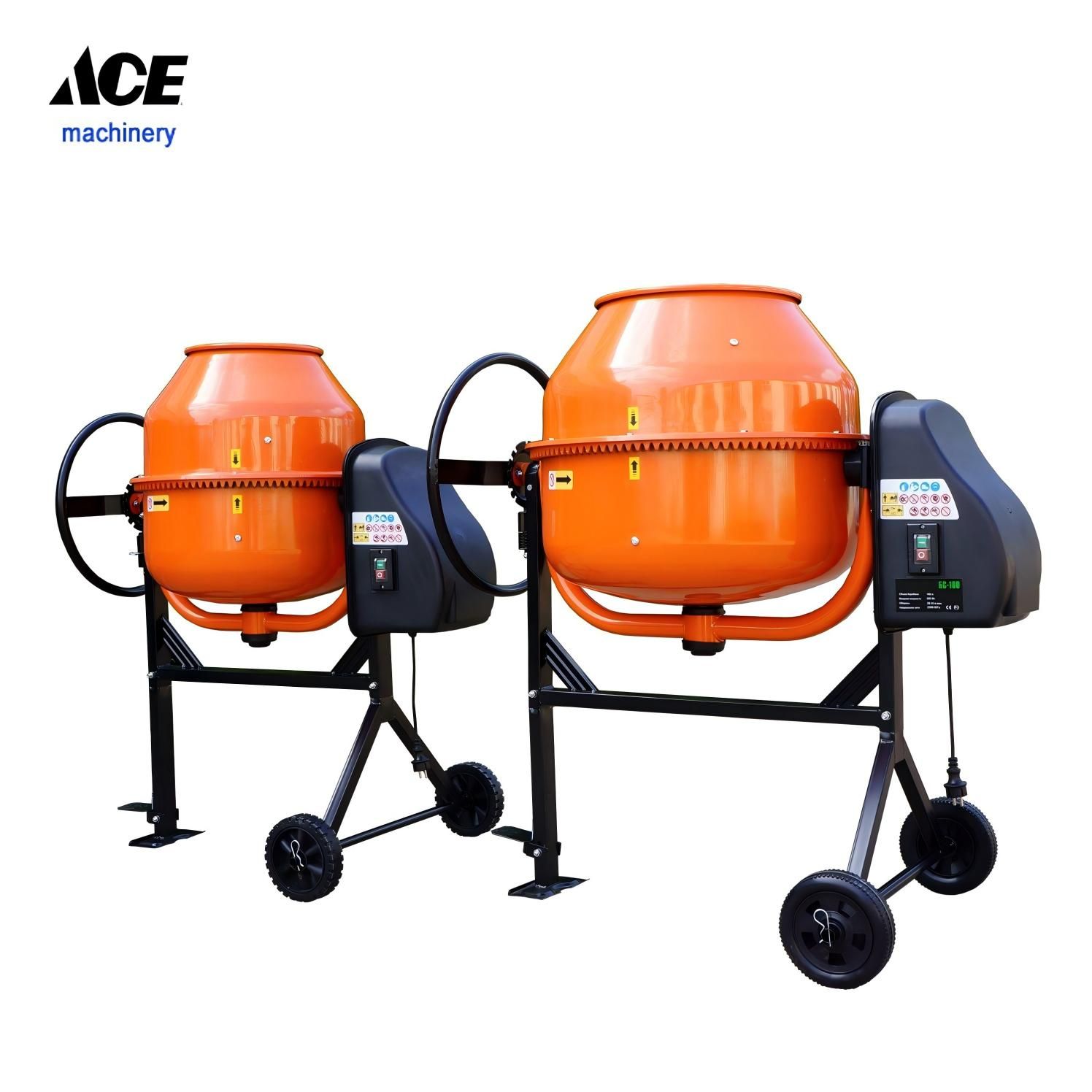
How to mix concrete in a mixer
Using a concrete mixer correctly enhances productivity and ensures consistent quality. First, ACE recommends pre‑wetting the drum slightly to reduce sticking. Operators should add about half of the required mixing water, then the measured cement, followed by sand and aggregate, and finally the remaining water to bring the mixture to the required slump.
Efficient operation involves running the mixer at a moderate speed until a uniform texture is achieved, usually around 2–5 minutes per batch depending on capacity. ACE’s concrete mixer rental units are designed with ergonomic controls and optimized drum geometry to simplify this process. After mixing, the drum should be tipped immediately to discharge, reducing the risk of over‑mixing and cycle delays.
Cleaning the drum promptly after use—by rinsing and rotating with water—extends the mixer’s lifespan. This procedure, when repeated with ACE’s durable and precision‑engineered mixers, optimizes performance and reduces downtime, whether the user owns a concrete mixer for sale or is renting one.
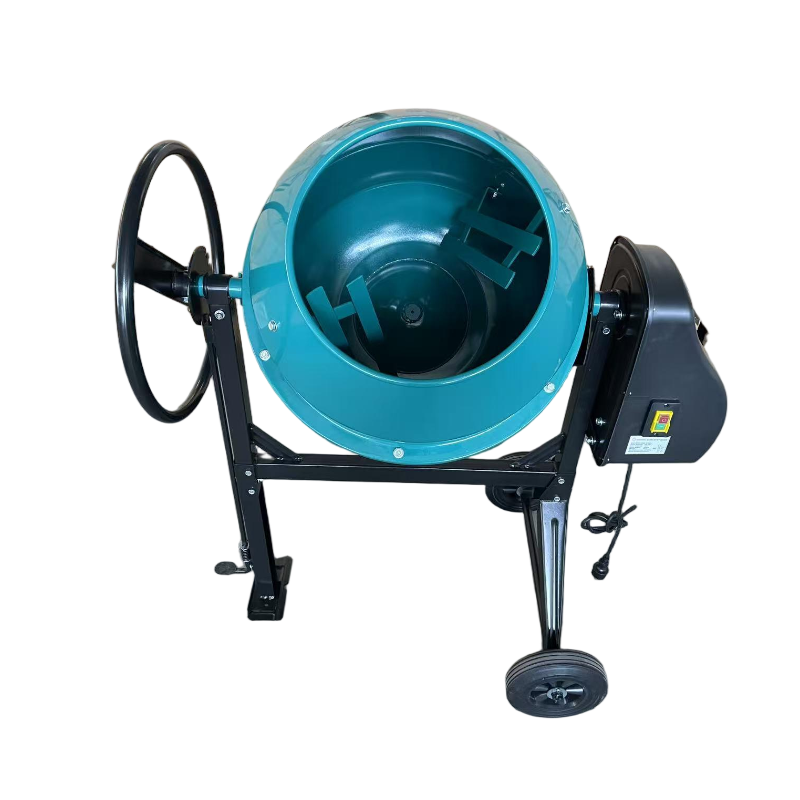
Which concrete mix is used for which work?
Selecting the proper concrete mix ratio ensures structural performance, durability, and workability across different construction objectives. For light civil tasks such as pathway slabs or footings, a mix ratio of 1:2:4 (cement:sand:aggregate) is common—adequate strength without excessive cost. Standard structural elements like beams or columns often require 1:1.5:3 or 1:1:2.5 for higher compressive strength. For finishing surfaces or architectural elements, richer ratios such as 1:1:2 with a reduced water‑cement ratio (around 0.45) deliver smooth texture and aesthetic appeal.
When durability is critical (e.g. pavements, marine environments), ACE‑recommended mixes may include supplementary cementitious materials or additives to enhance resistance to carbonation, chlorides, or freeze‑thaw cycles. Since ACE manufactures mixers meant for a wide range of concrete mix ratios, customers can access both concrete mixer rental and concrete mixer for sale options that support variable mix designs. The company’s R&D and QA teams ensure these mixers handle diverse materials—from standard aggregates to specially modified blends—while preserving consistency and strength across applications.
Summary
ACE ensures reliable mixers tailored to user needs with precision and speed.

