Product Structure Introduction
A construction equipment supplier of construction machinery solutions for 30 years. WhatsApp:+86-18968212829
Language
A construction equipment supplier of construction machinery solutions for 30 years. WhatsApp:+86-18968212829
Compact mini excavator models have become common on modern construction sites. Their small size, precise controls, and flexible attachments make them ideal for many small- and medium-scale tasks where large machines cannot work.
Compared with large excavators, the main strength of a mini excavator is its compactness. That small size brings three practical benefits:
Flexible movement: Some models are under 1 meter wide and can pass through doors and narrow corridors. They work well inside buildings, between floors, and in tight courtyards.
Easy transport and lower cost: They can be moved on light trucks without heavy trailers. This saves transport cost and preparation time for multi-site work.
Gentle on surfaces: Models with rubber tracks have low ground pressure, so they reduce damage to paved roads, interior floors, and lawns.
Mini excavators act as a precision tool for common earthwork tasks:
Residential foundation excavation: In villas and self-built homes, where space is limited, mini excavators dig strip foundations and footings with tight accuracy (often within a few centimeters).
Basement and low-disturbance projects: For adding basements or expanding below existing buildings, mini excavators limit vibration and soil disturbance, helping to protect nearby structures.
Trench excavation: For water, drainage, gas, power, and communication lines, mini excavators control trench depth and width precisely, meeting installation standards.
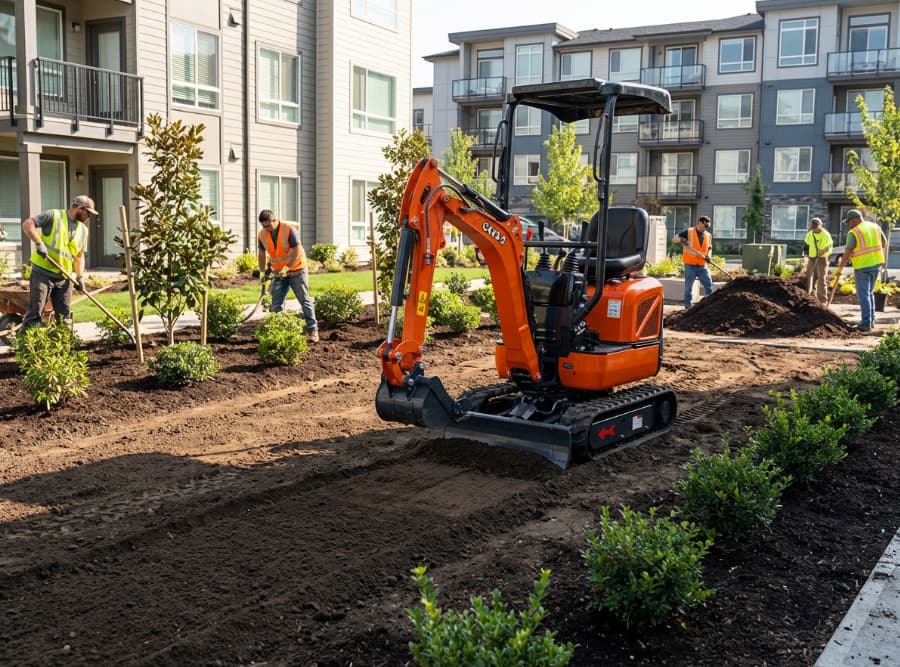
Material handling: With buckets and other mini excavator attachments, they move bricks, pipes, and mortar across uneven sites and can lift materials into pits or floors.
Backfilling and compaction: Backfilling with a mini excavator is much faster than manual labor. When combined with a vibratory rammer attachment, it can perform layered compaction efficiently.
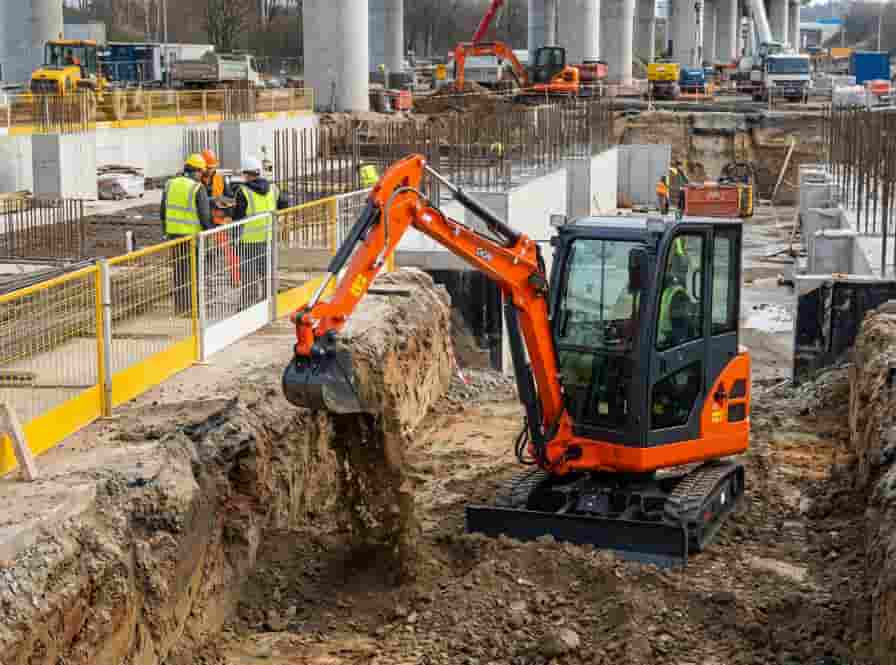
One standout use of the mini excavator is indoor work. Narrow widths (often under 1.5 m) and adjustable heights allow them to enter buildings via corridors or elevators:
Controlled indoor demolition: For partition walls, small slabs, and old equipment bases, they provide precise demolition with less noise and less risk to preserved structures.
Indoor pit excavation: For elevator pits, sump pits, and machinery foundations, mini excavators cut time and cost compared with manual digging while reducing safety risks.
Debris removal: They quickly collect and move indoor waste, keeping work areas clear and organized.
Septic tanks and inspection wells: Mini excavators maintain accurate pit sizes for installations, minimizing later adjustments.
Outdoor pipelines and landscape shaping: They control trench depth precisely and shape small landscape features while protecting lawns with rubber tracks.
Much of a mini excavator’s value comes from its ability to use different tools. Quick-connect systems let operators change attachments rapidly so a single machine can handle many tasks.
Common attachments:
Hydraulic breaker: Breaks concrete and old foundations faster than manual chiseling.
Grab bucket: Picks up rebar, timber, and waste for sorting and loading.
Vibratory rammer: Compacts backfill to required density (often >95%).
Drilling auger: Pre-drills holes for piles or tree planting.
Buckets: Narrow buckets for trenches and wide buckets for leveling and moving materials.
Most modern machines let one operator swap attachments in under 10 minutes without special tools.
One machine, many roles: With attachments, a mini excavator works as an excavator, breaker, grabber, rammer, and more.
Cost-effective: Lower transport and operating costs make mini excavators ideal for small and medium projects.
Site protection: Rubber tracks and low ground pressure reduce repair needs after work.
Mini excavators deliver flexible movement, easy transport, and low-impact operation. When paired with a range of mini excavator attachments — including various buckets — they become a practical, efficient choice for modern construction. For buyers looking for value, a quality Chinese mini excavator or China mini excavator model often offers reliable performance, a wide selection of attachments, and cost advantages for small- and medium-sized sites.
mini excavator Chinese mini excavator mini excavator attachments China mini excavator buckets

